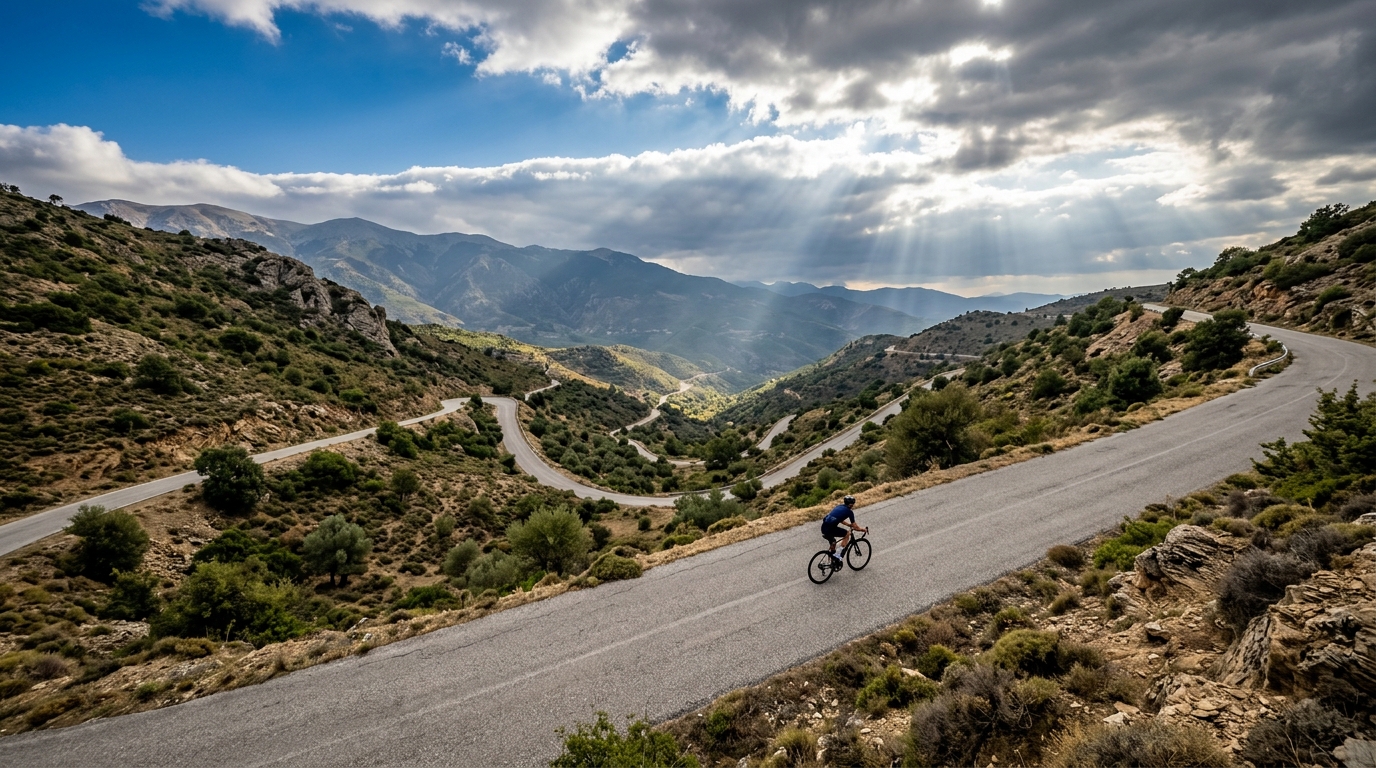
Makaza
Makaza is a long category 2 climb where the average gradient hides the pacing cost of a 14.1 km ascent with pitches above 10%.
- Length
- 14.1km
- Avg
- 4.5%
- Max
- 10.5%
- Summit
- 763m
- Ascent
- 635m
The climb
Gradient profile
Makaza cycling climb profile
Makaza is a category 2 climb that asks for patience more than aggression. The headline number is manageable - 14.1 km at 4.54% - but that average only tells part of the story. Over that distance, even a moderate gradient becomes a real aerobic load, especially because the climb rises from 123 m to 763 m and gains 640 m from bottom to summit.
This is not a short punch where you can muscle through a bad start. It is a long climb where the cost of riding above threshold early will come back later, particularly if you hit the steeper sections already carrying fatigue.
How the gradient rides
On paper, Makaza is a steady endurance climb with a sting. The average gradient of 4.54% suggests much of the ascent should feel controlled if you settle into rhythm, but the maximum gradient of 10.54% changes the pacing equation. That gap between average and maximum is the key detail: the climb is not uniformly hard, but it contains ramps steep enough to force a decision.
The practical mistake is treating the full 14.1 km as if it rides at the average. It will not feel that simple. A climb with this profile rewards riders who keep the flatter or steadier ground under control, then absorb the steeper pitches without turning them into repeated anaerobic efforts. If you surge every time the road kicks up, the climb becomes much harder than its average gradient suggests.
Pacing and gearing
The right approach is to start below your sustainable climbing effort and let the duration do the work. For riders pacing by power, the early section should sit comfortably under /glossary/ftp rather than hovering at it. That gives you room to handle the 10.54% maximum gradient without spiking deep into the red.
Gearing should be chosen for the steepest ramps, not the average. A setup that feels perfect at 4.54% can feel overgeared when the gradient briefly moves into double digits. If cadence collapses on those pitches, power output becomes harder to regulate and the climb turns into a sequence of muscular efforts rather than one steady ascent.
A smart ride on Makaza looks like this:
- Start conservatively and ignore the temptation to ride the average gradient too hard.
- Keep cadence smooth on the moderate sections, using them to stabilize effort.
- Shift early before the steepest ramps so you are not forced into a low-cadence grind.
- Save a controlled lift for the upper part, once the cumulative cost of 14.1 km is already clear.
Makaza is difficult because it is long enough to punish impatience and variable enough to punish poor gearing. Ride it as a sustained climb with selective pressure, not as a series of attacks, and the profile becomes much more manageable.