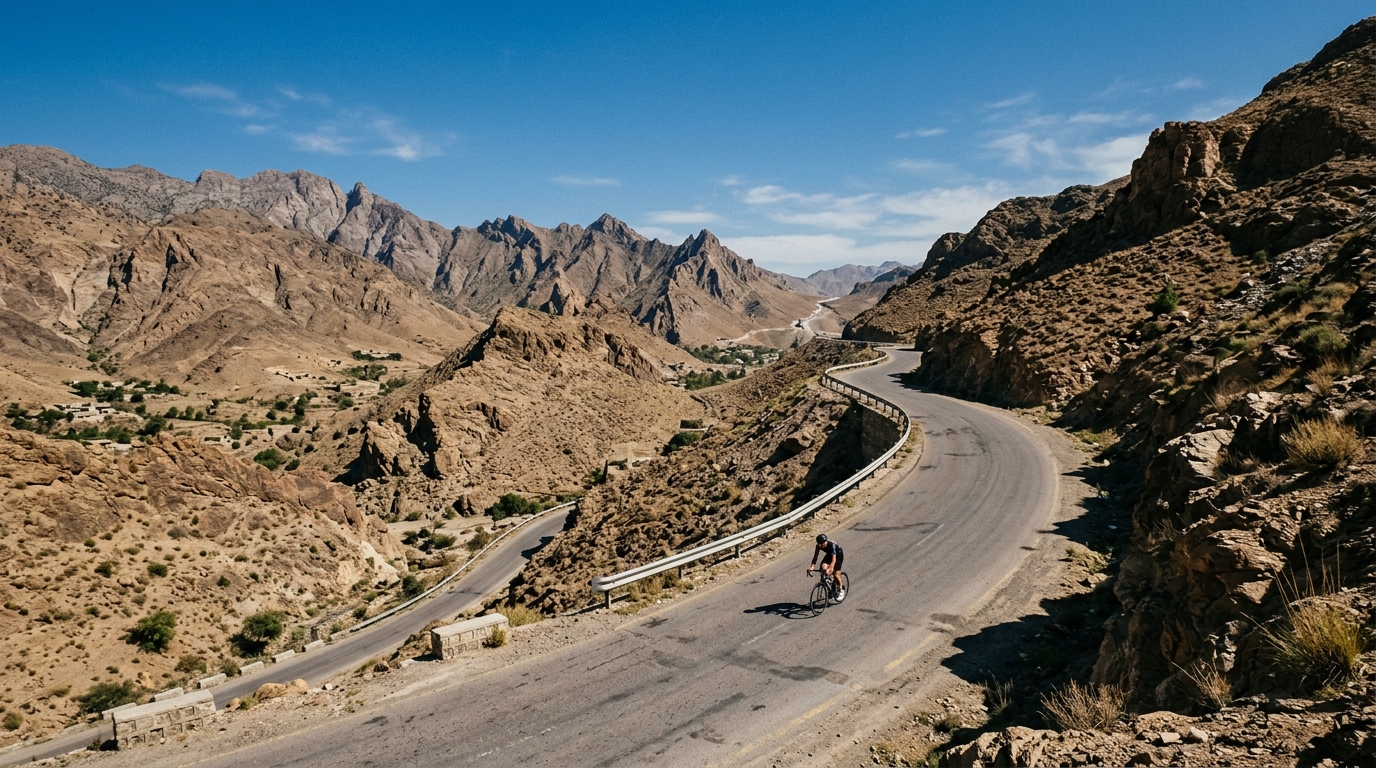
Khyber Pass
A practical pacing and gearing guide to the Khyber Pass cycling climb, a 7.8 km category 3 ascent averaging 4.31%.
- Length
- 7.8km
- Avg
- 4.3%
- Max
- 7.4%
- Summit
- 980m
- Ascent
- 316m
The climb
Gradient profile
Khyber Pass cycling climb profile
The Khyber Pass cycling climb is a category 3 ascent that rewards control more than brute force. On paper, it is 7.8 km long at an average gradient of 4.31%, rising from 644 m to 980 m. That gives it the shape of a sustained, aerobic climb rather than a short, explosive wall.
The key number is the gap between the average gradient and the maximum gradient of 7.44%. A climb averaging 4.31% but touching 7.44% is unlikely to feel brutally steep for its full length. The better read is that the road gives you enough moderate-gradient terrain to keep momentum, but also includes ramps sharp enough to punish riders who ride the lower slopes too hard.
How the gradient unfolds
With only the overall climb data available, the safest way to pace the Khyber Pass is to treat it as a steady drag with intermittent harder sections. The full ascent gains 336 m from start elevation to summit elevation, with a listed total ascent of 316 m. Either way, the climbing demand is real, but it is spread across enough distance that pacing errors accumulate gradually rather than instantly.
The opening kilometres should not require climbing at the limit. At this average gradient, speed can stay relatively high, which makes it tempting to ride above sustainable power because the effort does not immediately feel costly. That is the trap. The maximum gradient tells you there are steeper portions somewhere on the climb, and those are where early overpacing shows up.
By the middle of the climb, the challenge is likely to be maintaining pressure without letting cadence bog down. A 4.31% average is shallow enough that small changes in wind, surface, and gearing choice can alter the feel of the effort. The steeper pitches near the 7.44% maximum are not extreme, but they are steep enough to force a gear change if you have been riding a large gear for too long.
Pacing and gearing notes
For a strong endurance rider, this is a controlled threshold-adjacent climb rather than an all-out test from the base. Use the first part to settle into rhythm, then lift effort only once the climb has declared itself. If riding by power, anchor the effort around a sustainable climbing target rather than chasing speed. If you use FTP, this is the type of ascent where riding slightly under control early can produce a faster final result than surging into every ramp.
Gearing should prioritize cadence flexibility. The average gradient does not demand a mountain-style bailout gear for every rider, but the 7.44% maximum means you want at least one easier option available when the road steepens. Staying seated through the ramps will usually be more efficient than standing repeatedly, unless you are using short out-of-saddle efforts to reset cadence.
The best approach is simple: carry momentum where the gradient allows it, avoid burning matches before the steeper sections, and finish by increasing pressure over the final portion rather than trying to win the climb in the first half.