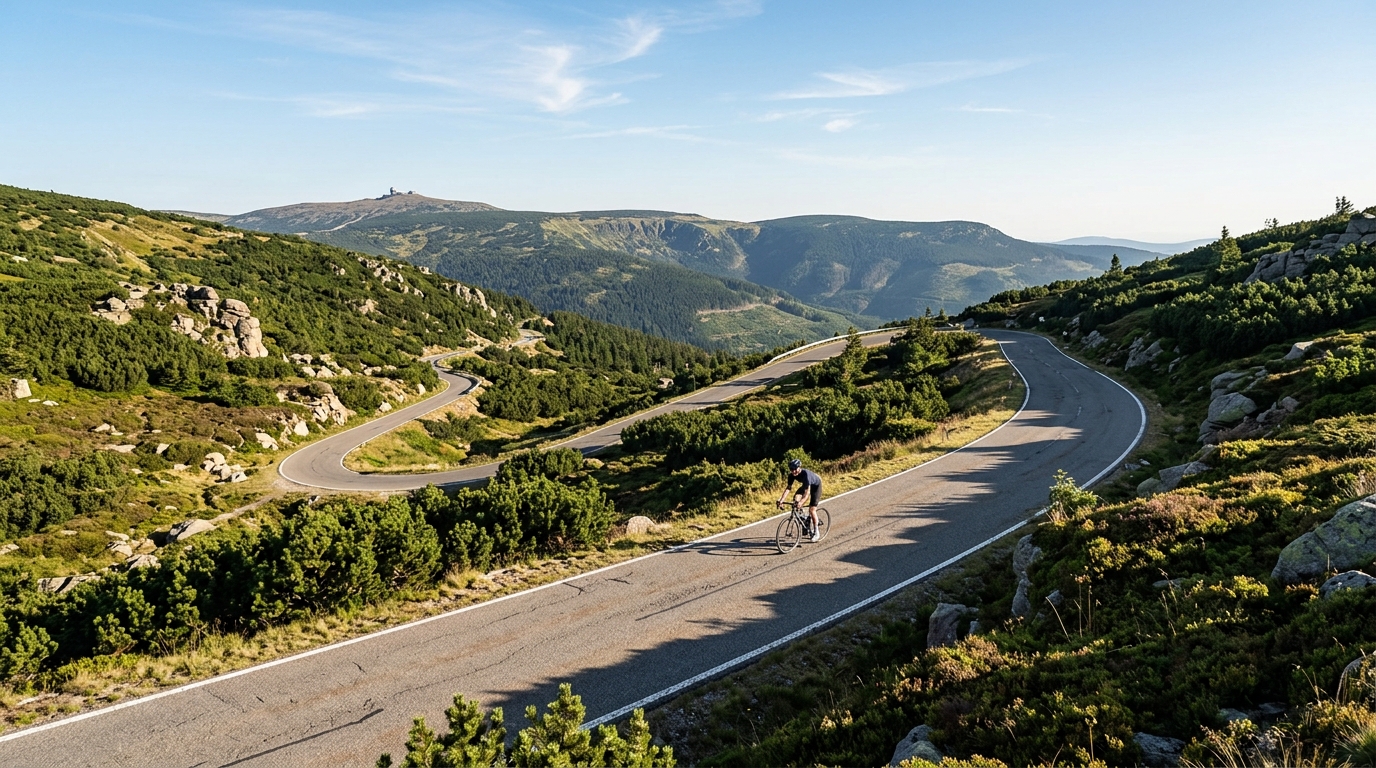
Karkonosze Pass
A measured guide to the Karkonosze Pass cycling climb: 17.7 km at 5.33%, with steep ramps reaching 14.66% on the way to 1287 m.
- Length
- 17.7km
- Avg
- 5.3%
- Max
- 14.7%
- Summit
- 1,287m
- Ascent
- 929m
The climb
Gradient profile
Karkonosze Pass cycling climb profile
Karkonosze Pass is a category 1 climb in Czechia that asks for patience more than aggression. The headline numbers are substantial: 17.7 km from a start elevation of 346 m to a summit elevation of 1287 m, with 941 m of net elevation gain. The average gradient is 5.33%, but the maximum gradient of 14.66% is the number that should shape how you ride it.
That combination matters. A climb averaging 5.33% over 17.7 km is not simply a wall from bottom to top. It is long enough that the cost of riding above threshold early compounds, but irregular enough that the steepest sections can punish anyone who treats the average as the full story. The profile data points to a climb where the sustainable effort is moderate, yet the decisive moments are likely the ramps where cadence drops and torque demand rises.
How the gradient unfolds
From bottom to summit, the climb gains steadily enough to produce nearly a kilometre of vertical change. The 5.33% average means much of the ascent can be ridden at a controlled climbing rhythm, but the 14.66% maximum gradient means there are moments where pacing has to shift from smooth aerobic climbing to damage limitation.
The key is not to chase speed early. On a climb this long, the first priority is keeping the effort below the level that forces repeated surges. If you ride the opening kilometres as if the whole climb is only the average gradient, the steeper pitches later in the ascent will feel much harder than their numbers suggest because they arrive on accumulated fatigue.
Pacing and gearing notes
Treat Karkonosze Pass as a long threshold-management climb. If using power, anchor the ride around a sustainable effort near your known climbing pace rather than responding to every change in gradient. The ramps up to 14.66% are where you should allow power to rise briefly, but not so much that you need a long recovery afterward. For context on setting that ceiling, see /glossary/ftp.
Gearing should be conservative. The average gradient may look manageable, but the maximum gradient demands a low enough gear to keep cadence from collapsing on the steepest ramps. If your easiest gear only works on steady moderate gradients, it is probably not low enough for the hardest parts of this climb.
The best ride here is controlled, not spectacular. Settle into the 17.7 km duration, respect the nearly continuous gain from 346 m to 1287 m, and save enough margin for the sections where the road reaches well beyond the average.