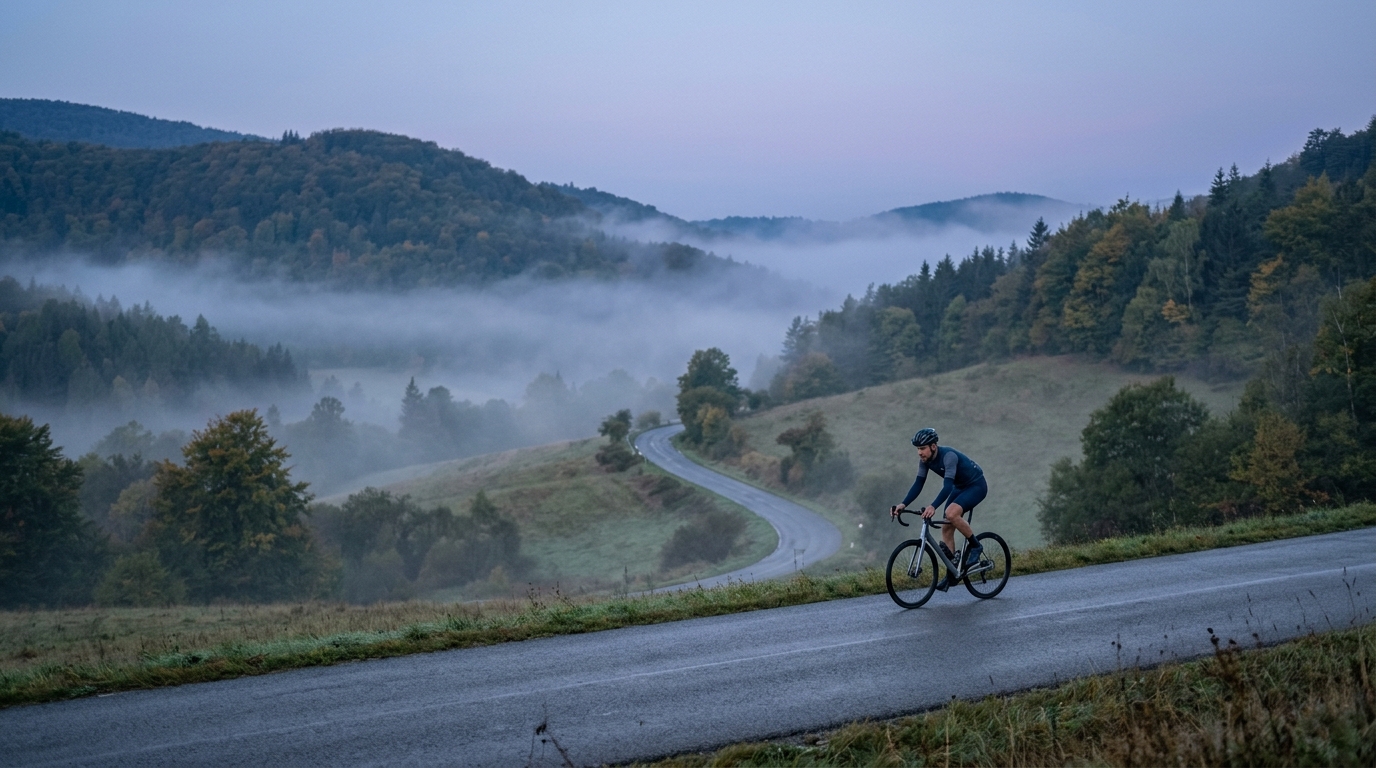
Dukla Pass
A short category 4 ascent in SK: 2.8 km at 5.8%, with enough double-digit gradient to punish riders who start too hard.
- Length
- 2.8km
- Avg
- 5.8%
- Max
- 10.4%
- Summit
- 449m
- Ascent
- 141m
The climb
Gradient profile
Dukla Pass cycling climb profile
Dukla Pass is a short, compact climbing effort rather than a long mountain grind. At 2.8 km with an average gradient of 5.8%, it sits in that awkward zone where it looks manageable on paper but can still bite if ridden like a false flat. The listed maximum gradient of 10.42% is the key detail. This is not a climb where the average tells the full tactical story.
The pass starts at 284 m and tops out at 449 m, giving a net elevation gain of 165 m. That makes it a category 4 climb by the supplied classification: short enough that strong riders will be tempted to force the pace from the bottom, but steep enough in places that an early surge can become expensive before the summit.
How the gradient unfolds
Without a detailed kilometre-by-kilometre profile, the safest way to read Dukla Pass is through the relationship between its average and maximum gradients. A 5.8% average over 2.8 km suggests a broadly moderate ascent, but the 10.42% maximum means the climb contains sharper ramps that sit well above the overall mean.
That matters because the climb will not ride like a perfectly even 5.8% drag. If it did, pacing would be simple: settle into threshold, hold cadence, and carry speed over the top. The maximum gradient changes that equation. Any double-digit pitch will increase torque demand, especially if it arrives after an already sustained effort. Riders who enter the climb overgeared or already above target intensity will have less room to absorb those ramps.
Pacing and gearing notes
For a climb this short, the main error is treating the opening as free speed. The total distance is only 2.8 km, so the temptation is to attack the climb immediately. That works only if the effort is controlled enough to handle the steeper sections without a major cadence drop.
Practical approach:
- Start just below your target climbing effort, especially if riding by /glossary/ftp.
- Shift early before the steepest ramps, rather than waiting until cadence has already fallen.
- Keep one gear in reserve for the 10.42% maximum gradient.
- If racing, the decisive move is more likely to come on the steepest pitch than on the average gradient.
A compact or climbing-friendly setup makes sense for most riders, not because Dukla Pass is long, but because the steepest gradients are where efficiency disappears fastest. On a short category 4 climb, losing momentum for even a small section can cost more than the raw distance suggests.
Riding takeaway
Dukla Pass is best paced as a short sustained climb with interruptions above its average gradient. The winning strategy is restraint early, smooth cadence through the ramps, and a controlled acceleration once the summit is clearly within reach. The numbers say it is not a major mountain, but they also say it is steep enough to punish sloppy pacing.