Climb library · Tajikistan
Cycling climbs in Tajikistan
Tajikistan is a climbing destination measured in thin air and sheer remoteness. With two catalogued climbs and summits reaching 4,658 metres, this is high-altitude riding at its most uncompromising, where the road tips upward for kilometre after kilometre and the horizon stays stubbornly out of reach. None of the ascents here carry an hors catégorie label, yet the sustained altitude alone makes every pedal stroke a test of lungs and patience.
The two marquee climbs anchor the country's reputation. The Ak-Baital Pass is the crown jewel, a lung-searing haul into rarefied heights that leaves riders gasping for the summit. The Anzob Pass offers its own brand of punishment, a long grind through raw, weathered terrain. Together they define what it means to ride in Tajikistan: quiet, elevated, and utterly unforgiving.
Signature climbs of Tajikistan
All climbs in Tajikistan
4 climbs
The complete guide to climbing in Tajikistan
The Riding
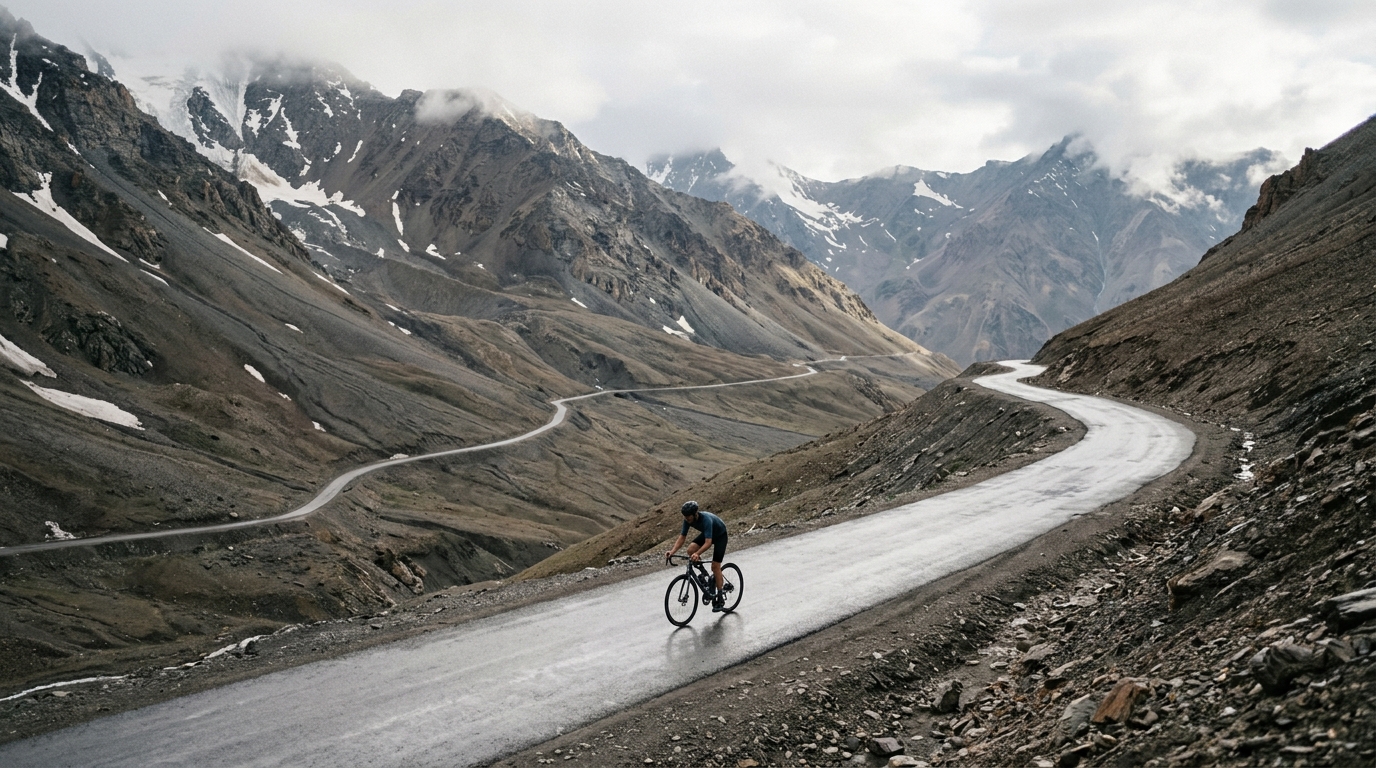
Cycling in Tajikistan is defined by one overwhelming factor: altitude. This is a country of thin air and long, patient ascents, where the road climbs not toward a single dramatic summit but onto vast high plateaus that sit far above the tree line. With a highest catalogued summit reaching 4658 m, the riding here belongs to a rarefied category. The challenge is rarely a wall of savage gradient; instead it is the accumulation of thousands of metres of vertical gain undertaken while the body fights for oxygen.
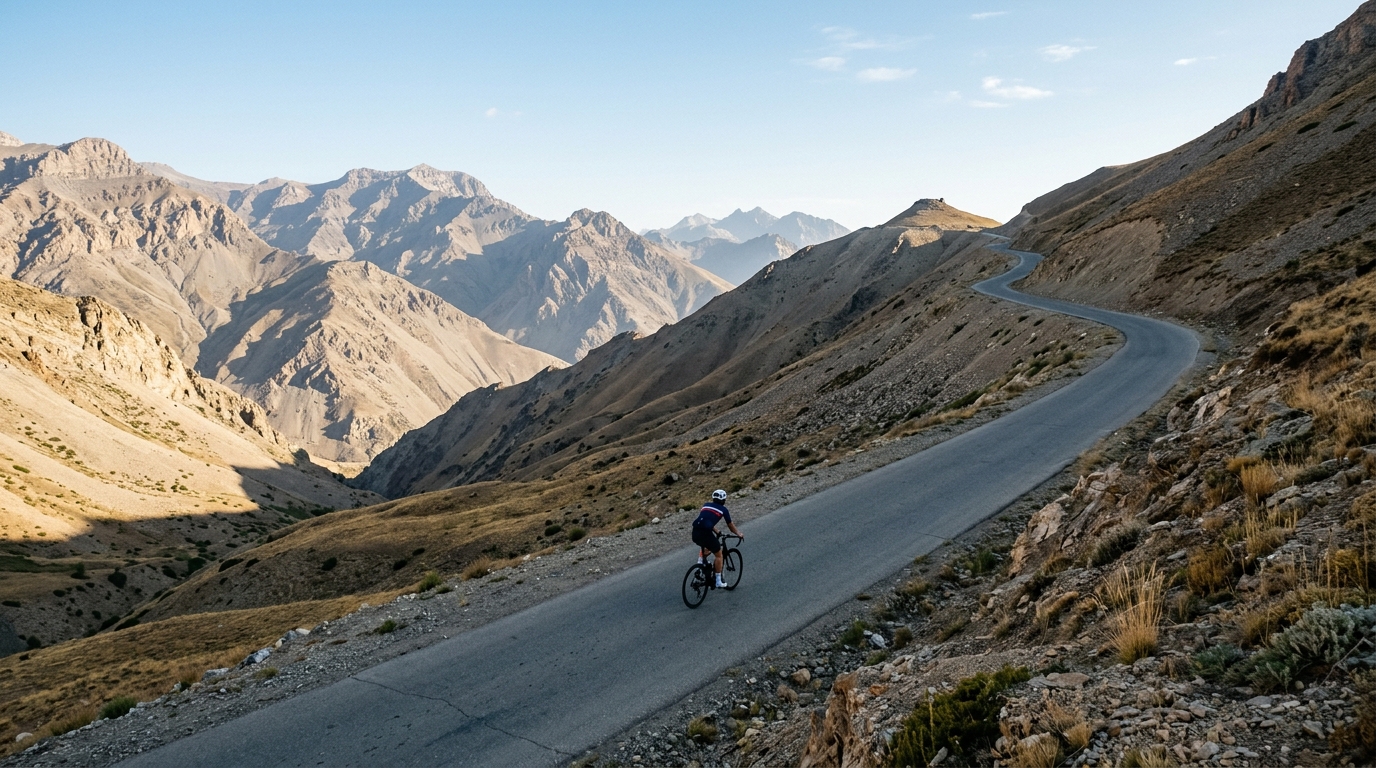
The character of the climbing is one of scale and endurance rather than punchy steepness. Roads unspool across arid, treeless terrain, and gradients tend to be sustained and manageable rather than punishing. What makes them formidable is the sheer height at which they unfold and the length of time a rider spends turning the pedals with lungs working overtime. There are 2 catalogued climbs in Tajikistan and, tellingly, 0 of them are rated hors catégorie. That statistic captures the truth of the place well: these are not climbs that overwhelm through gradient, but through the relentless, high-altitude grind that defines every kilometre.
Because the network of major named ascents is small, the riding rewards preparation over improvisation. A rider who arrives fit, acclimatised and self-sufficient will find the terrain generous in its beauty and severe in its demands.
Standout Climbs
The two catalogued climbs of Tajikistan bookend the experience of riding here.
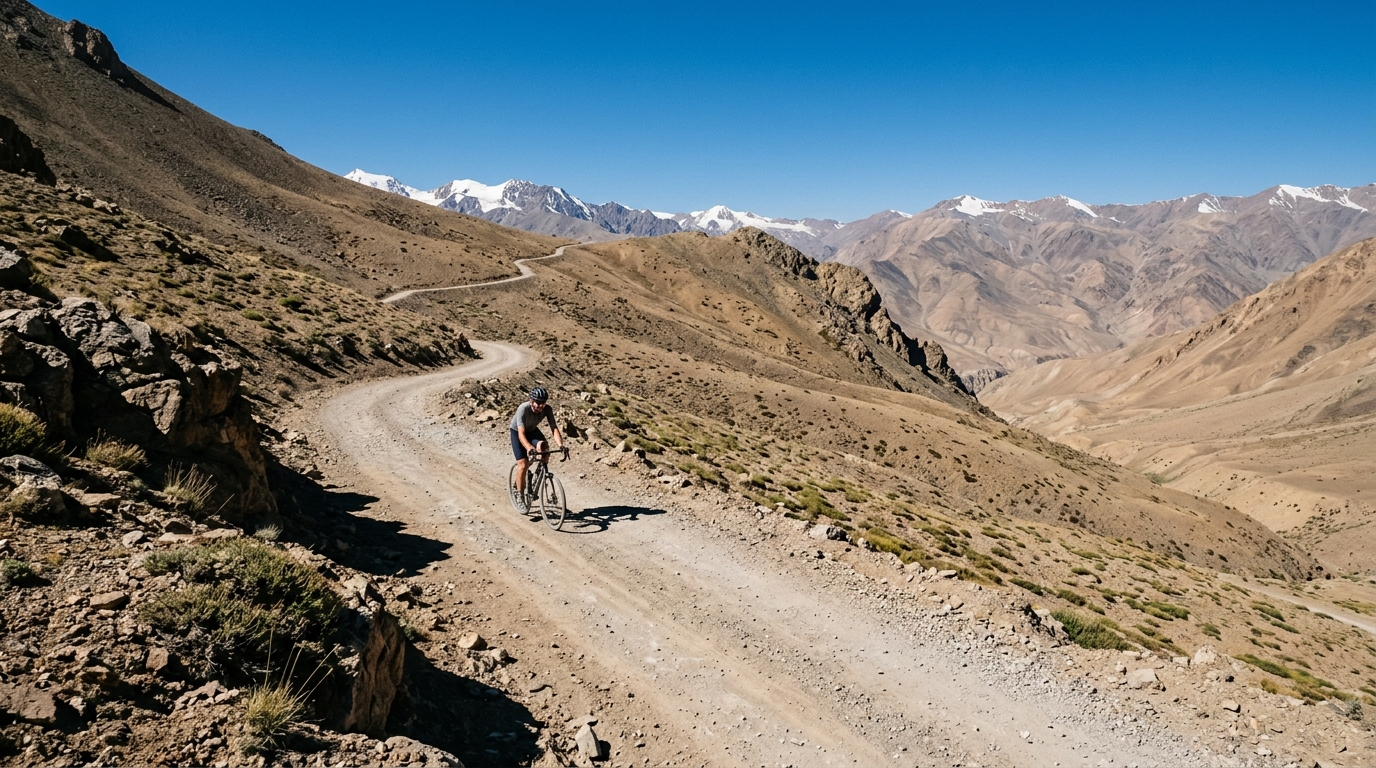
The Ak-Baital Pass is the country's high point and its defining ascent, topping out at the highest summit in the catalogue. This is climbing in its most stripped-back form: a long haul into rarefied air where the altitude does the work that gradient does elsewhere. Riders reaching the top have earned a place among the highest paved passes a cyclist can attain, and the effort is measured as much in breaths as in watts.
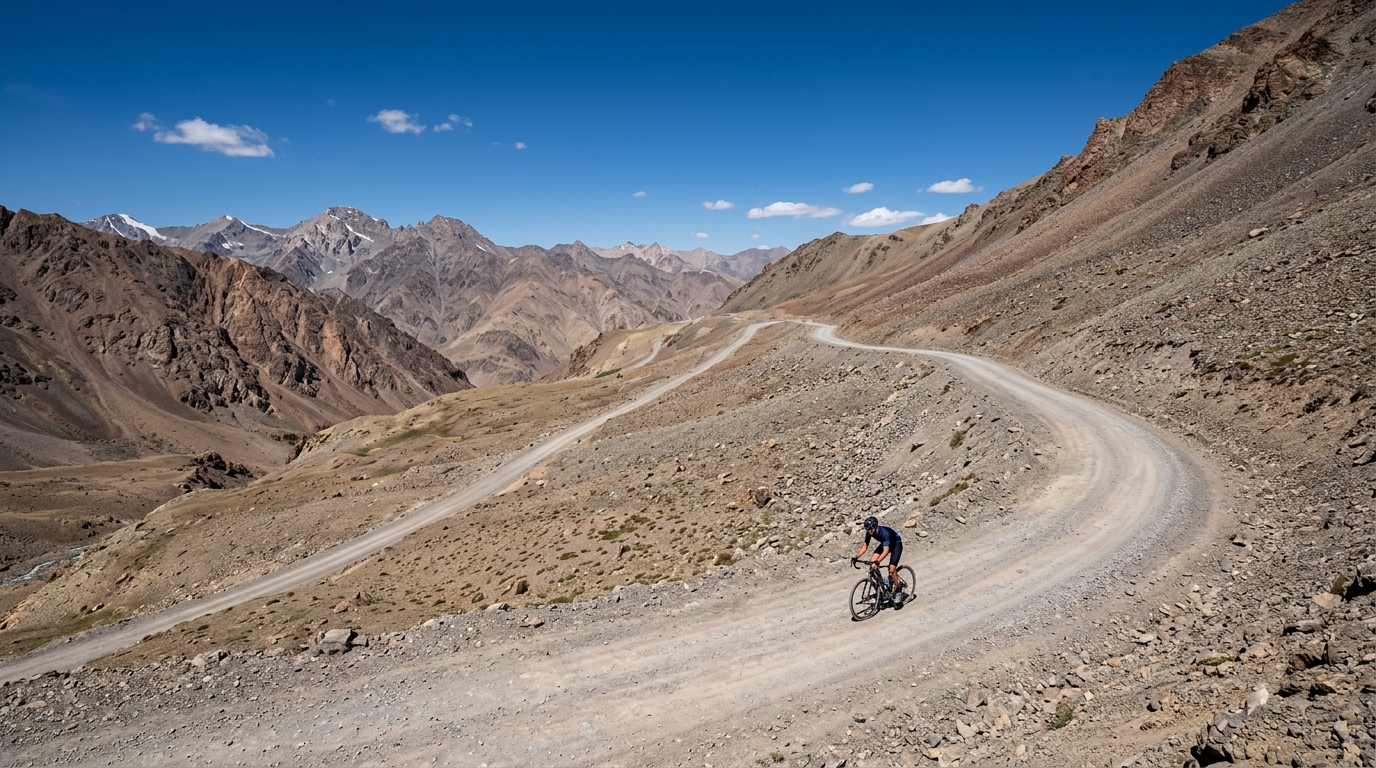
The Anzob Pass offers a different flavour of the same high-mountain riding. It is a substantial ascent in its own right, a sustained pull that rewards steady rhythm and patience. Together, Ak-Baital Pass and Anzob Pass form the backbone of any cycling itinerary built around Tajikistan's climbs, each demanding respect for the height and the exposure that come with riding at elevation.
When to Ride
Season selection matters enormously here, and it is dictated by altitude far more than by latitude. The high passes are only reliably rideable in the warmer months, when snow has retreated from the upper slopes and the roads are clear. Summer is the window: it offers the longest days, the most settled conditions, and the best chance of finding the highest sections free of snow and ice.
Even at the height of summer, riders should expect sharp temperature swings. At the elevations involved on the Ak-Baital Pass in particular, mornings and evenings can be bitterly cold even when the midday sun is strong. Weather at altitude changes quickly, and a clear start can give way to wind and cold within hours. Riding outside the summer window risks encountering snow-blocked roads and dangerous cold on the exposed high ground, so the shoulder seasons are best left to the well-equipped and experienced.
Practical Notes
The single most important consideration is acclimatisation. With the highest summit at 4658 m, altitude sickness is a genuine risk, and no amount of fitness substitutes for spending time adjusting to the elevation before tackling the biggest climbs. Build in days to acclimatise, ascend gradually, and listen to your body.
Self-sufficiency is the second pillar. The terrain is arid and exposed, and long stretches of climbing pass through country with few services. Carry more water and food than you think you need, along with layers for the cold that arrives at altitude regardless of the season. Effective sun protection is essential; the combination of thin air and open, treeless terrain makes for fierce exposure.
Mechanical self-reliance rounds out the picture. On climbs as remote and high as the Ak-Baital Pass and the Anzob Pass, help can be a long way off, so carry the tools and spares to handle common problems yourself, and choose gearing low enough to spin comfortably when the air is thin.
Summary
Tajikistan is a destination for the altitude-hungry cyclist. Its 2 catalogued climbs, with none rated hors catégorie and a high point of 4658 m, tell the story clearly: the difficulty here comes from height and endurance rather than ferocious gradient. The Ak-Baital Pass stands as the crowning ascent, with the Anzob Pass as its formidable companion. Ride in summer, acclimatise properly, pack for cold and self-sufficiency, and Tajikistan rewards you with some of the highest, most memorable climbing a cyclist can experience.
Looking for full rides in Tajikistan?
Routes in Tajikistan