Climb library · Lesotho
Cycling climbs in Lesotho
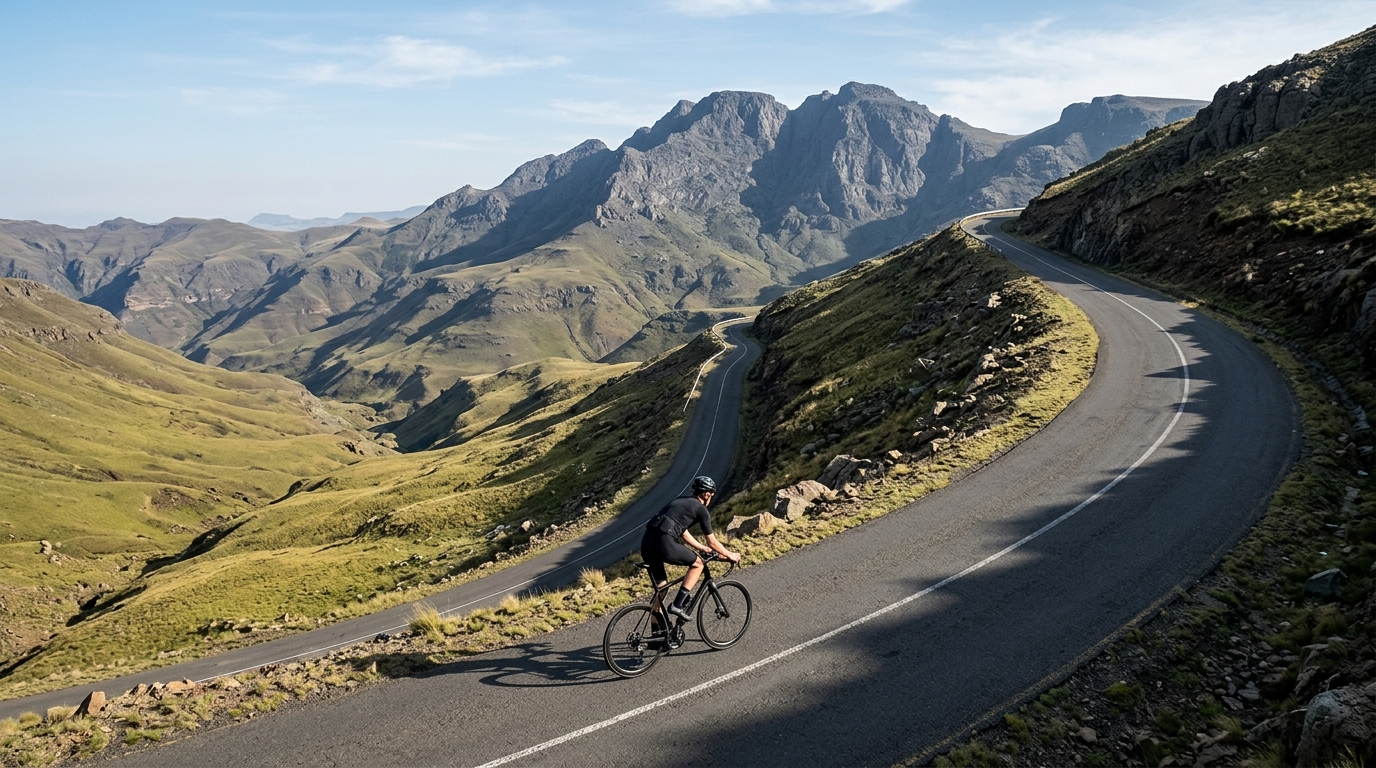
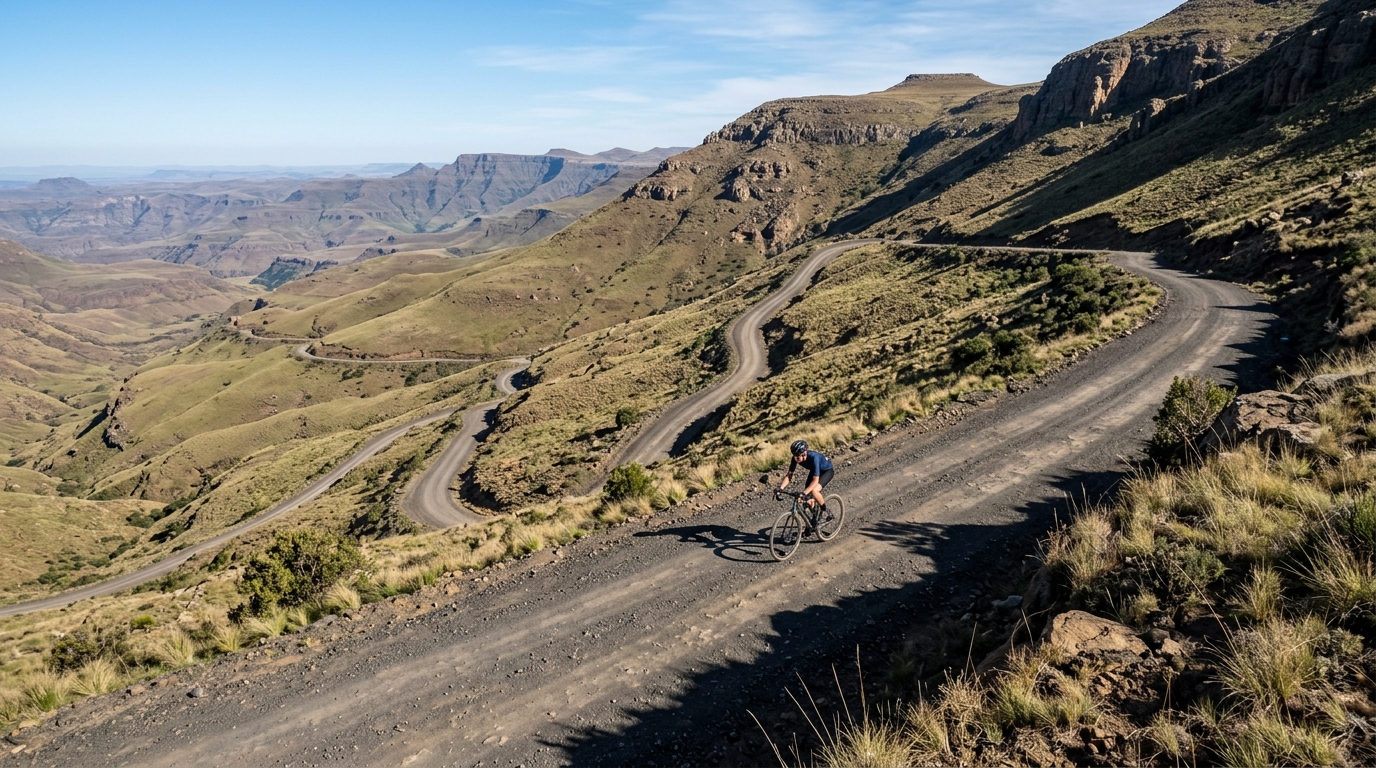
Perched at the roof of southern Africa, Lesotho is a country built for climbing. Its roads rarely stay level for long, threading upward through thin mountain air toward a highest catalogued summit of 2,818 metres. With three climbs on the map, this is a compact but demanding destination — one where altitude, not just gradient, defines the effort. Riders come here for the sensation of pedalling above the clouds, on passes that reward patience with vast, open horizons.
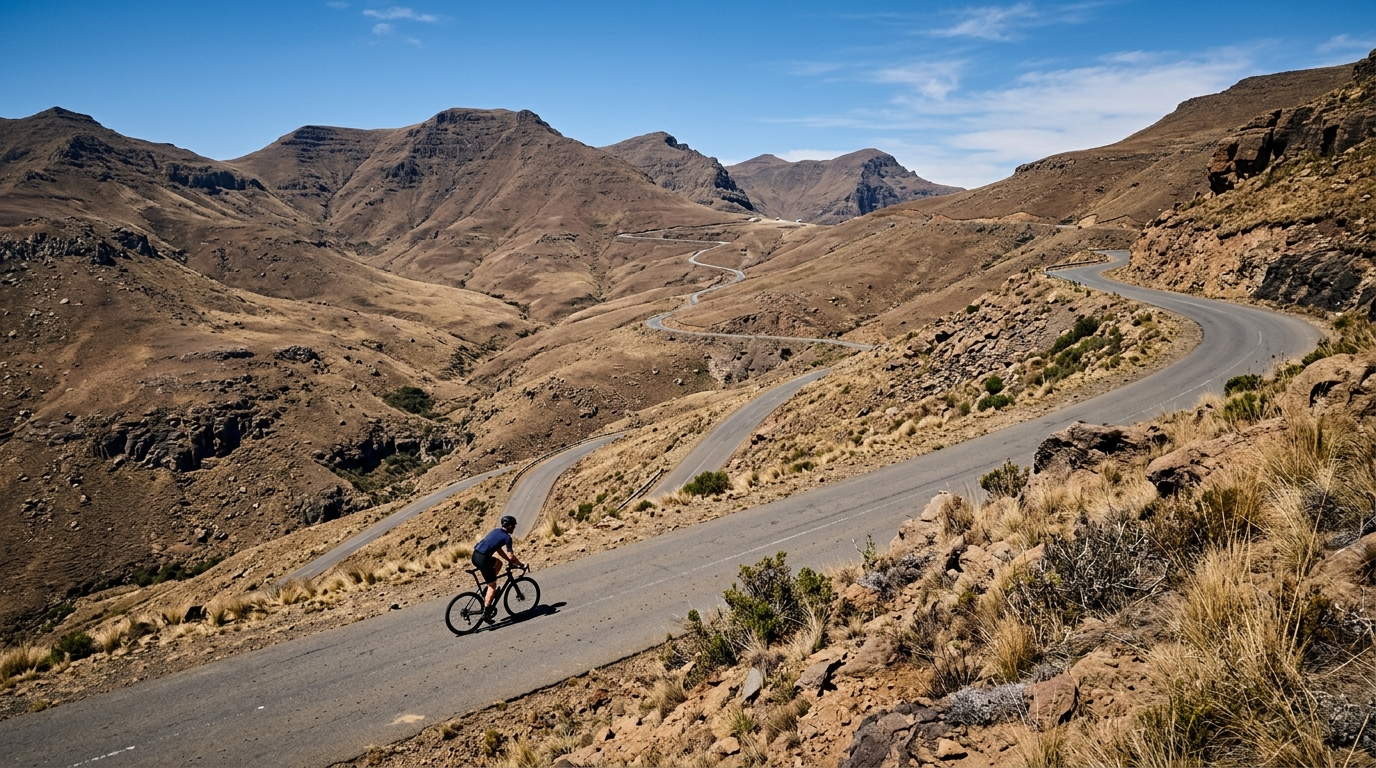
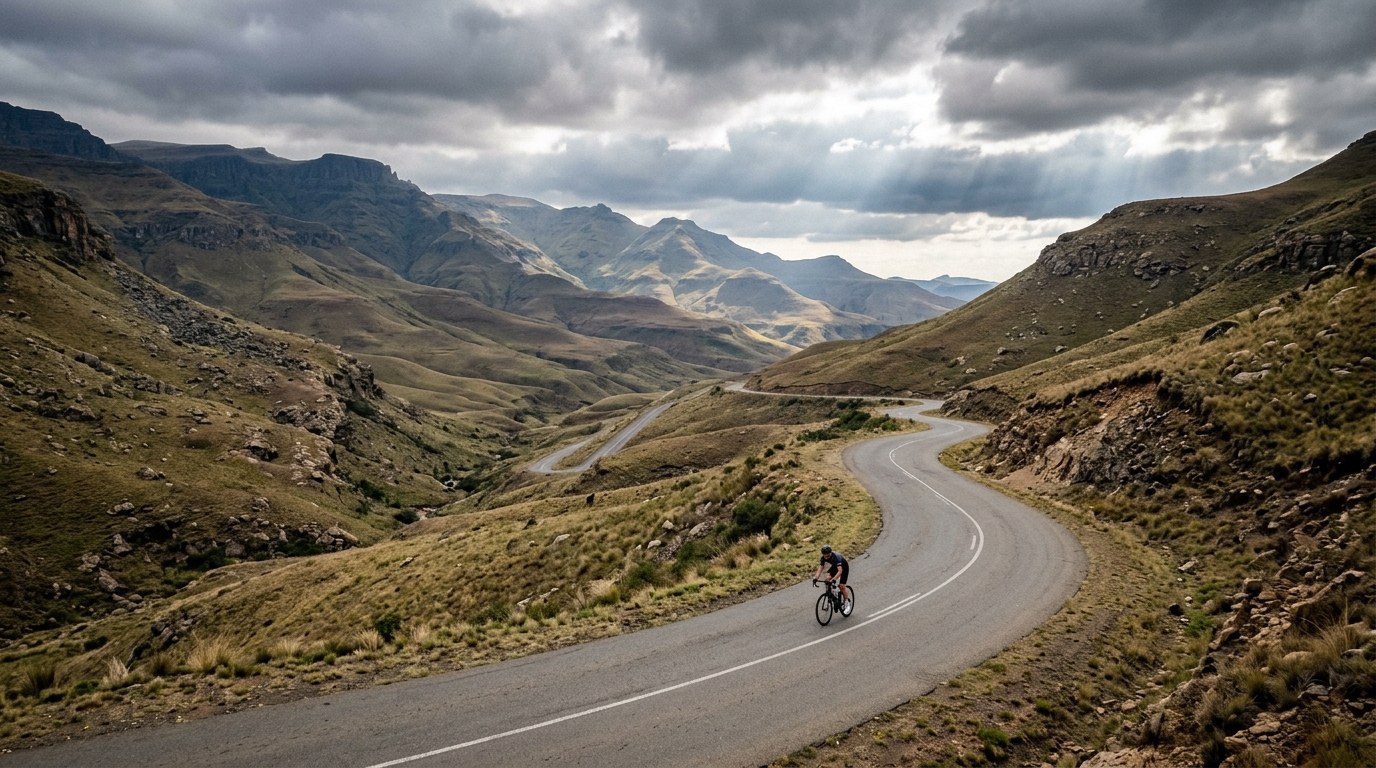
The marquee ascents give the country its character. Mahlasela Pass draws those chasing high-altitude legend, while God Help Me Pass hints at the suffering promised by its name. Qacha's Nek rounds out the trio, a gateway climb in the country's remote reaches. None ranks as hors catégorie, yet the sheer elevation makes every metre count. For cyclists seeking somewhere genuinely different, Lesotho offers climbing at the edge of the sky.
Signature climbs of Lesotho
All climbs in Lesotho
5 climbs
The complete guide to climbing in Lesotho
The Riding
Lesotho is a climber's country in the most literal sense. There is almost nowhere in it that sits low, and cycling here means spending your day well above the altitudes most riders ever touch. The catalogue is small but concentrated: three catalogued climbs, none of them hors catégorie, yet every one of them demands respect. The reason is not raw gradient alone but the thin air. With the highest summit reaching 2818 m, even a moderate ramp feels harder than the same slope would at sea level, and pacing becomes the single most important skill you bring.
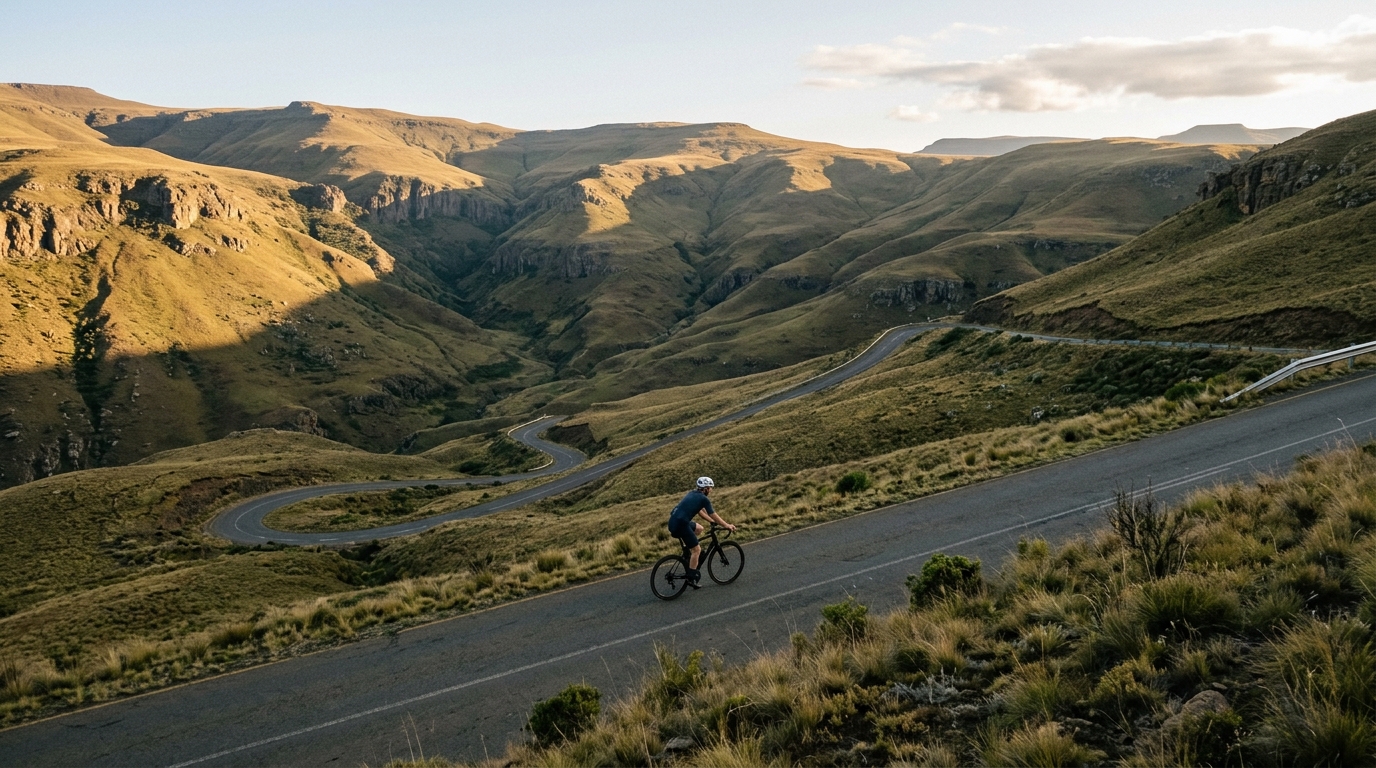
The character of the riding is defined by sustained, honest effort rather than short savage pitches. These are pass roads that lift you methodically from valley floors to high saddles, and the length of the ascents matters as much as the steepness. You settle into a rhythm, watch your breathing, and let the altitude set the ceiling on your power. Descents are long and cold, and the scale of the terrain around you is vast and open. This is not a place for chasing personal bests on a single steep wall; it is a place for endurance, patience, and the quiet satisfaction of gaining height in a landscape that never seems to stop rising.
Standout Climbs
Three climbs anchor any cycling itinerary in Lesotho, and together they capture the range of what the country offers.
Mahlasela Pass is the high-altitude showpiece. It is the kind of ascent where the effort is governed less by the pitch of the road and more by the elevation you are working at, and it rewards riders who climb within themselves and keep something in reserve for the upper slopes.
God Help Me Pass earns its name honestly. It is the climb riders talk about afterwards, a sustained test that asks for both fitness and resolve. The name is a warning and an invitation in equal measure, and clearing it is a genuine achievement.
Qacha's Nek rounds out the trio, a pass climb that gives you the same long, deliberate style of ascent that defines riding across Lesotho. It is a fitting companion to the other two and a worthy objective in its own right.
None of these three carries an hors catégorie rating, which can mislead riders into underestimating them. In Lesotho the numbers on paper never tell the whole story; the altitude quietly raises the difficulty of everything.
When to Ride
Timing matters more here than in gentler cycling countries because of the height. At these elevations conditions can turn quickly and cold, and the same road that is a pleasure on a clear, still day becomes a serious undertaking when the weather closes in. Aim for the warmer, drier stretches of the year, when daytime temperatures are more forgiving and the passes are most reliably rideable. Even then, plan around the middle of the day, start climbs with time in hand, and be ready to turn back if the sky changes. The long descents that follow every summit are where the cold bites hardest, so a good day is one where you top out with plenty of daylight and settled weather still ahead of you.
Practical Notes
Prepare for altitude first and foremost. If you are arriving from lower ground, give yourself time to acclimatise before attempting the highest of the passes, and do not be surprised when your usual power feels out of reach on the upper slopes of Mahlasela Pass. Gear low: bring easier ratios than you think you need, because the combination of length and thin air makes spinning far more sustainable than grinding.
Carry proper layers. The summits are cold even in the warmer season, and descents from height demand a windproof shell and something for your hands. Water, food, and self-sufficiency matter on these long pass roads, where the effort is spread over hours rather than minutes. Above all, ride conservatively. The three catalogued climbs here — Mahlasela Pass, God Help Me Pass, and Qacha's Nek — reward measured pacing far more than aggression, and the mountain always has the final say.
Summary
Lesotho offers a small, focused set of cycling climbs whose difficulty comes chiefly from altitude and sustained length rather than extreme gradient. With three catalogued ascents, no hors catégorie climbs, and a high point of 2818 m, the country rewards patient, well-paced riders. Mahlasela Pass, God Help Me Pass, and Qacha's Nek together make Lesotho a destination for anyone who wants to test their endurance in the thin, high air of a country built almost entirely of climbs.
Looking for full rides in Lesotho?
Routes in Lesotho