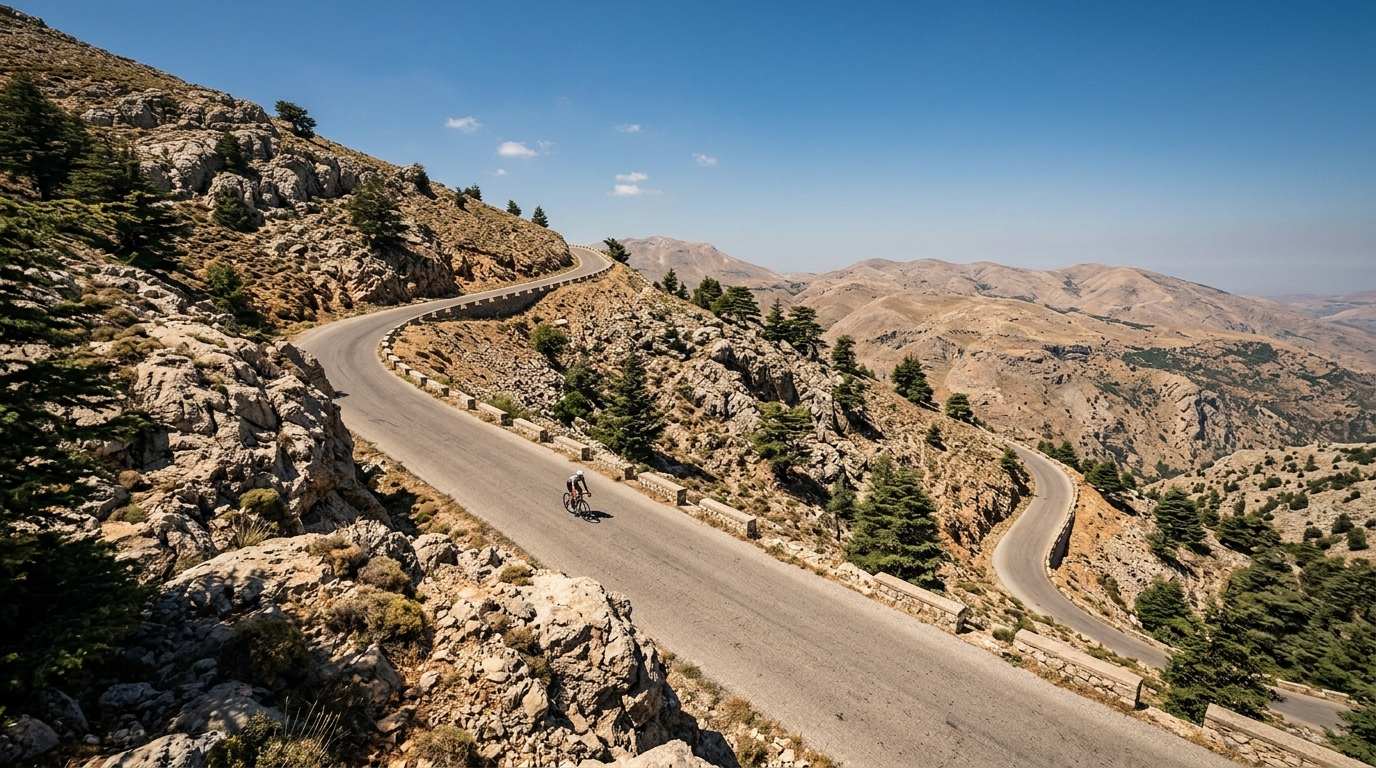
Climb library · Lebanon
Cycling climbs in Lebanon
Lebanon packs a surprising amount of vertical gain into a small footprint, and its two catalogued climbs invite riders to trade coastal heat for cooler mountain air. Roads tilt upward quickly here, carrying you from lowland warmth toward a high point of 1,923 metres. Neither ascent is rated hors catégorie, which makes Lebanon an approachable proving ground for climbers building form rather than chasing brutal, race-defining gradients.
The marquee routes give the country its character. The Cedars draws riders into the storied high country, while Mzaar Kfardebian offers a steady haul toward altitude that rewards patience over raw power. With just two climbs on the map, Lebanon feels intimate and focused, a place where you can learn every switchback and return to sharpen your pacing on ground that never quite lets you settle into cruise control.
Signature climbs of Lebanon
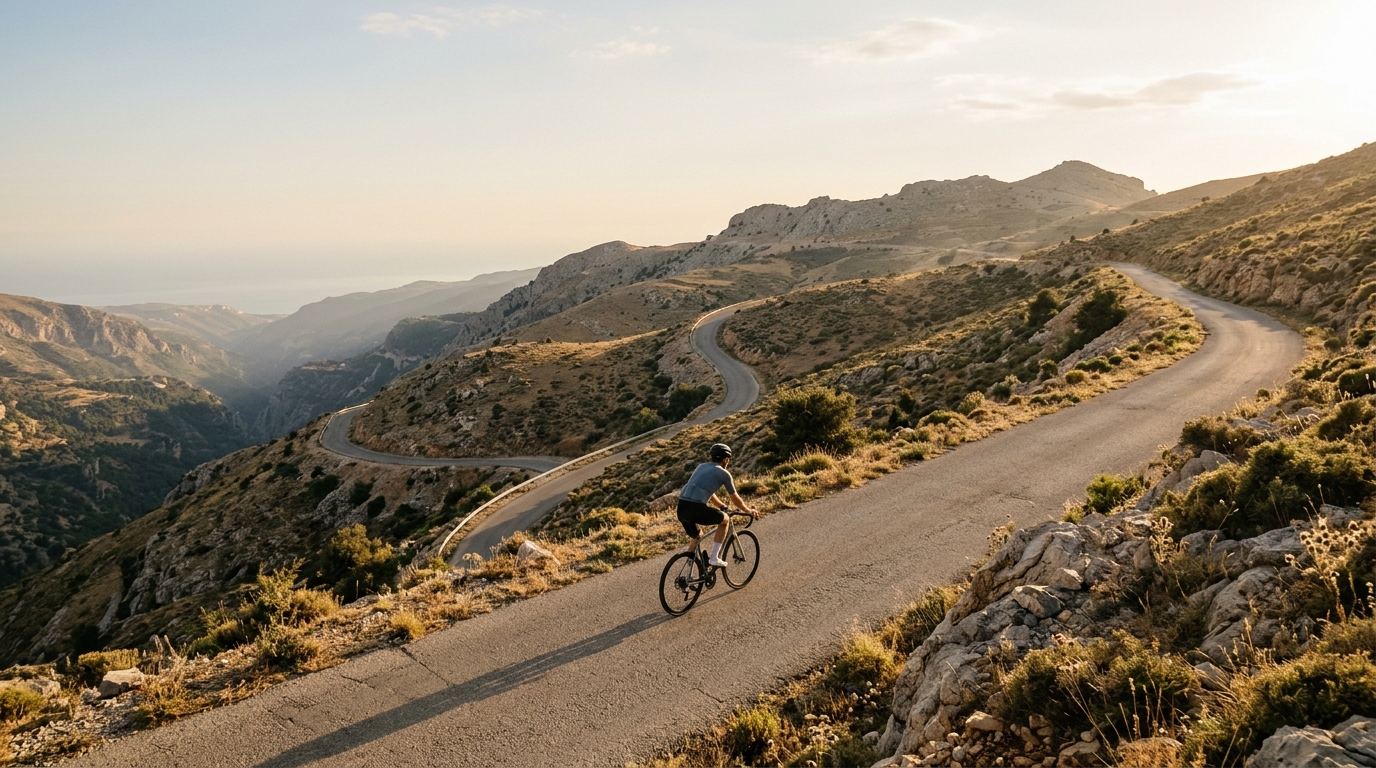
All climbs in Lebanon
2 climbs
The complete guide to climbing in Lebanon
The Riding
Lebanon is a small country that stacks its terrain vertically, and that makes it a genuinely rewarding place to ride uphill. The road cycling here is defined by mountains that rise sharply from the coast, so climbs tend to begin almost as soon as you turn inland and keep gaining height for a long time. Two climbs are currently catalogued in Lebanon, and while neither carries an hors catégorie rating, both are substantial efforts that ask for patience, pacing and respect for altitude.
The character of Lebanese climbing is one of sustained elevation rather than short, punchy walls. With the highest catalogued summit sitting at 1,923 m, you are frequently riding into thinner air, where the effort compounds and where the temperature and light shift noticeably as you gain height. These are the sorts of ascents where a steady rhythm and a sensible gear choice matter more than raw power, and where the reward is the long, open view that comes with reaching the top of a mountain road.
Because the catalogue here is focused rather than sprawling, riders can treat Lebanon as a place to target specific, memorable climbs rather than to chain together dozens of anonymous ones. That focus is part of the appeal: each of the two climbs is a destination in its own right.
Standout Climbs
The Cedars is the headline ascent and the reason many cyclists point their wheels toward the mountains in the first place. It is a high climb that carries you well up into the range, and it rewards the effort with the sense of scale that only real altitude provides. Ridden patiently, it is one of the defining efforts in the country.
Mzaar Kfardebian is the second catalogued climb, and it offers another long pull into the high mountains. Like The Cedars, it is best approached as a sustained ascent where consistency wins out over aggression. Together, these two climbs form the backbone of any Lebanese climbing itinerary, and completing both gives a rider a strong feel for what the country's mountains have to offer.
With only two catalogued climbs, planning is simple: you can build a trip, or a weekend, around riding both and giving each the attention it deserves rather than rushing between them.
When to Ride
Altitude drives the calendar in Lebanon. Because the high point of the catalogued climbs reaches 1,923 m, the upper stretches of these roads sit at elevations where conditions turn cold and wintry outside the warmer months. The most comfortable riding is found when the high ground is clear and the temperatures at altitude are manageable, which points toward the warmer, drier part of the year for tackling the summits.
Lower on the climbs, conditions are milder and the riding window is broader, but the summits are what define these ascents, so it is worth timing an attempt for when the top is genuinely accessible and pleasant. Early starts help on hot days, letting you gain the height before the sun is at its strongest and giving you the clearest air for the descent.
Practical Notes
Come prepared for a real mountain environment. Gaining more than a kilometre and a half of vertical over a single climb means packing layers: it can be warm at the bottom and distinctly cooler at 1,923 m, and a descent from that height will feel colder still. A wind layer or light jacket stowed for the top is sensible.
Gearing matters more than anything else. These are long, sustained ascents, so a climbing-friendly cassette will let you settle into a rhythm you can hold for the full length of the effort rather than burning out early. Carry enough food and water for a long time on the bike, since the upper reaches of a mountain road offer little in the way of resupply.
Finally, treat the descents with the same seriousness as the climbs. Long ascents mean long, fast descents where fatigue, cold and gradient combine, so keep something in reserve and ride the way down with attention.
Summary
Lebanon offers a compact but serious climbing menu: two catalogued ascents, no hors catégorie ratings, and a high point of 1,923 m. The Cedars and Mzaar Kfardebian are the country's defining climbs, both long, high efforts that reward steady pacing and good preparation. Come with the right gears, sensible layers and a warm-weather plan for the summits, and Lebanon delivers mountain riding that punches well above the size of its catalogue.
Looking for full rides in Lebanon?
Routes in Lebanon