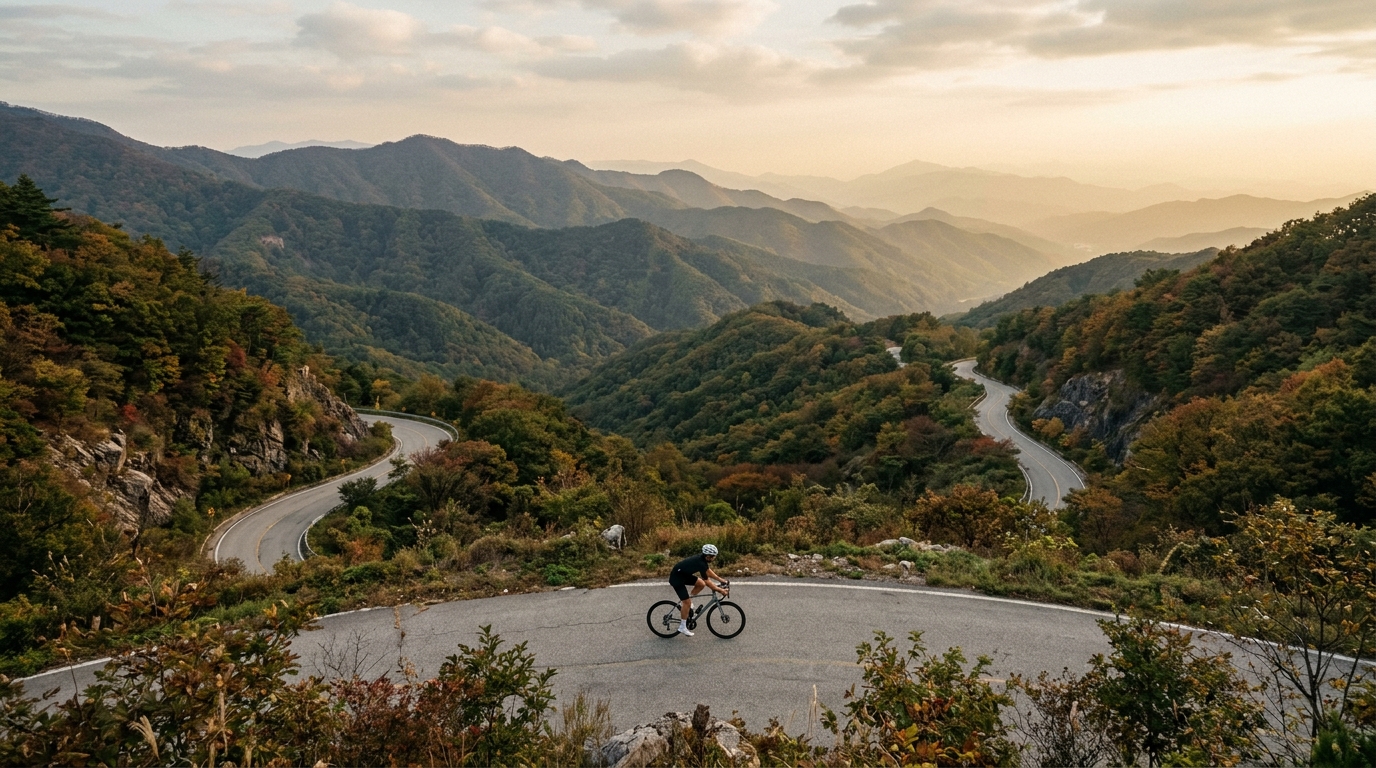
Climb library · South Korea
Cycling climbs in South Korea
South Korea rewards riders who like their mountains steady and rhythmic rather than savage. With four catalogued climbs and a highest summit reaching 843 metres, this is a place to settle into a cadence and let the road unspool. None of the ascents tip into hors catégorie territory, so the challenge here is less about survival and more about the long, sustained tempo effort that defines a good day in the saddle.
The country's marquee passes carry names worth chasing. Daegwallyeong is the standout, a broad mountain crossing that has become a rite of passage for local riders, while Jungnyeong and Maguryeong add character with their winding gradients. Paljoryeong rounds out the quartet, giving visitors a tidy list to tick off. For anyone building a focused climbing trip, South Korea packs plenty of vertical reward into a manageable handful of ascents.
Signature climbs of South Korea
All climbs in South Korea
7 climbs
- DaegwallyeongCat 2KR · 17.7 km · 4.7% · 815 m388pts
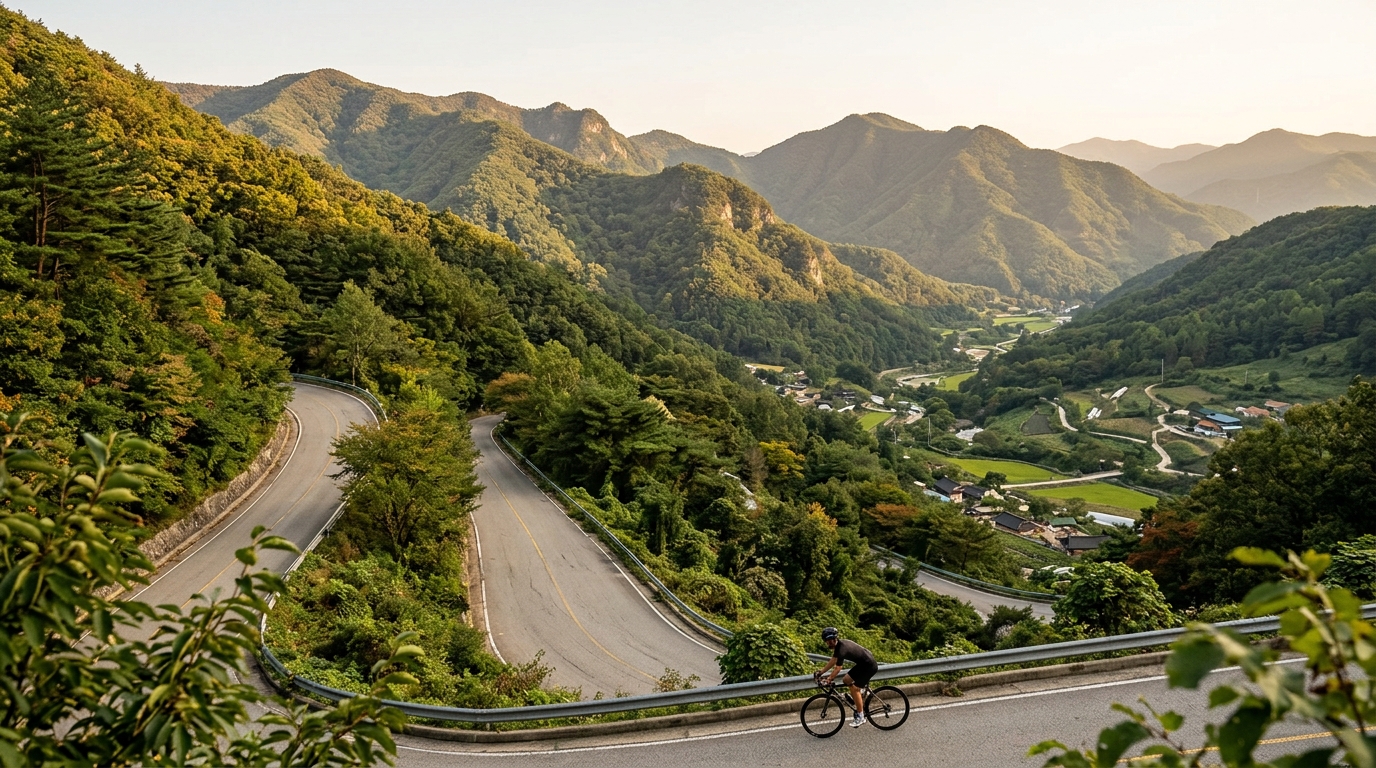 PaljoryeongCat 2KR · 3.6 km · 7.7% · 251 m212pts
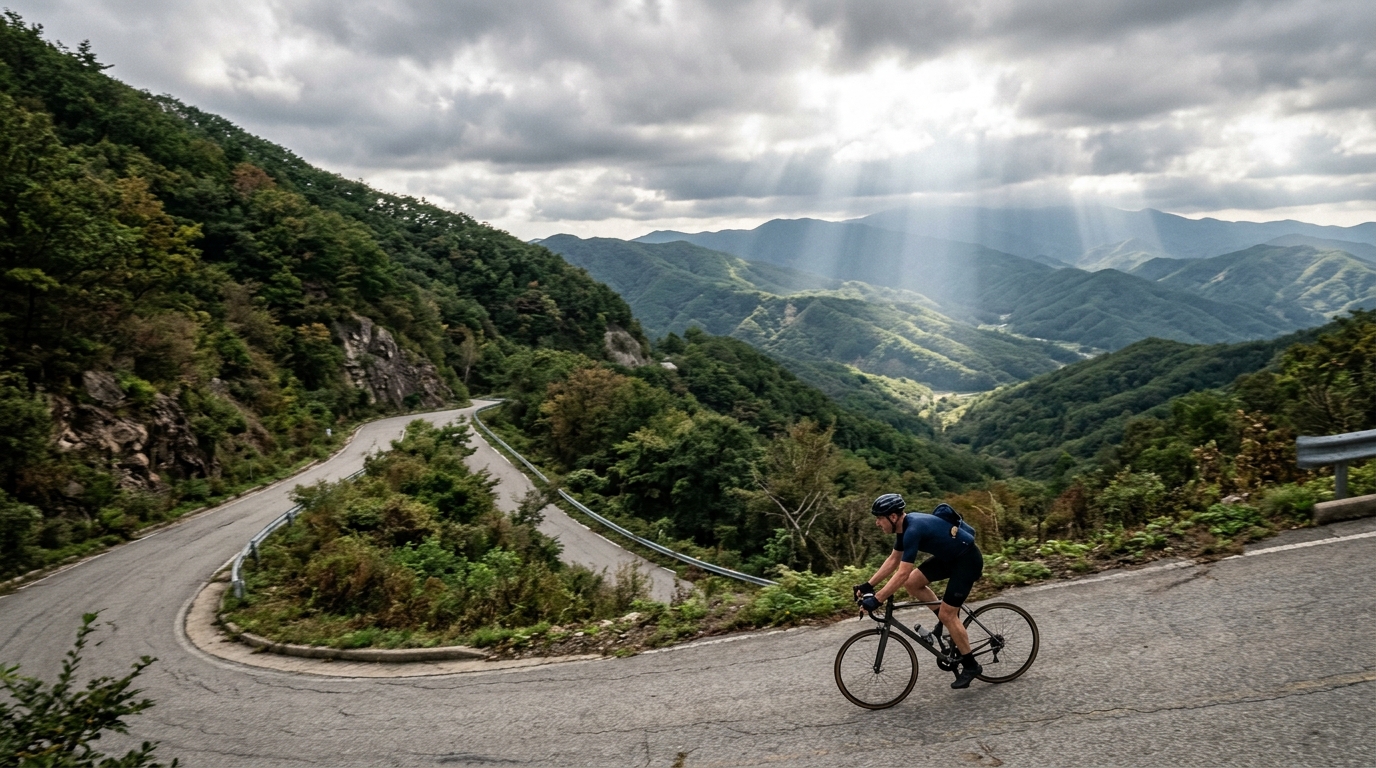 GombaeryeongCat 1KR · 5.0 km · 12.0% · 477 m710pts
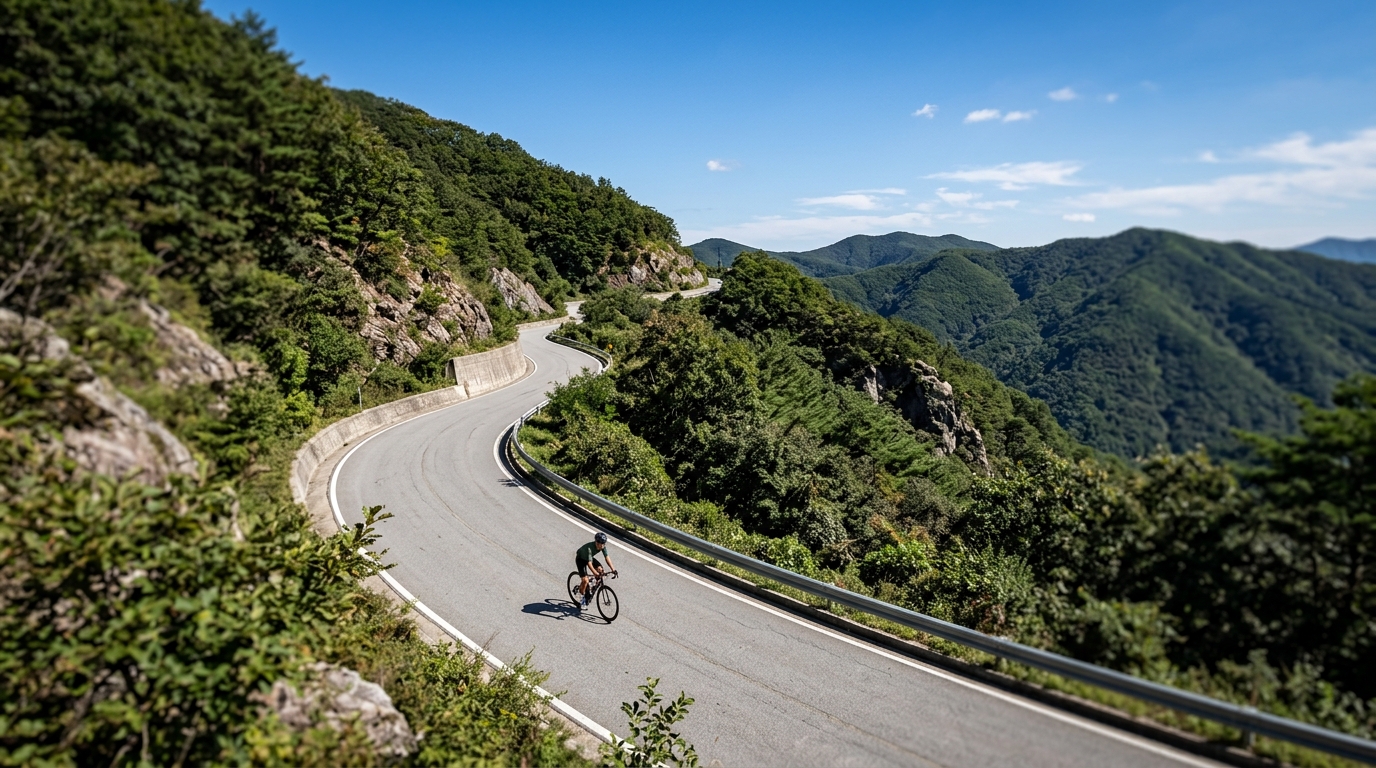 JungnyeongCat 1KR · 7.6 km · 8.0% · 580 m482pts
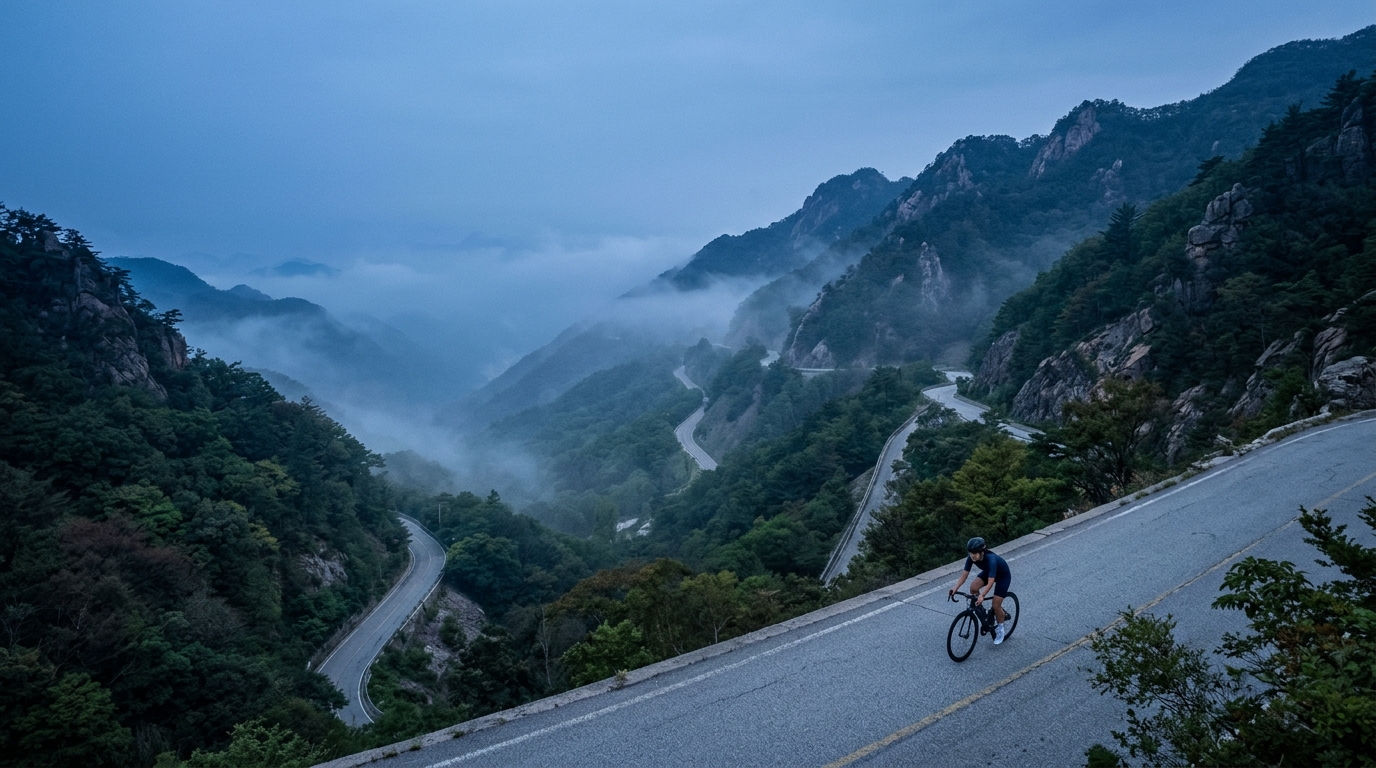 HangyeryeongCat 1KR · 18.0 km · 5.1% · 842 m461pts
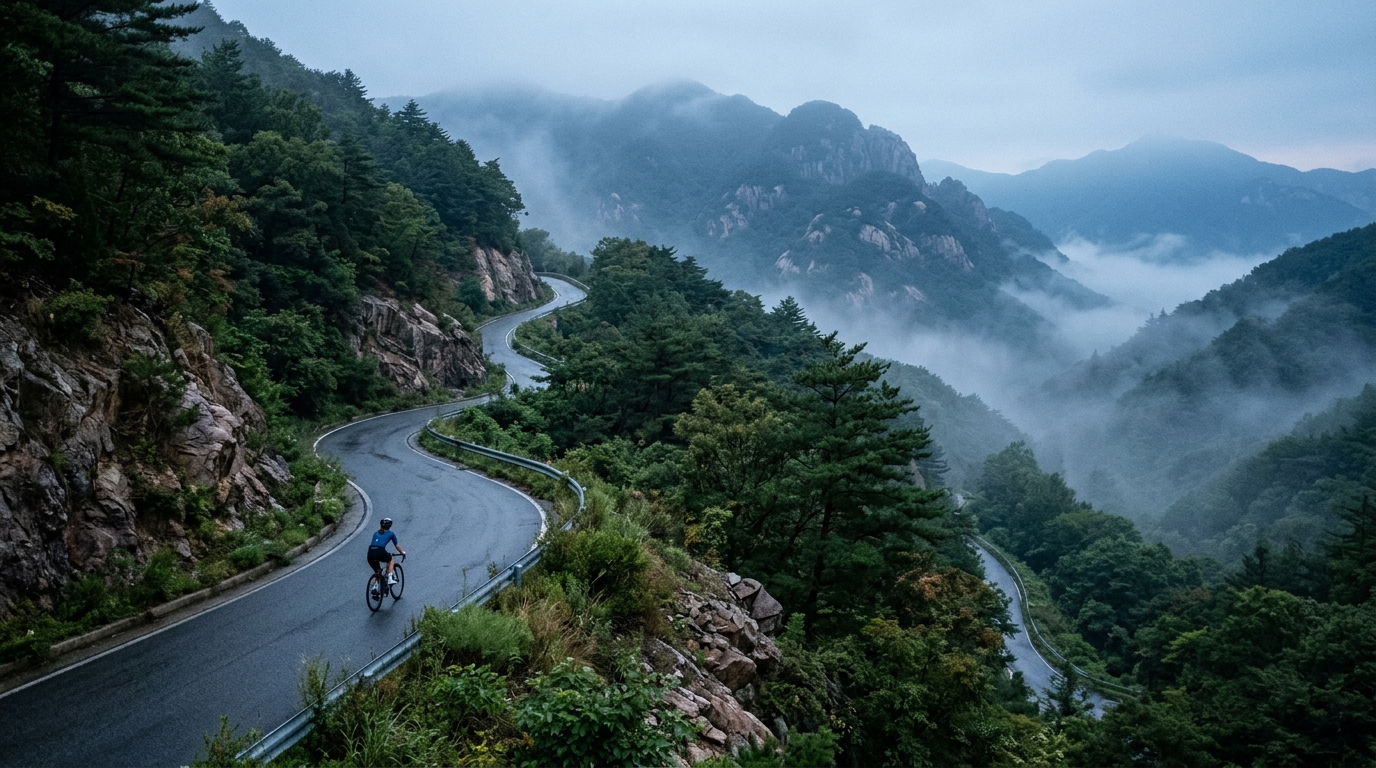 MaguryeongCat 2KR · 8.0 km · 6.0% · 456 m289pts
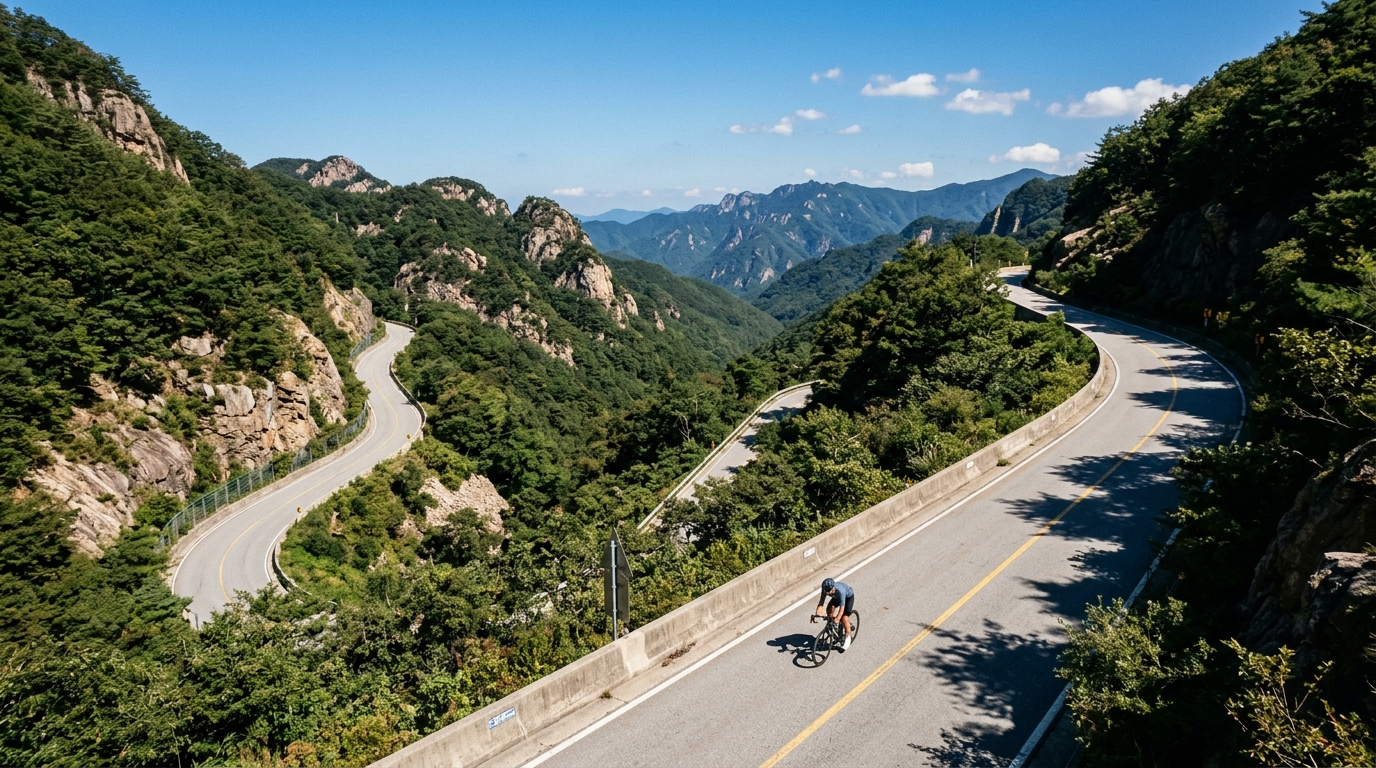 Ihwa-ryeongCat 2KR · 4.6 km · 6.7% · 176 m206pts
The complete guide to climbing in South Korea
South Korea is a compact but genuinely mountainous country, and for cyclists that translates into climbs that reward patience over raw altitude. There are no hors-catégorie monsters here — the catalogue runs to four ascents, and the highest summit tops out at 843 metres. What that number understates is the character of the riding: steady, wooded passes that thread through ridgelines rather than towering above the treeline. This is climbing measured in gradient and rhythm, not in the thin air of the high mountains.
The Riding
The defining feature of climbing in South Korea is the mountain pass. With a highest catalogued summit of 843 metres, none of these ascents push into genuine high-altitude territory, so you never have to worry about oxygen thinning out on the upper slopes. Instead, the challenge is the sustained work of grinding up a pass road, often for kilometre after kilometre, through forested slopes that offer shade in the heat and shelter from the wind. The four catalogued climbs share this personality: they are honest, road-based ascents where consistency of effort matters more than explosive power. With zero hors-catégorie climbs in the country, the emphasis falls squarely on climbs that a well-prepared amateur can take on, even if the longer passes demand real staying power. Expect gradients that settle into a workable rhythm rather than the brutal double-digit walls of the highest European cols.
Standout Climbs
The four catalogued climbs form the backbone of any South Korean climbing itinerary.
Daegwallyeong is the headline ascent — a long, storied mountain pass that has become synonymous with climbing in the country. Its reputation rests on sustained length and elevation gain that make it the natural centrepiece for a hard day out.
Jungnyeong is another classic pass crossing, a steady climb that links valleys through the ridgeline and rewards a measured pace. It is the sort of ascent where you settle into a gear early and hold it.
Maguryeong offers a quieter, no-less-demanding test — a pass that keeps the pressure on without ever relenting into a flat recovery stretch, making it a favourite for riders who like a continuous effort.
Paljoryeong rounds out the catalogue, a pass climb that completes the set of four and gives riders a fourth distinct summit to tick off. Together, these four ascents represent the full catalogued climbing map of South Korea.
When to Ride
Timing your trip matters here. Summer brings heat and humidity, and while the forested slopes of these passes offer welcome shade, the wet-season conditions can make the longer ascents heavy going. The shoulder seasons of spring and autumn tend to be the sweet spot: cooler temperatures, drier roads, and clearer views from the summits. Autumn in particular puts on a show as the wooded mountainsides turn colour, which turns a climb like Daegwallyeong or Jungnyeong into a visual as well as a physical experience. Winter can bring cold and snow to the higher passes, so plan around it if you are chasing all four summits in a single trip.
Practical Notes
Because none of the four climbs reach beyond 843 metres, altitude preparation is a non-issue — you can arrive and ride without acclimatisation. The bigger practical considerations are hydration and pacing on the longer passes, where sustained effort in warm conditions can catch out riders who go too hard early. Carry enough water for the full ascent, since the wooded pass roads do not always offer frequent resupply. Since these are established mountain-pass roads, they are ridable on a standard road setup, though a compact or wide-range cassette makes the longer, sustained gradients considerably more comfortable. With only four catalogued climbs and no hors-catégorie ascents, it is entirely realistic to plan a trip that takes in Daegwallyeong, Jungnyeong, Maguryeong and Paljoryeong across a handful of riding days.
Summary
South Korea offers a focused, achievable climbing menu: four catalogued ascents, no hors-catégorie climbs, and a highest summit of 843 metres. The riding is defined by long, forested mountain passes that test rhythm and endurance rather than altitude tolerance. Daegwallyeong stands as the marquee climb, with Jungnyeong, Maguryeong and Paljoryeong completing a compact but rewarding set. Ride in spring or autumn, pace yourself on the sustained gradients, and you can knock out the country's entire catalogued climbing map in a single well-planned trip.
Looking for full rides in South Korea?
Routes in South Korea