Climb library · Iceland
Cycling Climbs in Iceland
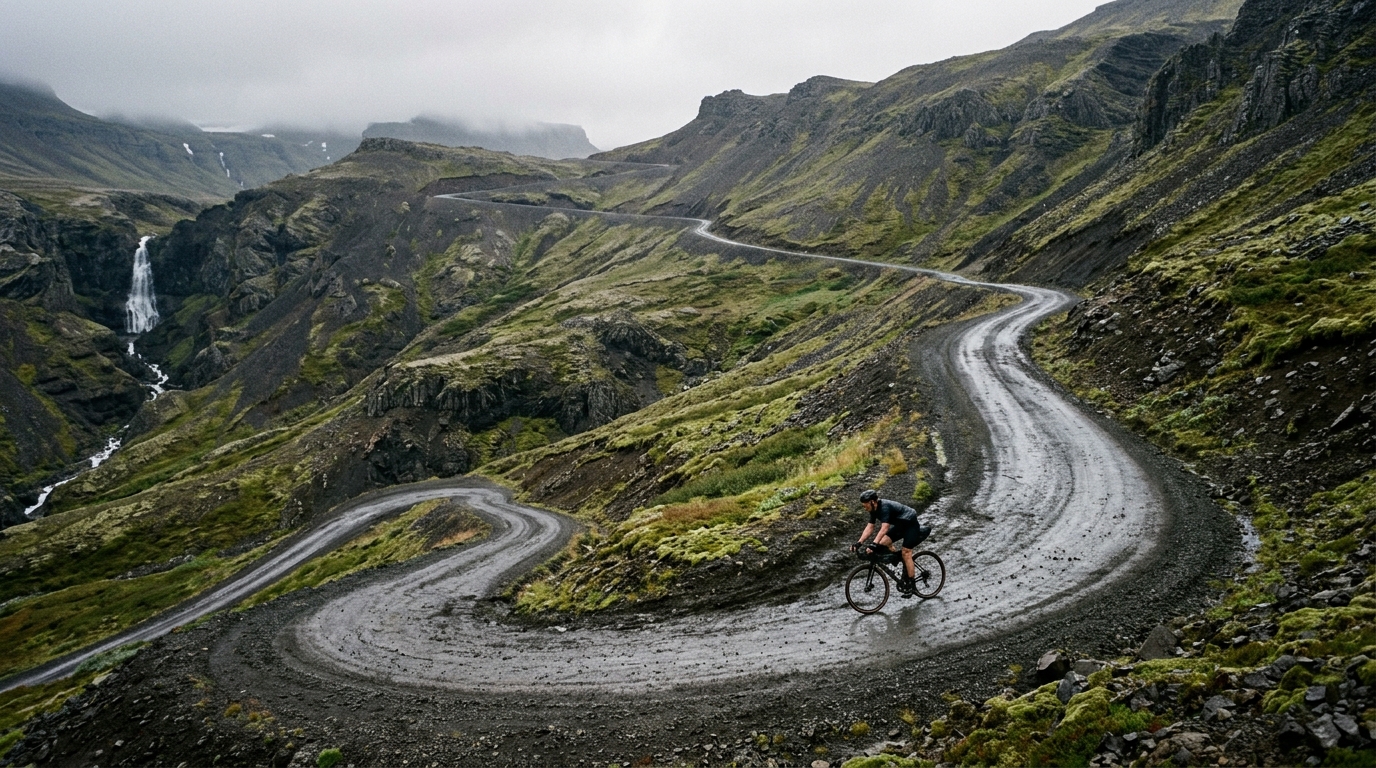
Iceland is not a country of endless ranked giants, and that is exactly what makes its climbing feel distinct. With 8 catalogued climbs and no hors categorie ascents, the challenge is less about stacking huge elevation numbers and more about how isolated, exposed efforts change the rhythm of a ride. The highest listed summit reaches 1055 metres, enough to make the terrain consequential without turning the trip into a pure altitude project.
The names tell the story of a climbing map built around scattered, memorable objectives rather than dense clusters: Námaskarð, Vonarskarð, Axarvegur, Fróðárheiði, Vatnsskarð, Oddsskarð, Víkurskarð, and Gönguskörð. That suits riders who like a destination where each climb has to be chosen deliberately. Iceland rewards planning, patience, and pacing - the climbs are few, but they matter.
Signature climbs of Iceland
All climbs in Iceland
8 climbs
- AxarvegurCat 1IS · 4.0 km · 10.7% · 387 m459pts
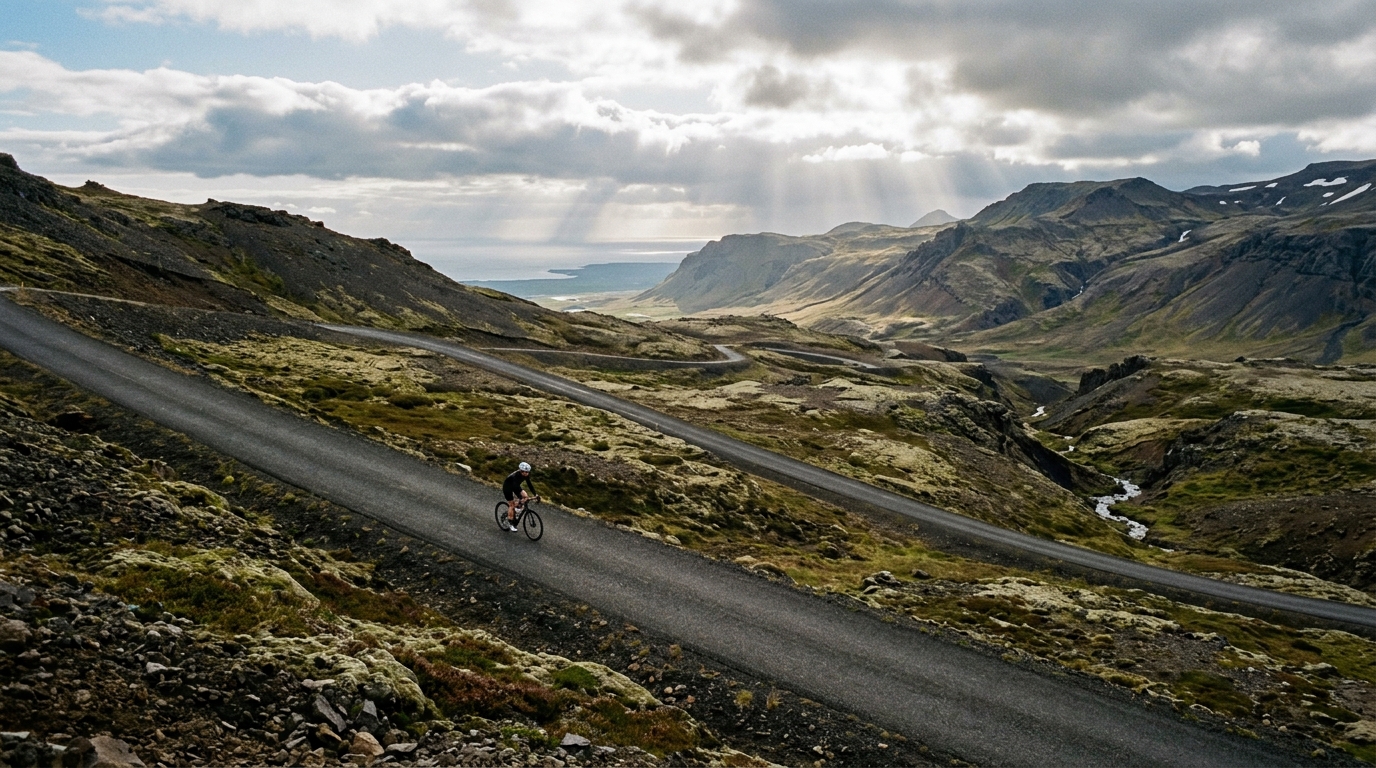 FróðárheiðiCat 2IS · 3.3 km · 10.1% · 291 m335pts
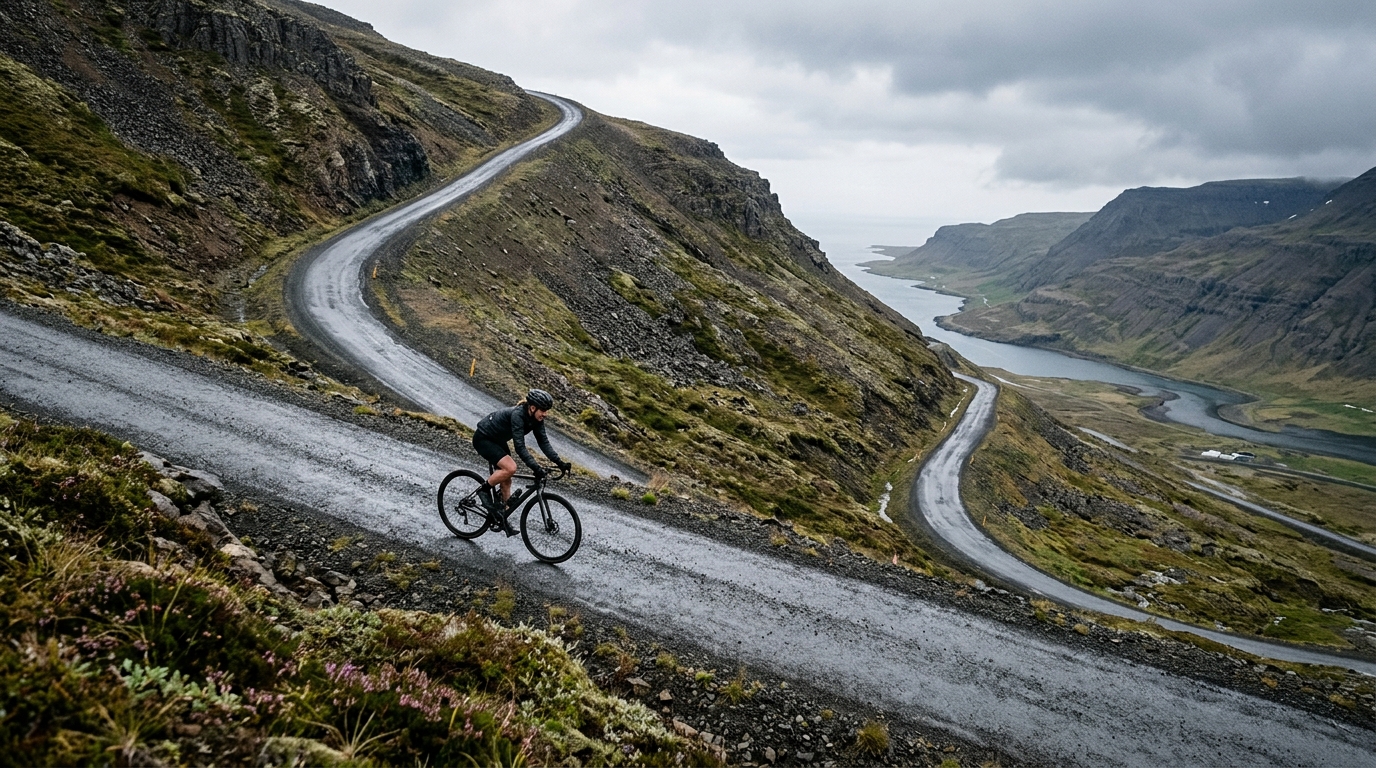 OddsskarðCat 1IS · 6.6 km · 9.8% · 623 m628pts
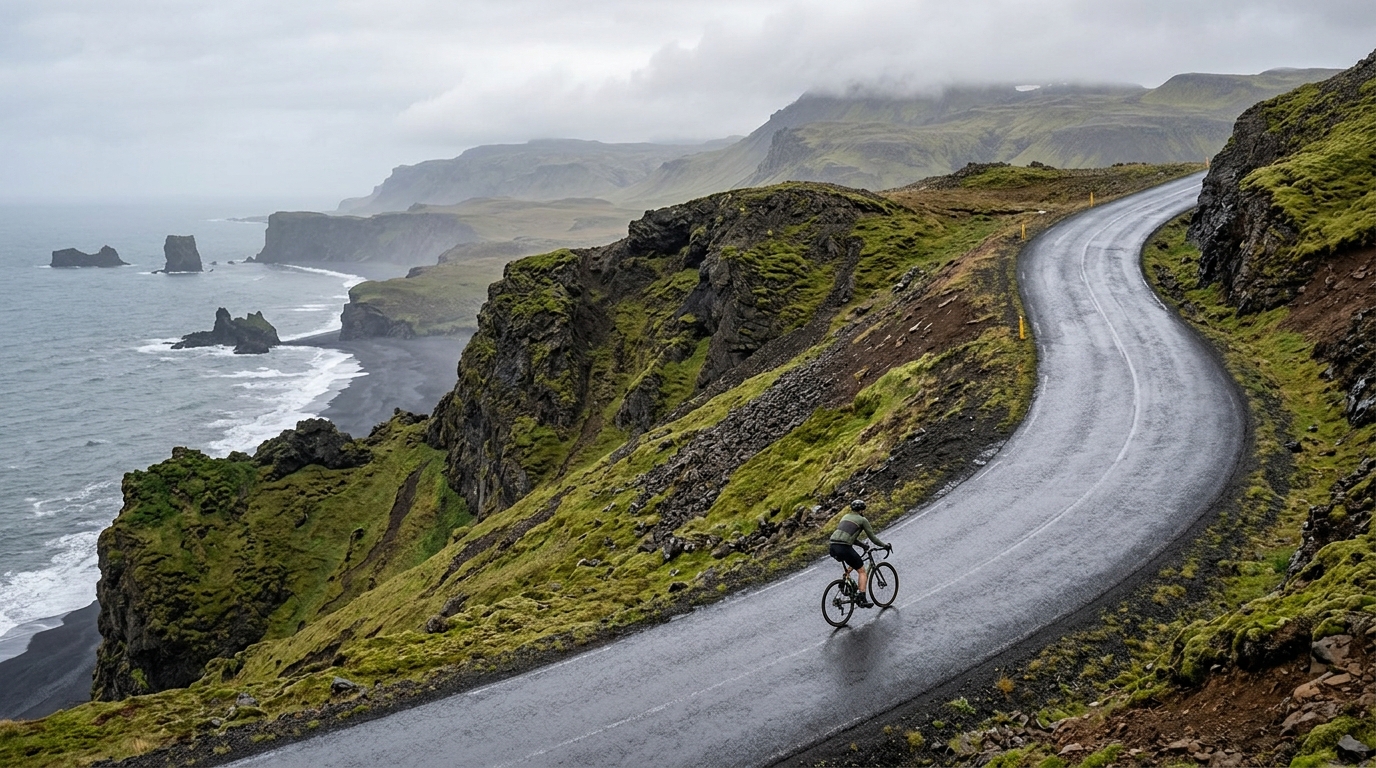 VíkurskarðCat 1IS · 4.2 km · 9.8% · 383 m404pts
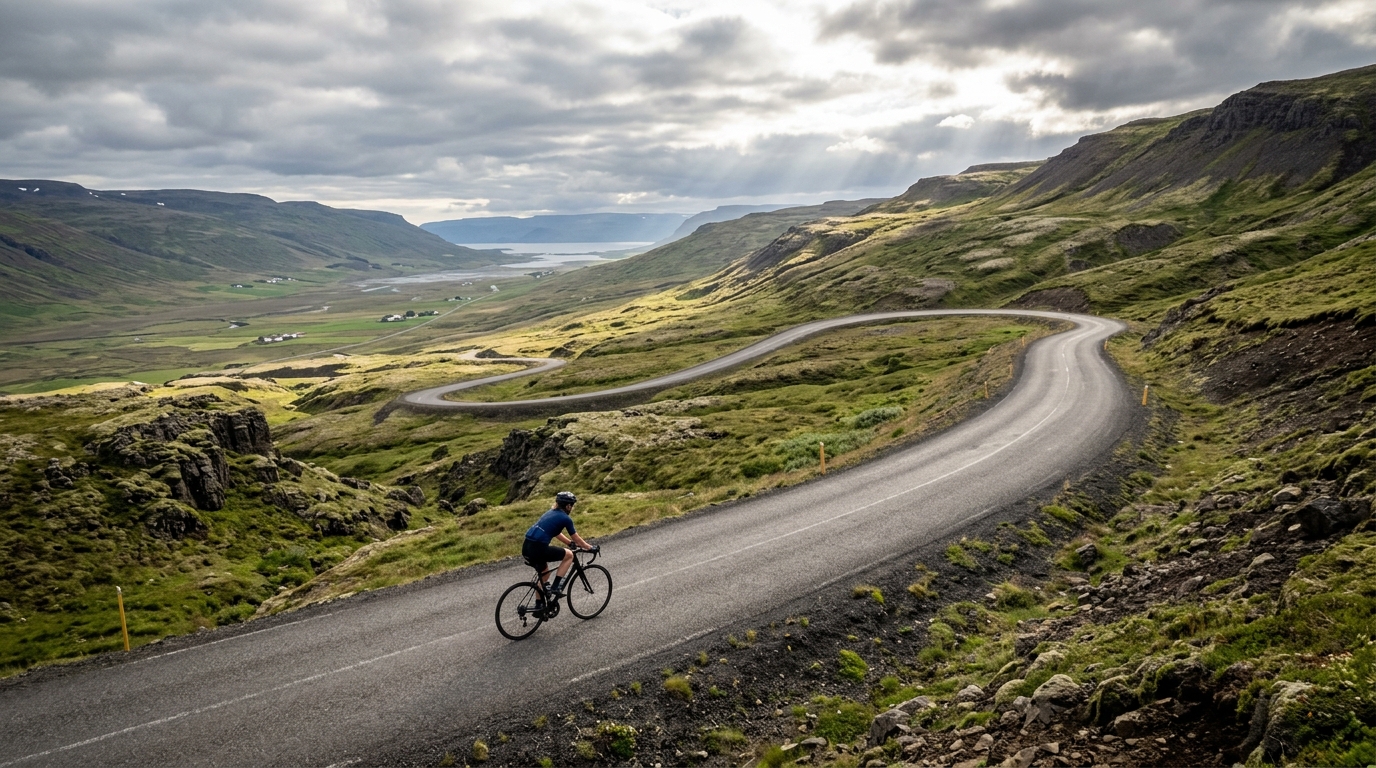 VatnsskarðCat 3IS · 8.4 km · 4.0% · 315 m136pts
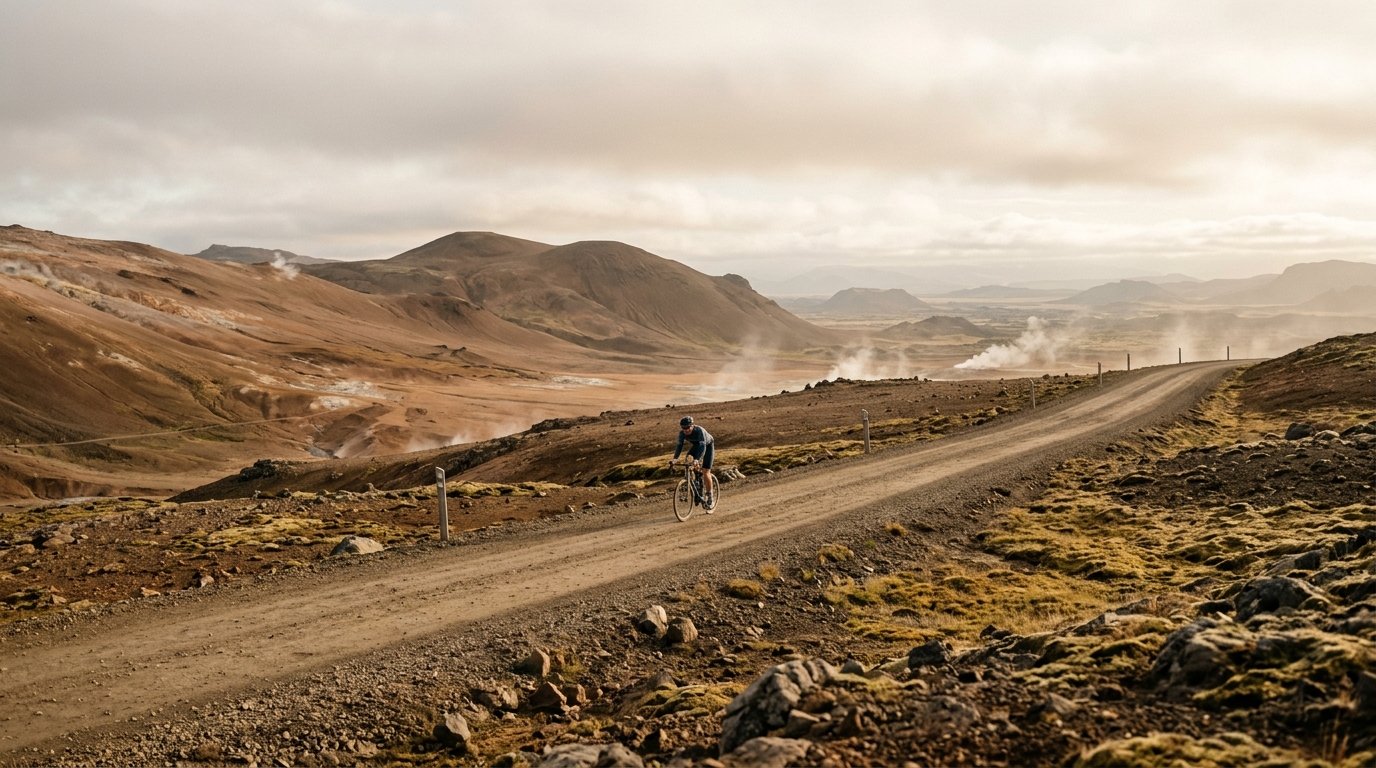 NámaskarðCat 4IS · 3.5 km · 4.2% · 127 m60pts
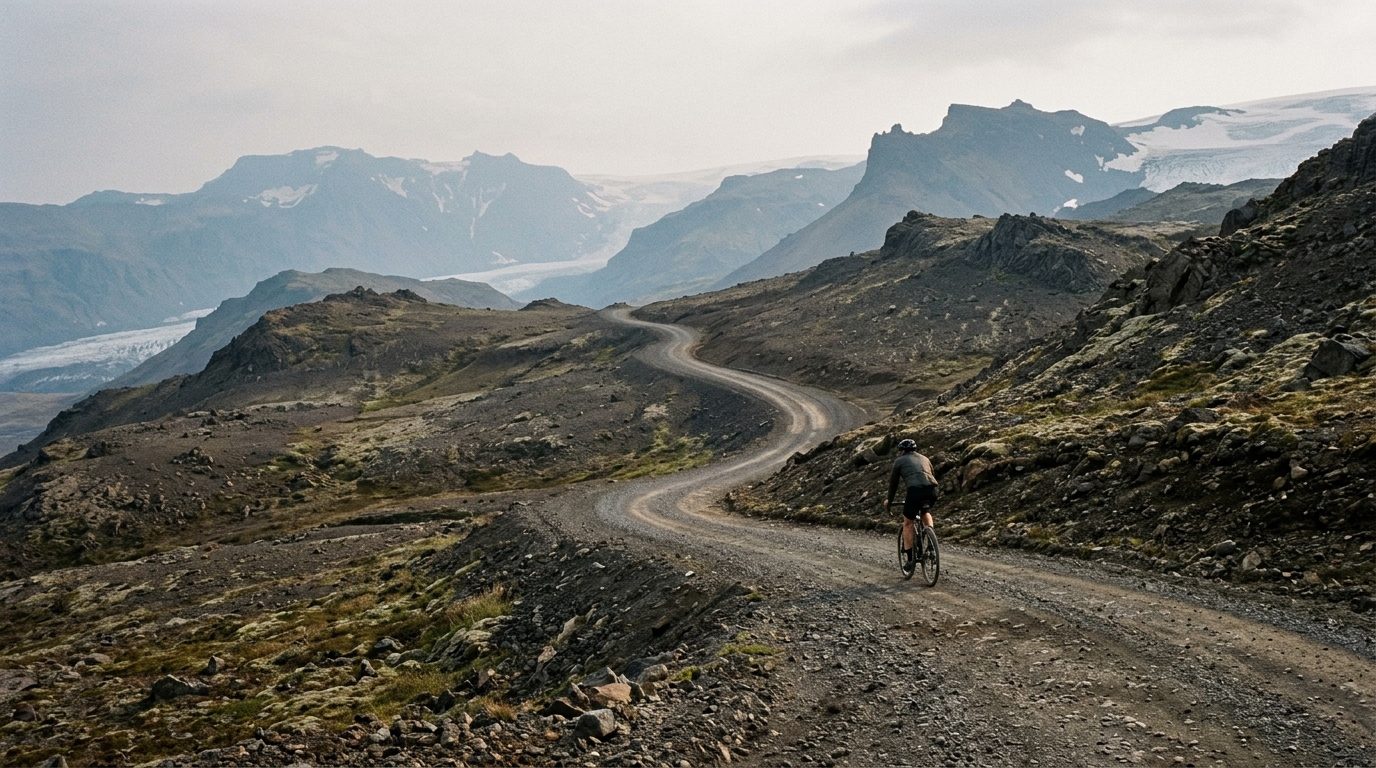 VonarskarðCat 4IS · 2.6 km · 4.8% · 104 m61pts
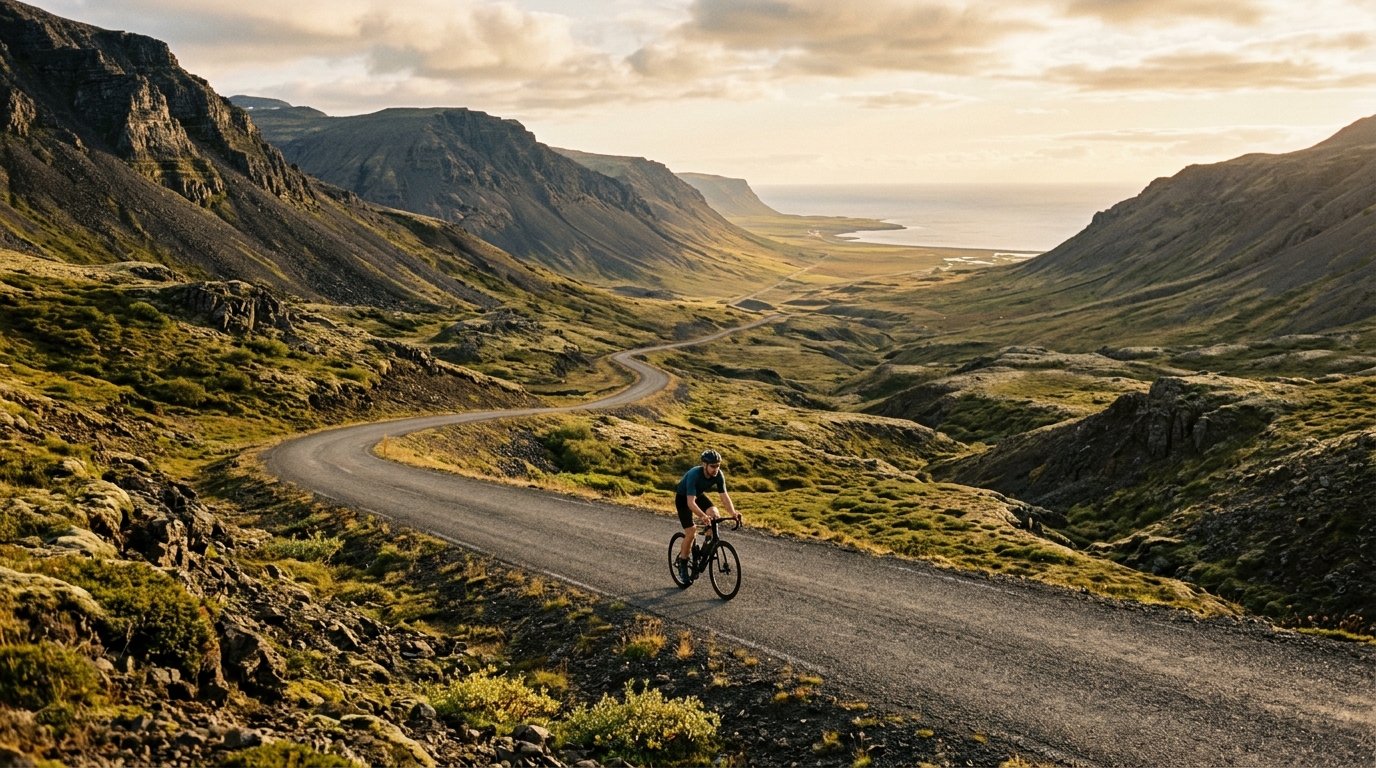 GönguskörðCat 3IS · 6.0 km · 4.2% · 239 m106pts
The complete guide to climbing in Iceland
Iceland as a climbing destination
Iceland is not a classic alpine climbing country, and that is the first thing to understand before building a trip around its ascents. The difficulty is less about endlessly stacked hairpins and more about exposure, weather, surface choice, and the way effort accumulates when there is little shelter. On paper, the Neverchill Iceland climb set is compact: 8 listed climbs, 0 hors categorie climbs, and a highest listed summit of 1055 metres. In practice, that does not mean easy riding.
The key difference is that Iceland makes pacing more conditional. A climb that looks manageable in calm weather can ride like a completely different effort when the wind is on the nose or shifting across an open slope. That matters because cyclists often judge a climb by length and gradient, but in Iceland the environment can be the multiplier. The same power can produce a controlled tempo one day and a survival rhythm the next.
This is why Iceland rewards riders who think like endurance athletes rather than tourists ticking off summits. The smartest approach is to treat each climb as part of a wider route system: where the road goes after the summit, how exposed the descent is, where the next food or water stop sits, and whether the return leg leaves you fighting the conditions when fatigue is highest. If you ride with a power meter, Iceland is a place to respect /glossary/ftp as a ceiling, not a target. The climbs are not just efforts. They are decisions.
Terrain and character
The character of Icelandic climbing is defined by openness. Many cycling regions give you visual cues: tree cover, villages, switchbacks, valleys that narrow and tell you when the road is about to steepen. Iceland can be more ambiguous. The road may rise across broad, exposed terrain where the gradient feels secondary to resistance from wind, road surface, and temperature.
That makes these climbs rhythmically different from famous European passes. In a dense mountain region, riders often settle into a climb because the road forces a consistent effort. In Iceland, the pacing problem is more variable. You can be climbing, fighting crosswind, managing rougher surfaces, and trying not to burn through calories all at once. The physiological demand is still straightforward - sustained aerobic work - but the execution is messier.
The listed climb set also tells a useful story. With no hors categorie climbs in the current Neverchill database for Iceland, the country is not defined by a single giant ascent that dominates every route plan. Instead, the challenge is distributed. The climbs become anchors inside larger rides, and the ride between them can be just as decisive as the ramps themselves.
The highest listed summit, at 1055 metres, is high enough to make weather and exposure relevant, but altitude is not the central training limiter for most riders. Do not plan Iceland as an altitude camp. Plan it as an endurance, durability, and decision-making test.
Standout climbs and route anchors
The notable climb list for Iceland includes Námaskarð, Vonarskarð, Axarvegur, Fróðárheiði, Vatnsskarð, Oddsskarð, Víkurskarð, and Gönguskörð. Without reducing them to a ranking, it is more useful to think about the role each can play in a route.
Námaskarð
Námaskarð is one of the names that immediately belongs on a rider's shortlist because it represents the Icelandic climbing problem well: open terrain, environmental variability, and the need to manage effort before the road has fully revealed itself. For a strong rider, the temptation is to ride by feel and press early. That can work in sheltered climbing regions. In Iceland, it is usually better to let the first part of the climb tell you what sort of day you are dealing with.
Treat Námaskarð as a pacing exercise. Start below threshold, keep cadence under control, and avoid chasing speed if the road or wind is working against you. The goal is not to produce the prettiest climbing file. It is to crest with enough control to handle the next section of the ride.
Vonarskarð
Vonarskarð should be approached as a commitment climb rather than a casual detour. That distinction matters. Some climbs can be added to a ride because they sit neatly off a main route and the penalty for under-fuelling or misjudging the weather is limited. Others require a more conservative mindset from the start.
The practical way to ride Vonarskarð is to build the route backward. Identify your exit, resupply logic, and bailout options first, then decide how hard the climb itself should be ridden. If those details are uncertain, the effort target should come down. Iceland punishes optimistic planning more than conservative pacing.
Axarvegur and Fróðárheiði
Axarvegur and Fróðárheiði are useful examples of climbs where the profile is only one input. Riders who are used to judging climbs mainly through gradients may underestimate how much surface and exposure can influence the ride. The smart execution is steady, seated, and repeatable. If you are riding multiple climbs in a day, these are the efforts where restraint matters.
A good rule is to avoid making the first named climb of the day the hardest effort of the day. In Iceland, the cost of going too deep early is not just muscular fatigue. It is the loss of flexibility. Once you are tired, every practical task becomes harder: eating on the move, holding position in wind, staying warm on descents, and making clean route decisions.
Vatnsskarð, Oddsskarð, Víkurskarð, and Gönguskörð
Vatnsskarð, Oddsskarð, Víkurskarð, and Gönguskörð round out the core Iceland climb list on Neverchill. The common thread is that each should be planned as part of a complete ride, not as an isolated ascent. That is the defining feature of Icelandic climbing. The summit is rarely the whole story.
For route design, these climbs are best used as structural points: a first test after warming up, a mid-ride separator, or a final controlled effort before the return. The choice depends less on prestige and more on logistics. Where is the food? Where is the water? What happens if the wind direction changes? Can you descend safely if conditions deteriorate? Those questions should shape the route before any discussion of targets or segment times.
Best season to ride
The best season for cycling climbs in Iceland is the main summer riding window, when road access, daylight, and weather stability are most likely to support longer rides. Even then, stability is relative. Iceland should be planned with flexible days rather than fixed summit obligations.
Spring and autumn can suit experienced riders who are comfortable making late decisions, shortening routes, or abandoning objectives when conditions do not line up. The trade-off is clear: quieter roads and a more austere riding experience on one side, reduced margin for error on the other. Winter is not the sensible target season for most visiting cyclists looking to ride climbs. If the goal is productive endurance riding rather than proving a point, the risk-reward balance usually points elsewhere.
The larger planning principle is simple: do not schedule Iceland as if every day will be rideable in the way you imagined it. Build a route menu instead. Have an A ride, a shorter B ride, and a sheltered C option if conditions are poor. That is not timid planning. It is how you actually leave with quality riding rather than a collection of compromised files.
Practical notes
Traffic and road positioning
Traffic in Iceland needs to be treated with respect because exposure and road width can change how safe a section feels. On open roads, wind can push a rider off a clean line, and passing vehicles create a bigger perceived penalty when there is limited room. Hold a predictable position, avoid drifting when eating or checking devices, and be willing to stop for clothing changes rather than trying to manage everything one-handed in poor conditions.
If a climb sits on a busier road, start earlier, ride visibly, and keep the group compact. If you are riding solo, make your movements obvious. The goal is not to occupy the road aggressively. It is to remove ambiguity.
Resupply and route spacing
Resupply is one of the biggest practical constraints. Do not assume that a climb has easy food or water access nearby. Start longer rides with more calories than you would carry in a denser cycling region, and treat every reliable stop as a chance to reset. In Iceland, running slightly heavy is usually better than running slightly short.
This is especially important because environmental load increases carbohydrate use indirectly. Riding into wind, staying warm, and managing rougher sections all raise the cost of what might otherwise look like a moderate endurance day. If your planned ride includes more than one listed climb, fuel it like a demanding training session from the first hour.
Altitude and weather exposure
The highest listed summit in Iceland on Neverchill is 1055 metres, so the altitude number itself should not dominate preparation. The more important issue is what elevation can mean when combined with weather. A climb does not need to be extremely high to become cold, exposed, or slow on the descent.
Carry layers that can be put on quickly. A waterproof or windproof shell is not just emergency kit in Iceland. It is part of normal climb-and-descent management. Riders who climb hard and then descend underdressed give back the advantage immediately through cold stress and poor handling.
Gearing, tyres, and bike choice
Gearing should be conservative. Choose a low gear you can turn while seated when the road surface or wind makes standing inefficient. If you are unsure whether your current setup is adequate, use /tools/ftp-estimator to sanity-check the power you can realistically sustain, then gear for the bad version of the climb, not the ideal one.
Tyre choice depends on the exact route, but the principle is the same: prioritise control and durability over marginal speed. Iceland is not the place to let a fragile setup dictate where you can ride. If a planned route includes uncertain surfaces, an all-road or gravel-capable bike may be the smarter choice than a pure road setup.
Pacing strategy
The best pacing strategy is disciplined negative control. That does not mean riding every climb slowly. It means refusing to let the first hard section define the day. Keep the first half of a climb controlled, assess wind and surface, then decide whether there is room to lift the effort.
For riders chasing training value, Iceland is excellent for muscular endurance and aerobic durability. Long, controlled climbs in variable conditions teach you to hold output when the feedback from speed is unreliable. That is a valuable skill. It also keeps the ride safer, because good pacing preserves attention.
How to plan an Iceland climbing trip
Start with the 8 listed climbs in the Iceland region guide at /regions/is, then group them by logistics rather than ambition. The best route is not always the one with the most named climbs. It is the one that lets you ride well, fuel properly, descend safely, and adapt when the weather changes.
A strong Iceland climbing itinerary should have three qualities. First, it should include at least one standout objective such as Námaskarð, Vonarskarð, Axarvegur, or Fróðárheiði. Second, it should leave slack in the schedule so that a poor-weather day does not force a bad decision. Third, it should use climbs like Vatnsskarð, Oddsskarð, Víkurskarð, and Gönguskörð as route anchors rather than isolated trophies.
That is the real appeal of Iceland for cyclists. It is not a place where the climb category tells the whole story. It is a place where terrain, weather, logistics, and pacing all matter at once. If you respect that, the riding can be deeply rewarding. If you ignore it, even a non-HC climb can become far harder than expected.