Climb library · Iran
Cycling climbs in Iran
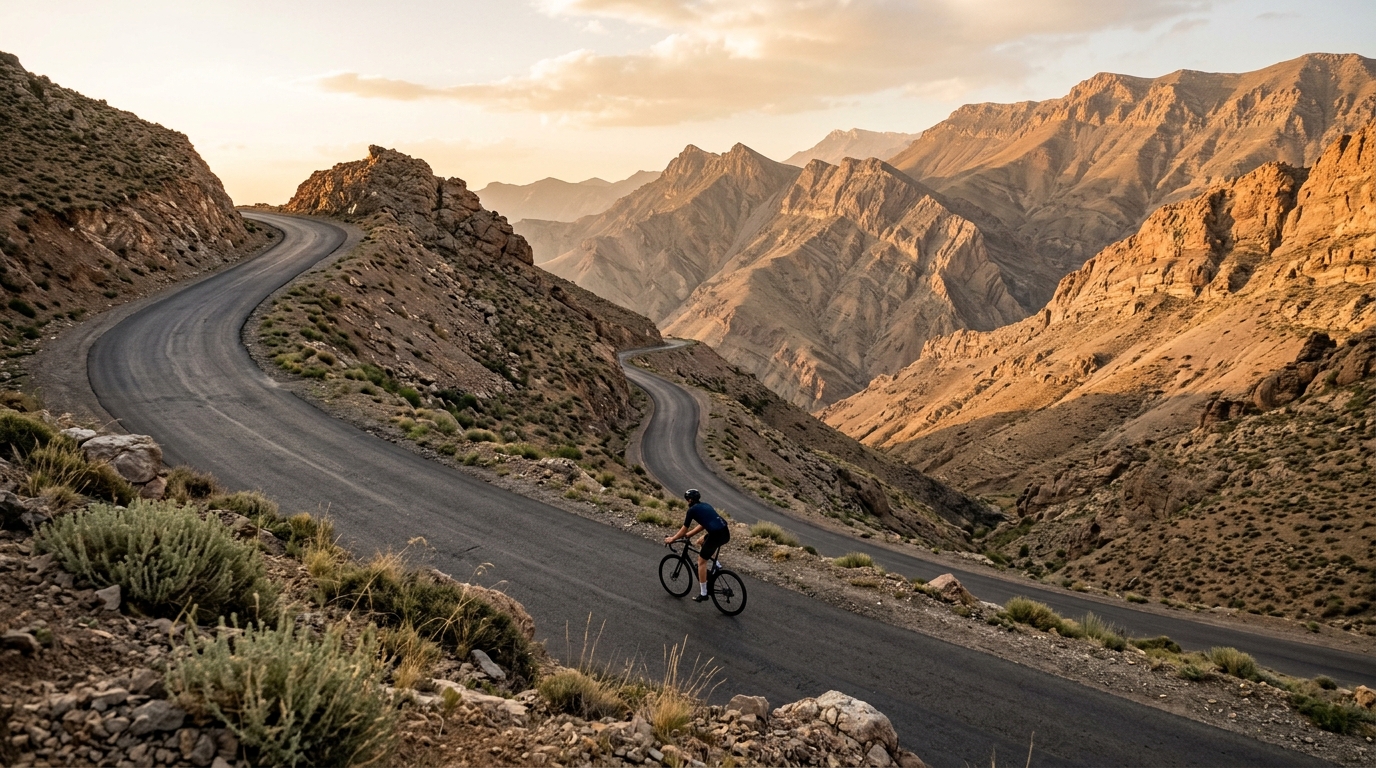
Iran rewards the patient climber with high, thin-aired ascents that carry riders toward summits reaching 3235 m. Its four catalogued climbs trade the raw brutality of hors catégorie ramps for sustained, high-altitude grinding, where the road keeps tilting upward long after your legs beg it to level off. The scenery shifts as you climb, and the sheer elevation on offer makes every effort feel like a genuine expedition rather than a quick out-and-back.
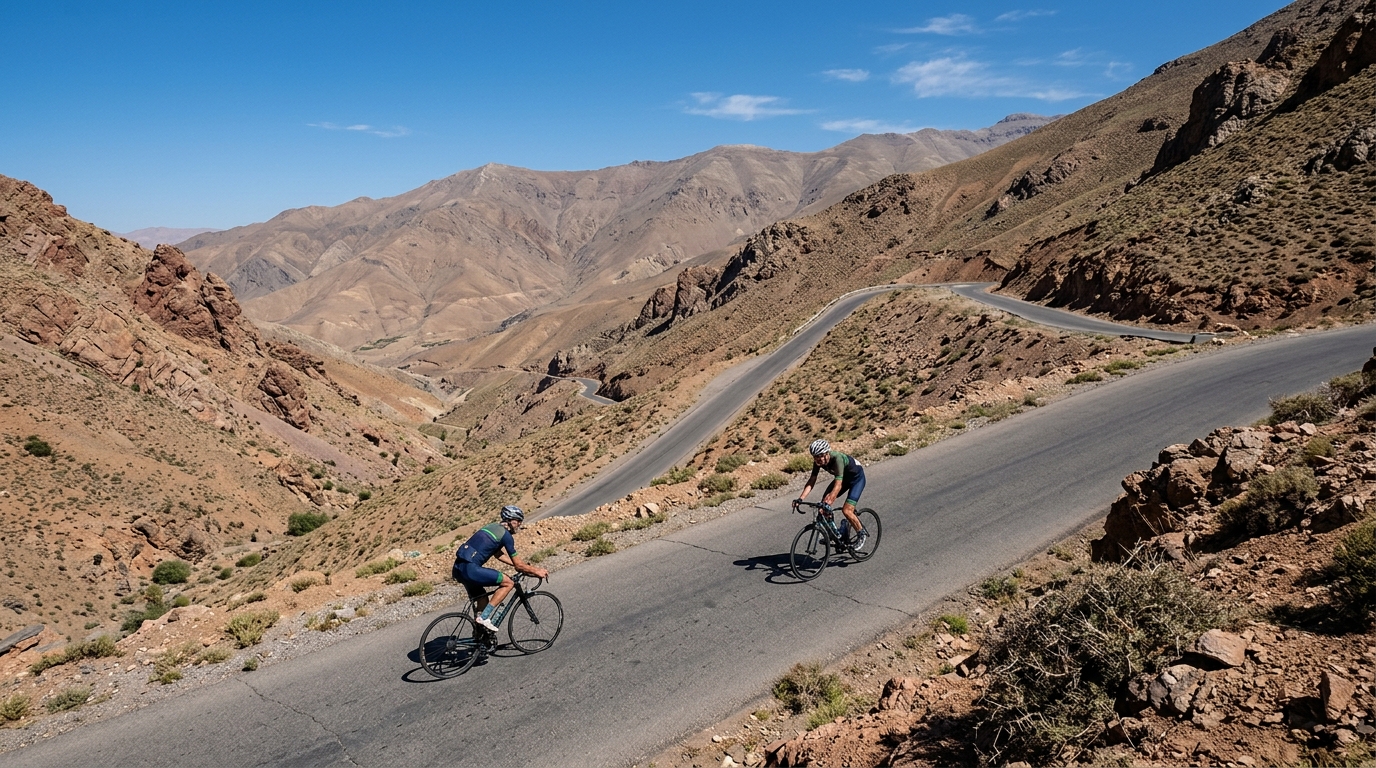
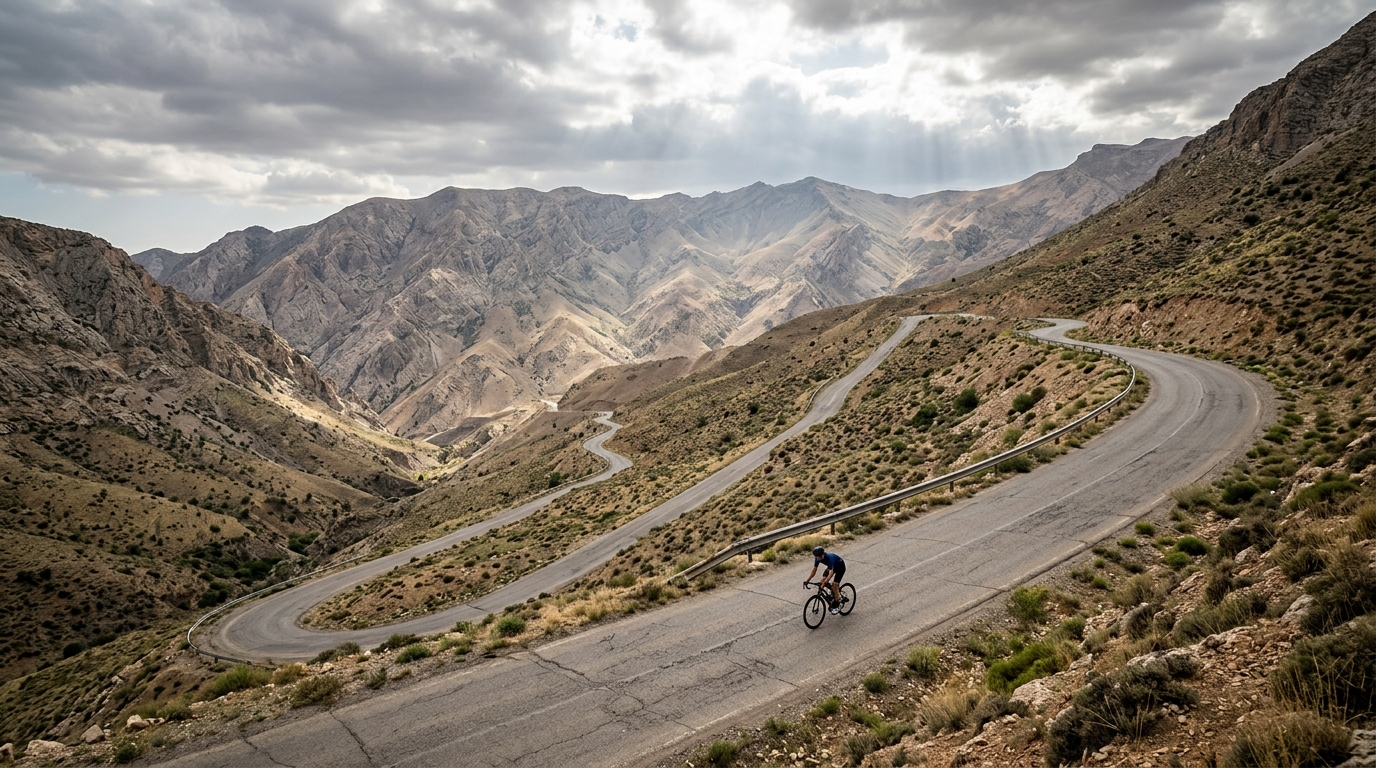
The marquee ascents give a sense of the terrain's range. Dizin lifts riders into ski-country heights, while the Haraz road threads a legendary corridor of switchbacks and tunnels. Taraz Pass and Kandovan Pass round out the catalogue, each a mountain crossing worth the climb. With only a handful of routes documented, Iran remains a frontier for riders chasing quiet, lofty roads far from crowded cols.
Signature climbs of Iran
All climbs in Iran
5 climbs
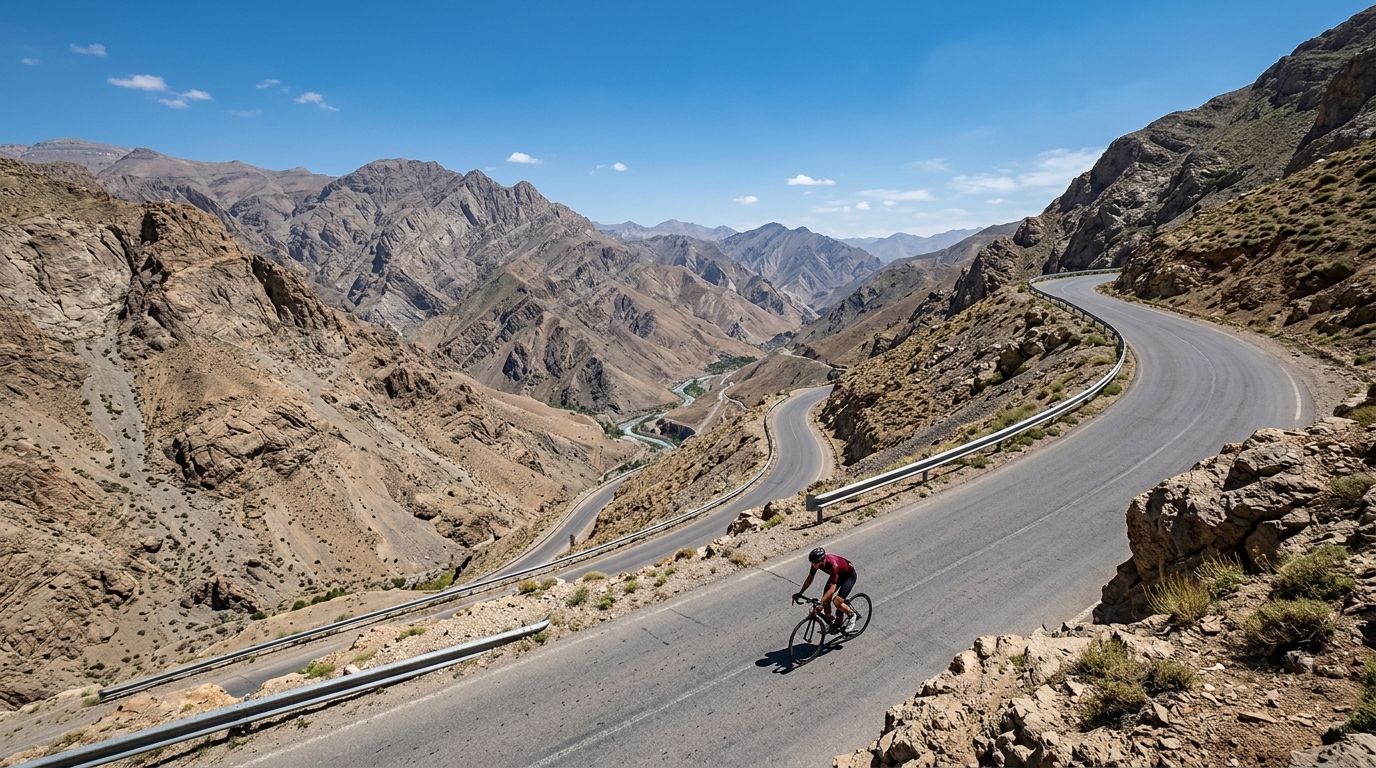
The complete guide to climbing in Iran
The Riding
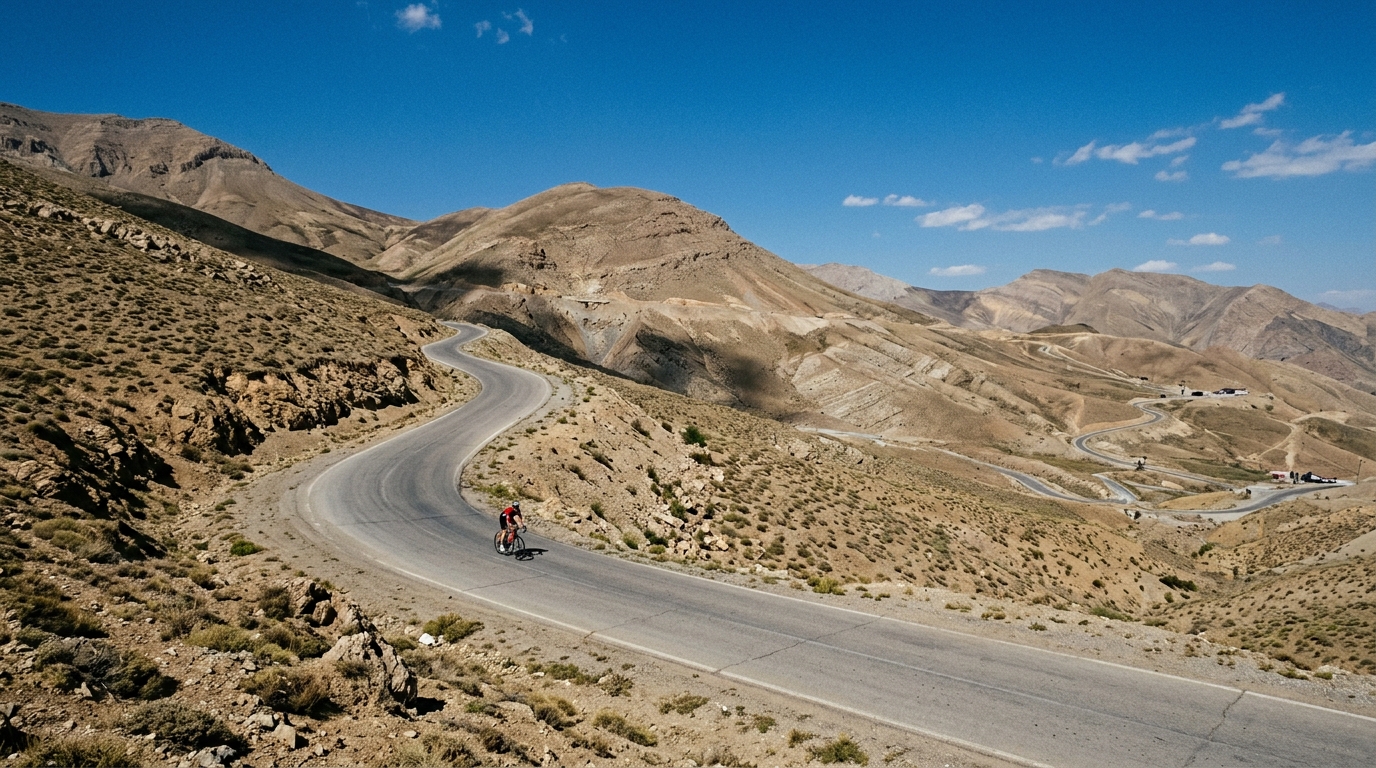
Cycling in Iran means long, high, sustained climbing rather than short bursts of steepness. The catalogue here is deliberately small — four climbs — but each one carries real weight, with the highest summit reaching roughly 3235 m. That altitude is the defining feature. None of these four are rated hors catégorie, yet the thin air near the top of the range does a slow, quiet job of wearing you down long before the gradient ever spikes.
The character is one of patience. Roads tend to unwind over many kilometres, following river valleys and mountain passes upward at gradients that stay manageable for long stretches. You settle into a rhythm and hold it. What makes the riding demanding is not a wall you have to fight over but the accumulation of vertical metres and the growing scarcity of oxygen as you push past 2500 and toward 3000 m. Riders used to lower elevations will feel their usual power quietly drain away on the upper slopes.
Because the collection is compact — Taraz Pass, Dizin, Kandovan Pass and the Haraz road — it is entirely realistic to plan a trip around ticking off all four. There is no sprawling menu to overwhelm you, just a focused set of high mountain roads that reward endurance, pacing and a head for altitude.
Standout Climbs
The Haraz road is the natural centrepiece: a long mountain route that climbs steadily through valley terrain, the kind of ascent where the effort is measured in hours rather than minutes. It is the sort of road you plan a whole day around.
Dizin is the high one, associated with the loftiest ground in the catalogue and the approach to summit elevations near 3235 m. This is where the altitude becomes the story — a climb best treated with respect, given the thin air waiting at the top.
Kandovan Pass is a classic mountain pass, taking a road up and over the high ground. Passes like this share a signature shape: a long grind to the col, then the release of a descent on the far side.
Taraz Pass rounds out the four, another sustained pass-style climb where the reward is the crest itself and the panorama that opens once you reach it.
Between them, these four give a genuine cross-section of Iran's high-mountain cycling: two named passes, a long valley road, and a summit-focused ascent near the ceiling of the range.
When to Ride
Altitude dictates the calendar here. With summits pushing toward 3235 m, the high sections of these roads are exposed to genuinely cold, wintry conditions for a large part of the year. The upper reaches of Dizin in particular sit at elevations where snow lingers long after lower valleys have thawed.
The practical window is the warmer months, when the passes are clear and the high roads are open and rideable. Aim for the heart of summer for the safest bet on the loftiest ground, and treat the shoulder seasons with caution — a pass that is inviting in the valley can still be blocked or bitter near the col. Even in summer, expect a wide temperature swing between the base of a climb and its summit; what feels warm at the start can turn sharply cold as you gain height.
Practical Notes
Prepare for altitude first and foremost. Give yourself time to acclimatise before attempting the highest ground, and pace the opening kilometres conservatively — these climbs punish riders who go out hard and then meet the thin air up high with nothing left. Carry enough clothing to cover the temperature drop at the summits; a long descent off a 3000 m-plus col can be genuinely cold even on a warm day.
Gearing matters on sustained climbs of this length. Lower ratios that let you spin steadily will serve you far better than pushing a big gear, especially as fatigue and altitude combine on the upper slopes. Plan food and water around long efforts, since these are climbs measured in hours. And check conditions on the passes before you commit — Taraz Pass, Kandovan Pass and the high road to Dizin can all be affected by season and weather at their crests.
Summary
Iran offers a small but serious set of cycling climbs: four catalogued ascents, none hors catégorie, but all shaped by length and altitude, with the highest ground near 3235 m. The Haraz road delivers a long valley climb, Kandovan Pass and Taraz Pass provide classic high-mountain crossings, and Dizin takes you toward the roof of the range. Ride them in the warm months, respect the thin air, and pace yourself for the long haul.
Looking for full rides in Iran?
Routes in Iran