Climb library · Ethiopia
Cycling climbs in Ethiopia
Ethiopia rewards riders who love altitude. Two catalogued climbs stretch across this highland country, and while neither carries an hors catégorie rating, the thin air alone makes them a serious test. With a summit reaching 2,591 metres, the challenge here is less about brutal ramps and more about sustained effort in air that leaves your lungs working overtime. It is a destination for cyclists who want to feel the elevation in every pedal stroke rather than simply read it off a map.
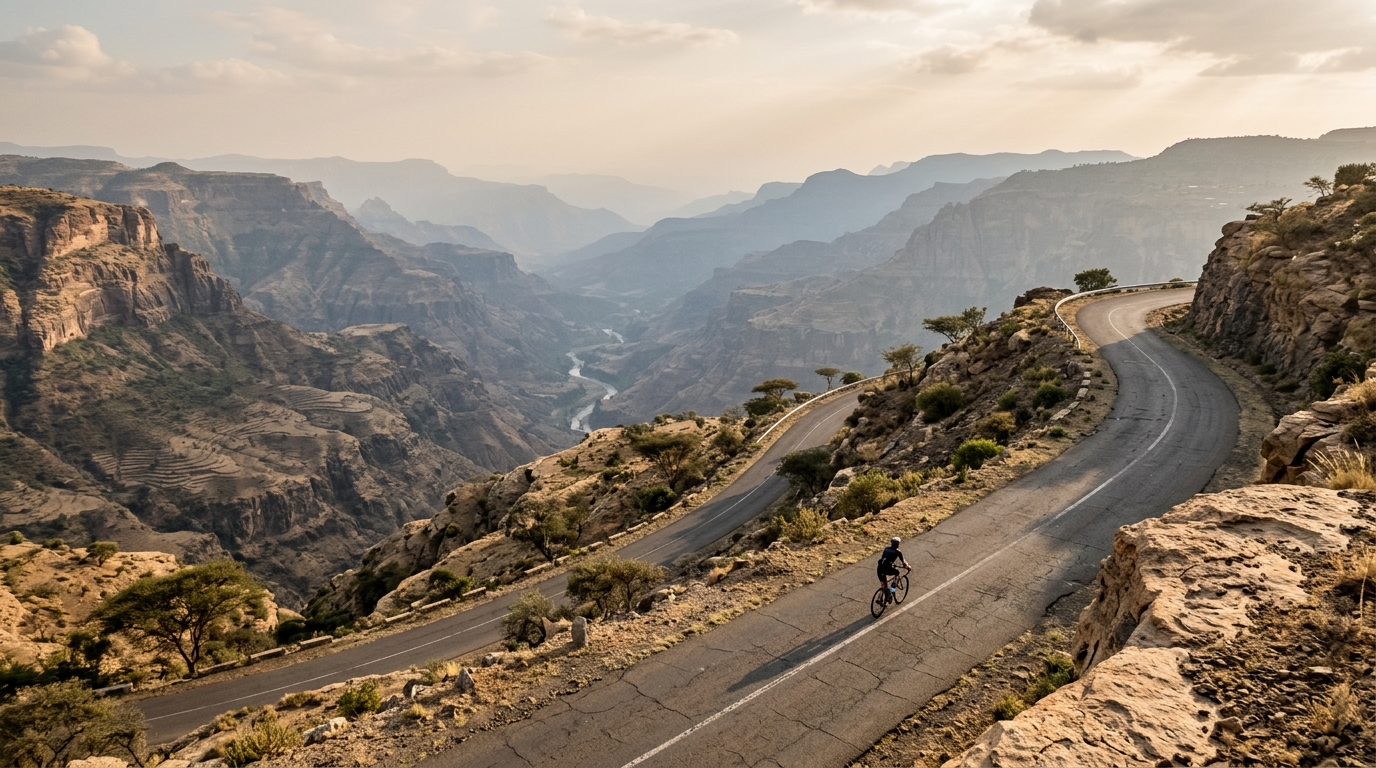
The two marquee ascents frame the experience. The Blue Nile Gorge is a long, exposed descent-and-climb through dramatic terrain, a signature route that demands patience and steady pacing. Closer to the heights, Entoto offers a cleaner, climbing challenge with commanding views over the surrounding country. Together they give Ethiopia a compact but memorable catalogue, ideal for riders chasing high, honest climbs away from the crowded roads of more familiar cycling destinations.
Signature climbs of Ethiopia
All climbs in Ethiopia
2 climbs
The complete guide to climbing in Ethiopia
The Riding
Ethiopia is a small but serious entry in the world of cycling climbs. The country's catalogue is short — just two documented ascents — but what it lacks in volume it makes up for in character. This is high-altitude riding on a high-altitude plateau, where roads sit far above the elevations most cyclists ever pedal at home. Even the highest catalogued summit here reaches 2591 metres, and much of the surrounding terrain never drops to anything you would call low.
That altitude is the defining feature of riding in Ethiopia. Thin air changes everything: sustained efforts feel heavier, recovery between hard sections comes slower, and pacing that would be comfortable at sea level can quickly turn into overreach. The gradients themselves are honest rather than brutal — none of Ethiopia's two catalogued climbs is rated hors catégorie — but the combination of thin air, long grinding pitches and big vertical spans makes them demanding in their own way. The reward is scenery on a grand scale, from the deep incisions of river country to the high ground above the capital.
Standout Climbs
There are two climbs to know in Ethiopia, and they capture the two faces of the country's riding.
The Blue Nile Gorge is the marquee ascent. It is the kind of climb that draws riders precisely because of its scale — a long, relentless haul out of a deep river cut, where the road works patiently upward across a huge span of vertical relief. It is a test of endurance and patience more than raw steepness, the sort of effort where settling into a sustainable rhythm matters far more than any single ramp.
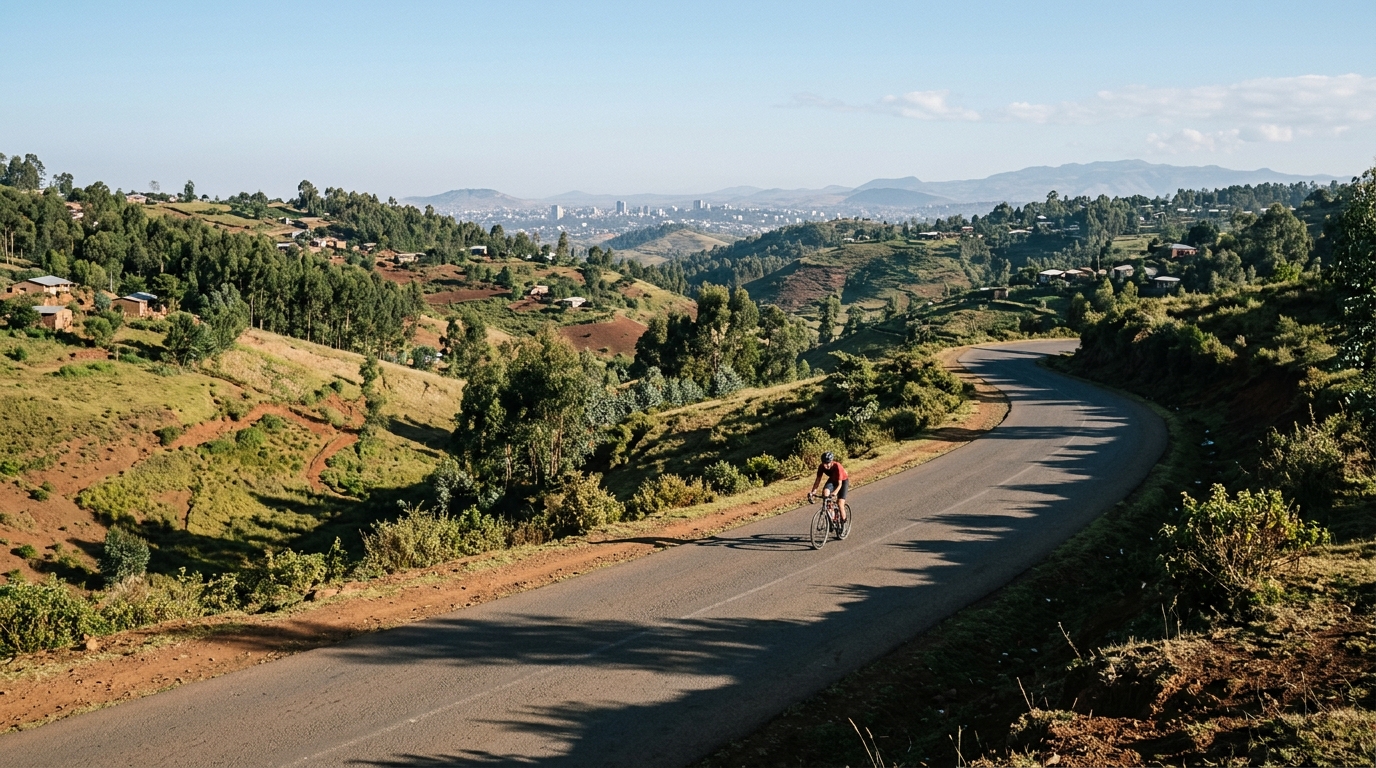
Entoto is the second catalogued climb and the more accessible of the pair, rising on the high ground associated with the plateau country near the capital. It sits among the higher terrain that pushes toward that 2591-metre ceiling, so even a shorter effort here is an altitude effort. Entoto is the natural proving ground for a rider getting used to pedalling in thin air before committing to the longer grind of the Blue Nile Gorge.
Between them, these two climbs are the whole story — there is no deep bench of alternatives, so a trip planned around Ethiopian climbing is really a trip planned around these named ascents.
When to Ride
The single most important factor in Ethiopia is altitude, and that shapes when and how you ride more than the calendar does. Because these climbs sit high, arrive with time to acclimatise rather than tackling the Blue Nile Gorge on day one. Give your body several days at elevation, start with the shorter effort on Entoto, and let your pacing be conservative until you know how the thin air affects you.
Aim for dry, stable conditions and clear skies, which make the long descents and the exposed upper sections of these climbs far safer and more enjoyable. Ride early in the day when you can: cooler air and better light both favour the long, sustained efforts these climbs demand, and an early start leaves margin if a climb takes longer than planned at altitude.
Practical Notes
Plan around the reality that Ethiopia is a two-climb destination. That is a strength, not a weakness — it means you can focus your preparation entirely on the Blue Nile Gorge and Entoto rather than spreading yourself thin.
Gear for long, steady climbing rather than short punchy efforts. A wide-range cassette and low gearing let you spin at a cadence you can hold for the full duration of the Blue Nile Gorge, which matters when the air is thin and blowups are costly. Carry more water and food than a similar-length climb at lower elevation would suggest, because you will be working harder for the same speed.
Descending deserves respect too. The long drop back into the gorge rewards fresh brakes, controlled speed and full attention. And because the catalogue is small, treat local knowledge as valuable — conditions on these two climbs are what you are really planning around.
Summary
Ethiopia is a compact, high-altitude climbing destination built around two catalogued ascents: the long, endurance-testing Blue Nile Gorge and the higher, more approachable Entoto, with the highest summit reaching 2591 metres and no hors catégorie climbs on the list. The riding here is defined by thin air and patient, sustained efforts rather than sheer steepness. Acclimatise properly, pace yourself conservatively, gear low, and let these two climbs be the focus of a trip that trades quantity for genuine high-altitude character.
Looking for full rides in Ethiopia?
Routes in Ethiopia