Climb library · Ecuador
Cycling climbs in Ecuador
Ecuador is a country built for thin-air climbing, where roads rise steadily into the high country and reward the effort with commanding views. Its catalogue is compact but concentrated: just two catalogued climbs, yet both carry the weight of serious elevation. The highest summit reaches 3,872 metres, an altitude that turns even measured efforts into a lung-burning test and makes acclimatisation part of the plan.
At the heart of the collection sit two marquee ascents. Quilotoa lifts riders toward a dramatic highland setting, while Papallacta Pass strings out a long, exposed haul over the divide. Neither climb is graded hors catégorie, so the challenge here is less about brutal ramps and more about sustained altitude and relentless gradient. For cyclists chasing something raw and high, Ecuador delivers a short list with an outsized reputation.
Signature climbs of Ecuador
All climbs in Ecuador
2 climbs
The complete guide to climbing in Ecuador
The Riding
Cycling in Ecuador is defined by altitude before anything else. This is a country where the road surface itself sits thousands of metres above sea level, so even a modest-looking gradient asks a great deal of your lungs. The catalogue here is small and select: two documented climbs, none of them rated hors catégorie, with the highest summit topping out at 3,872 metres. That number tells the story. These are not the longest or steepest ascents you will ever attempt, but they carry you into the sort of thin, cold air that turns a comfortable tempo effort into a lesson in patience.
The character of the riding is high-mountain rather than punchy. Because you are already climbing from an elevated starting point, the challenge is less about brutal double-digit ramps and more about sustained effort in oxygen-poor air. Expect to ride within yourself, to spin rather than grind, and to feel the altitude on every pedal stroke near the top. For riders who have only climbed at lower elevations, Ecuador is a recalibration: the legs may feel fine while the breathing simply cannot keep up.
Standout Climbs
Two climbs anchor the catalogue, and both are worth the trip.
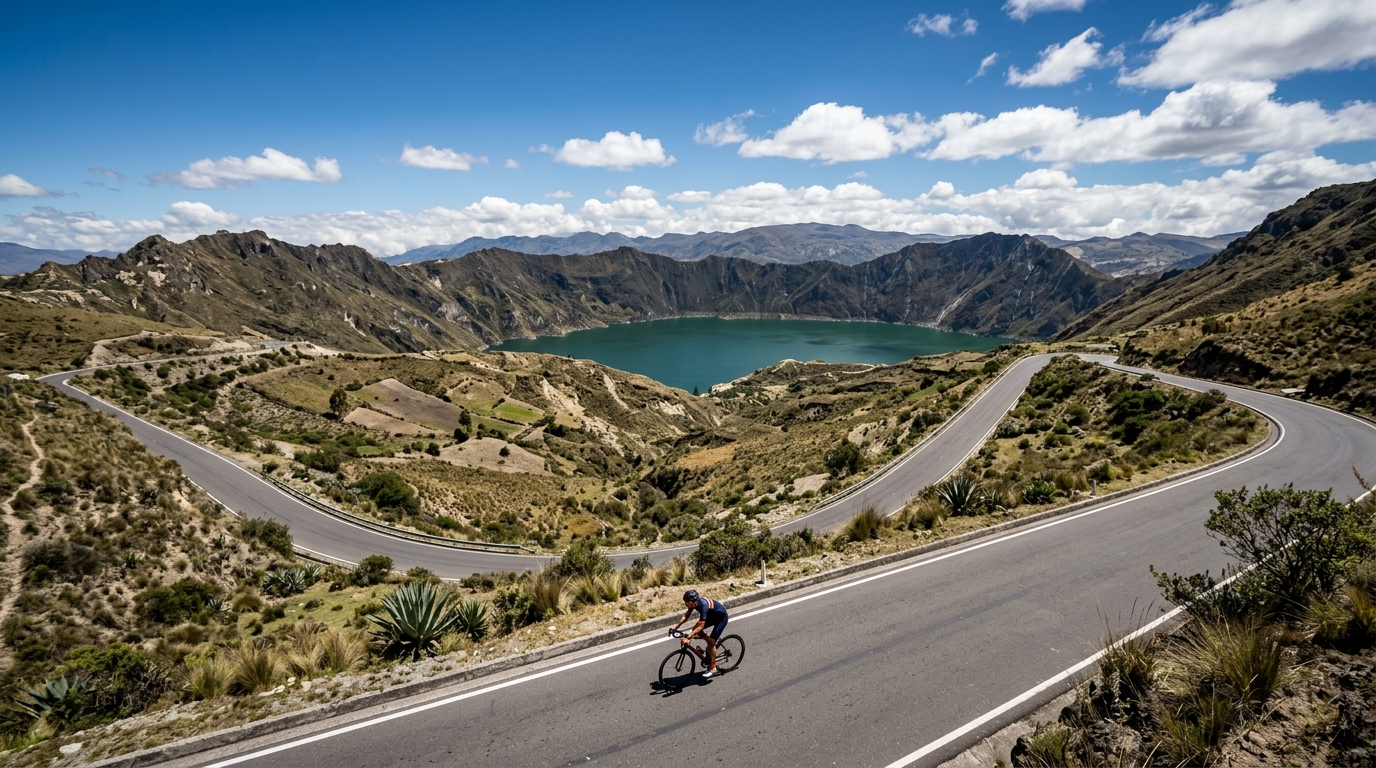
Quilotoa is the more scenic of the pair, a climb that rewards the effort with the payoff of a crater rim. The ascent draws you steadily upward until the landscape opens out, and the sense of arrival at the top is as much about the view as the vertical metres logged. It is the kind of climb you remember for the setting as much as the suffering.
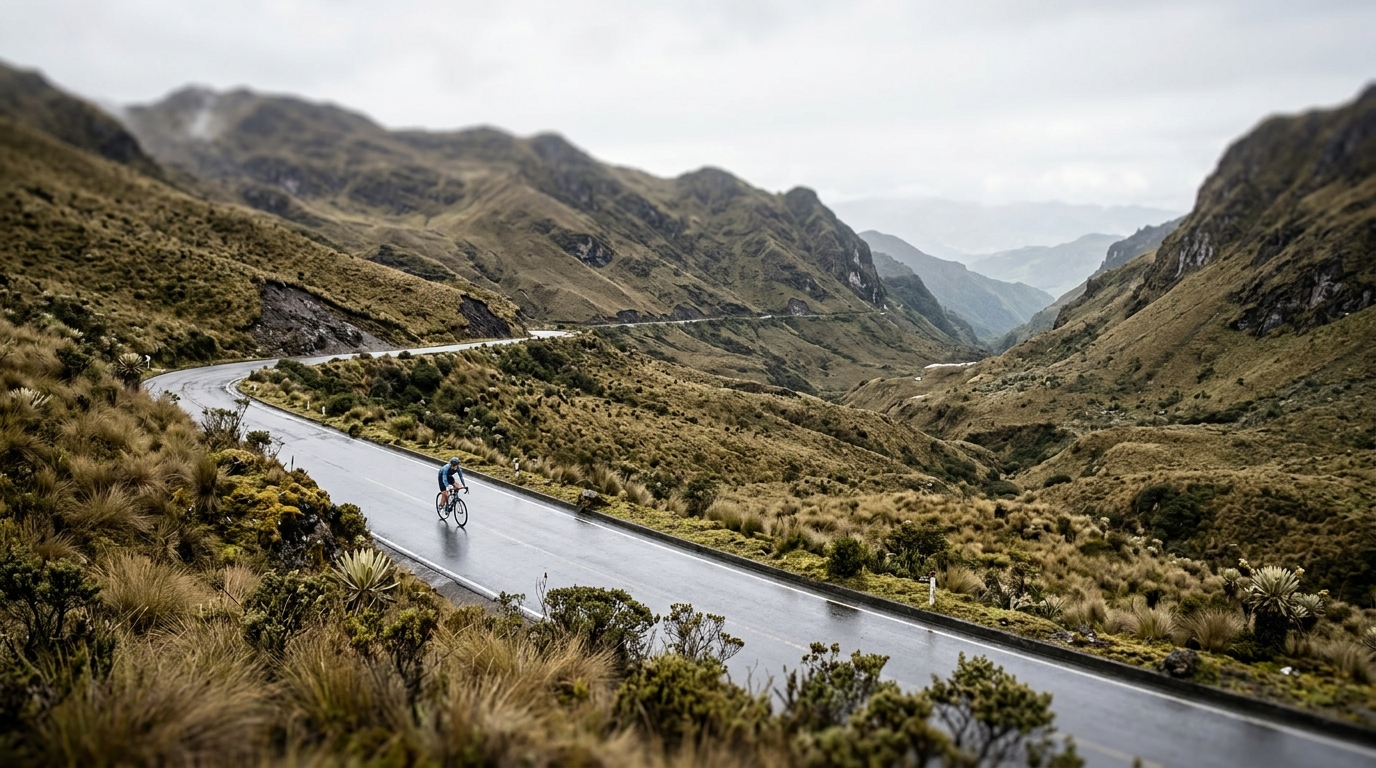
Papallacta Pass is the higher-altitude test and sits closer to the ceiling of what Ecuador's catalogue offers. This is a pass in the truest sense — a sustained haul up to a high saddle where the air is genuinely thin and the temperature drops noticeably. It is the climb that best captures why Ecuador demands respect from visiting riders: the gradient may be manageable, but the elevation is not something you can train away in a week.
Between them, these two ascents give a fair portrait of the country's climbing: high, exposed, and unhurried.
When to Ride
Timing in Ecuador is governed by weather windows rather than a race calendar. At the altitudes these climbs reach, conditions can shift quickly, and the difference between a clear, still morning and a cold, wet afternoon is stark. As a general rule, aim for the drier, more settled stretches of the year and start early — mountain weather tends to close in as the day wears on, and you do not want to be caught high on an exposed pass in deteriorating conditions.
Because you are riding at elevation, give yourself time to acclimatise before tackling either climb in earnest. Even fit riders arriving from sea level will feel the altitude sharply in the first days. A few easier rides at height before your target ascent will pay off, both in performance and in how much you actually enjoy the effort.
Practical Notes
Pack for cold at the top even when it is warm at the bottom — the temperature swing between the base and the summit of a high climb like Papallacta Pass can be considerable. Layers, a windproof shell, and something for your hands are worth carrying.
Pace yourself conservatively. With no hors catégorie monsters in the catalogue, the temptation is to treat these as straightforward climbs, but the altitude changes the maths. Ride the first two-thirds well within your limits so you have something left when the air thins near the top.
Hydration and nutrition matter more than usual at elevation, and recovery can be slower, so build rest into any multi-climb trip. Finally, keep an eye on the sky: these are exposed, high-mountain roads, and weather is the variable most likely to dictate how your day goes.
Summary
Ecuador offers a compact but genuinely demanding cycling experience, built around two catalogued climbs and defined almost entirely by altitude. With the highest summit at 3,872 metres and no hors catégorie ascents on the list, the difficulty here is not about savage gradients but about sustained effort in thin air. Quilotoa delivers the scenery and the satisfaction of a crater-rim finish, while Papallacta Pass provides the high-altitude test that best sums up the country's character. Come acclimatised, ride within yourself, respect the weather, and Ecuador's high roads will give you a climbing experience unlike anything at lower elevations.
Looking for full rides in Ecuador?
Routes in Ecuador