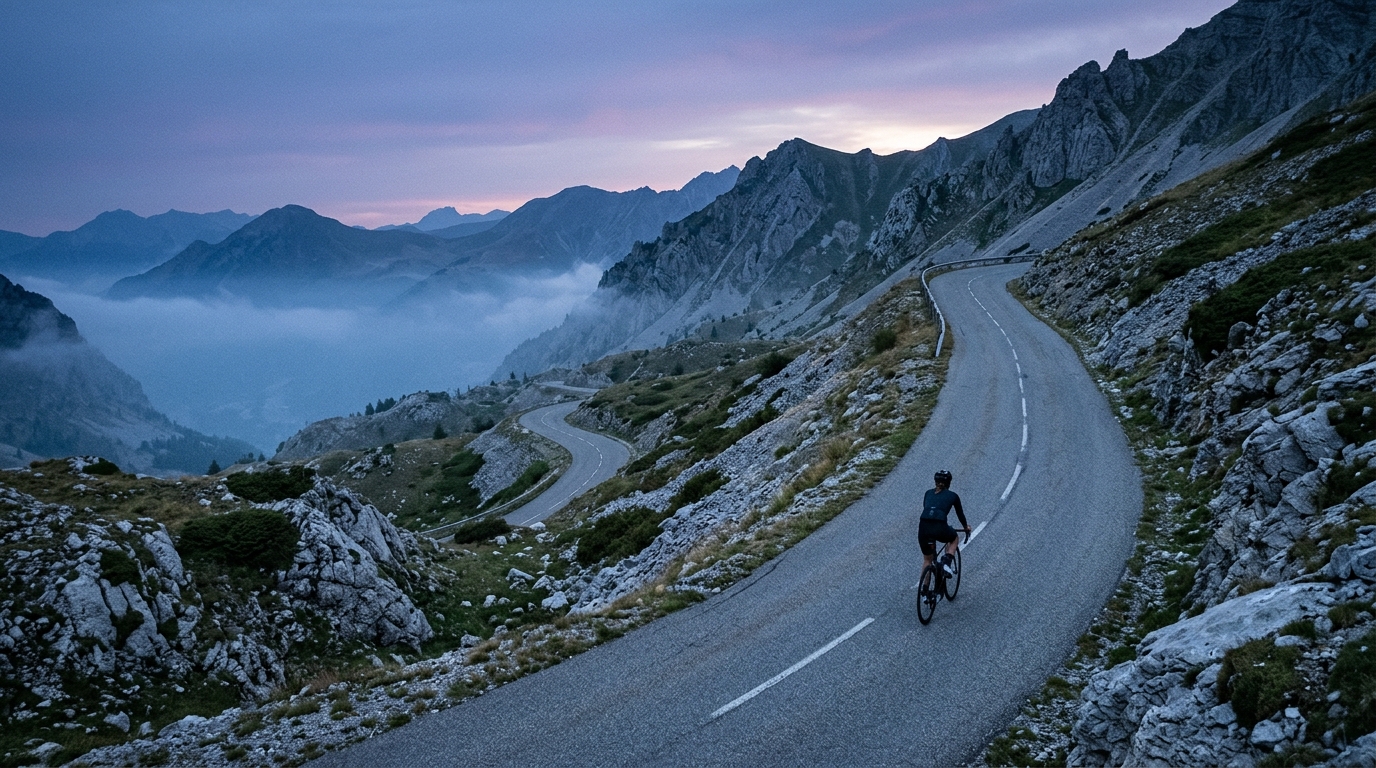
Colle dei Signori
A practical Colle dei Signori cycling climb profile, with pacing and gearing notes for a long HC ascent with severe maximum gradients.
- Length
- 29.7km
- Avg
- 5.4%
- Max
- 23.8%
- Summit
- 2,225m
- Ascent
- 1,574m
The climb
Gradient profile
Colle dei Signori cycling climb profile
Colle dei Signori is an HC climb that asks for patience before it asks for force. On paper, the headline is 29.7 km at 5.37%, rising from 629 m to 2225 m with 1596 m of net elevation gain. That average gradient makes it look manageable if read too quickly. The more important number for how it rides is the 23.79% maximum gradient, because a climb this long with pitches that steep is not a steady tempo drag. It is a long aerobic effort with enough violence in the road to punish anyone who rides the average rather than the climb.
How the gradient unfolds
The available profile data does not give sector-by-sector gradients, so the honest reading is broad rather than overly precise. The climb gains its elevation over nearly 30 km, which means the main demand is duration. At 5.37% average, much of the ascent can be paced as a controlled endurance or threshold-adjacent effort, depending on fitness and goal.
But the maximum gradient changes the pacing equation. A 23.79% ramp is not a detail you can ignore. Even if it is short, it creates a muscular cost that sits on top of the cardiovascular load. The practical takeaway is simple: the climb may average like a steady mountain road, but it has sections where momentum disappears and torque matters. Riders who arrive at those ramps already over target will pay twice - first in the legs, then again when they try to return to rhythm.
Pacing notes
Treat the opening goal as conservation, not speed. With 29.7 km to climb, the first mistake is letting the modest average gradient tempt you into riding above sustainable power. Keep the effort capped early, especially if pacing by FTP, because the steepest sections will force natural spikes even with disciplined riding.
A good approach is to ride the main body of the climb at a repeatable, conversationally hard intensity, then accept short increases on the steepest pitches without trying to hold that power after the road eases. The key is not avoiding every spike. On a climb with a 23.79% maximum, that may be unrealistic. The key is preventing those spikes from becoming the new baseline.
Gearing and ride feel
Gear for the maximum gradient, not the average. The 5.37% average suggests a comfortable climbing cadence is possible for long stretches, but the 23.79% maximum means you need a genuinely low bailout gear. If your easiest gear only works when you are fresh, it is not enough for this climb.
Because the summit sits at 2225 m after starting at 629 m, the effort also has a clear accumulated-load component. By the upper part of the climb, the decisive factor is likely to be how much torque damage you avoided earlier. Smooth cadence, conservative pacing, and a low gear are not comfort choices here. They are the way to keep the final kilometers from becoming survival.