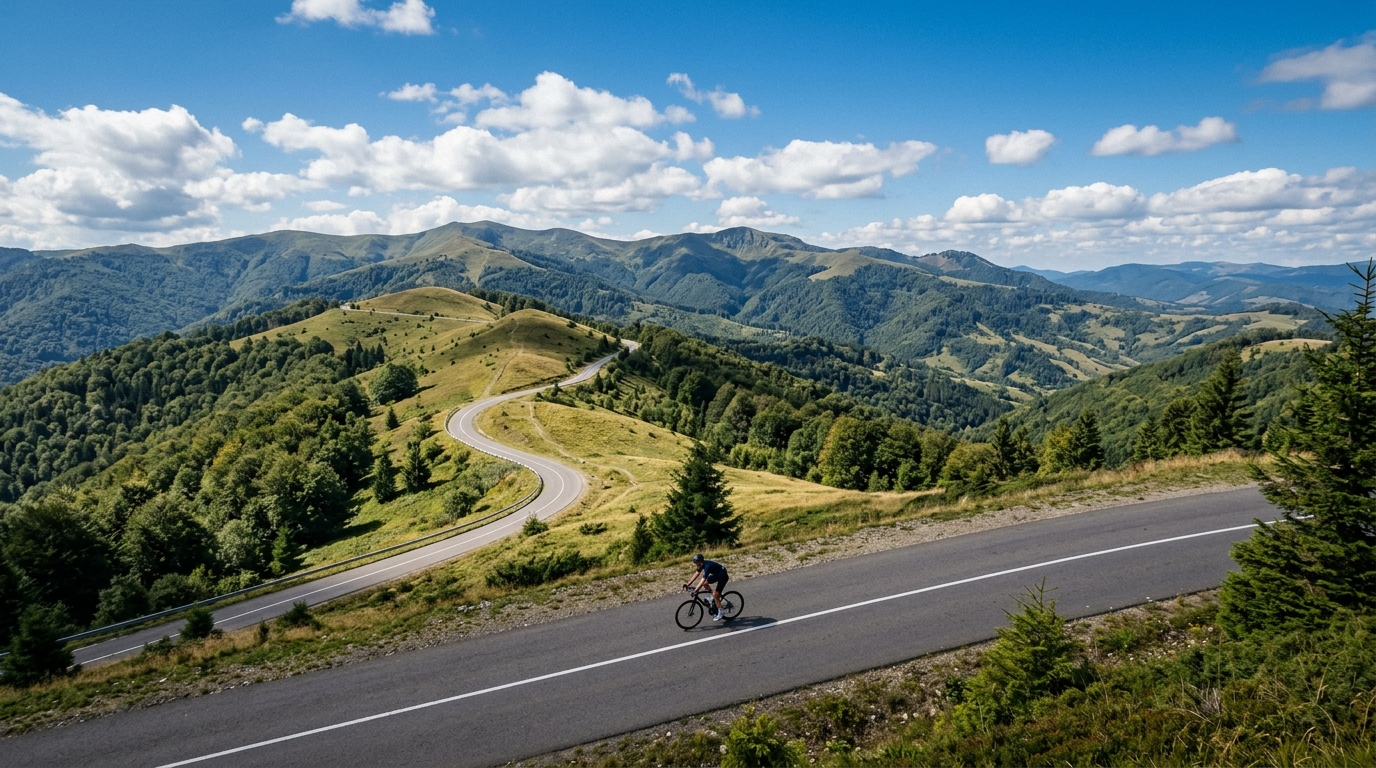
Volovets Pass
A practical pacing and gearing guide to the Volovets Pass cycling climb, a 10.9 km category 2 ascent in Ukraine averaging 4.41%.
- Length
- 10.9km
- Avg
- 4.4%
- Max
- 13.1%
- Summit
- 1,005m
- Ascent
- 473m
The climb
Gradient profile
Volovets Pass cycling climb profile
Volovets Pass is a category 2 climb in Ukraine that asks for restraint more than brute force. On paper, 10.9 km at 4.41% looks manageable, but the key number is the 13.08% maximum gradient. That gap between the average and the steepest pitch tells you the climb is not just a smooth aerobic drag. There is enough variation in the slope to punish riders who treat the average as the whole story.
The climb starts at 524 m and tops out at 1005 m, gaining 481 m from bottom to summit. Across 10.9 km, that makes it long enough to sit firmly in sustained climbing territory. The average gradient is moderate, so the dominant effort should be controlled tempo rather than repeated surges. But because the maximum gradient reaches 13.08%, the climb has at least one section where torque demand rises sharply. That is where pacing mistakes made earlier become expensive.
How the gradient rides
From the base, the only safe assumption is that the climb accumulates elevation steadily rather than violently. A 4.41% average over nearly 11 km means there is room to ride efficiently, stay seated, and keep pressure consistent on the pedals. This is the kind of climb where a rider can settle into a sustainable rhythm and make time through patience.
The complicating factor is the maximum pitch. A climb averaging 4.41% but touching 13.08% has a different tactical profile than a climb that simply sits around its mean. The steepest ramp will likely force a change in cadence, gear choice, or effort. If you arrive there already riding above your sustainable power, the ramp becomes a threshold spike rather than a short interruption.
That is the main lesson of Volovets Pass: ride the average, but prepare for the maximum.
Pacing notes
Treat the opening part of the climb as a setup, not an opportunity to prove form. The average gradient can tempt riders into pushing too hard because speed remains relatively high compared with steeper mountain roads. Keep the effort anchored around a sustainable climbing output, especially if using /glossary/ftp as a pacing reference.
A smart approach:
- Start slightly below target effort and let the climb come to you
- Keep cadence smooth on the moderate sections rather than grinding a bigger gear
- Expect at least one steep pitch where power will rise even if you stay controlled
- Avoid chasing speed changes caused by gradient shifts
- Save enough margin to ride the final kilometres without fading
For stronger riders, this is a climb where the decisive move would usually come after the steepest gradient has softened the group. For training, it works well as a sustained tempo or sweet spot effort with short higher-torque interruptions.
Gearing notes
Do not gear Volovets Pass only for the 4.41% average. Gear it for the 13.08% maximum. That does not mean riding defensively the whole way, but it does mean choosing a low enough climbing gear to stay seated and keep cadence from collapsing when the steepest section arrives.
If your easiest gear is already marginal on double-digit gradients, the climb will force standing efforts and power spikes. That is fine in a race scenario if it is intentional, but it is inefficient for a controlled ascent. The better setup is one that lets you keep a smooth rhythm on the main body of the climb while still having one gear left for the steepest ramp.
Volovets Pass is not defined by an extreme average gradient. It is defined by duration, accumulated elevation, and the tactical problem created by a moderate climb with a much steeper maximum pitch.