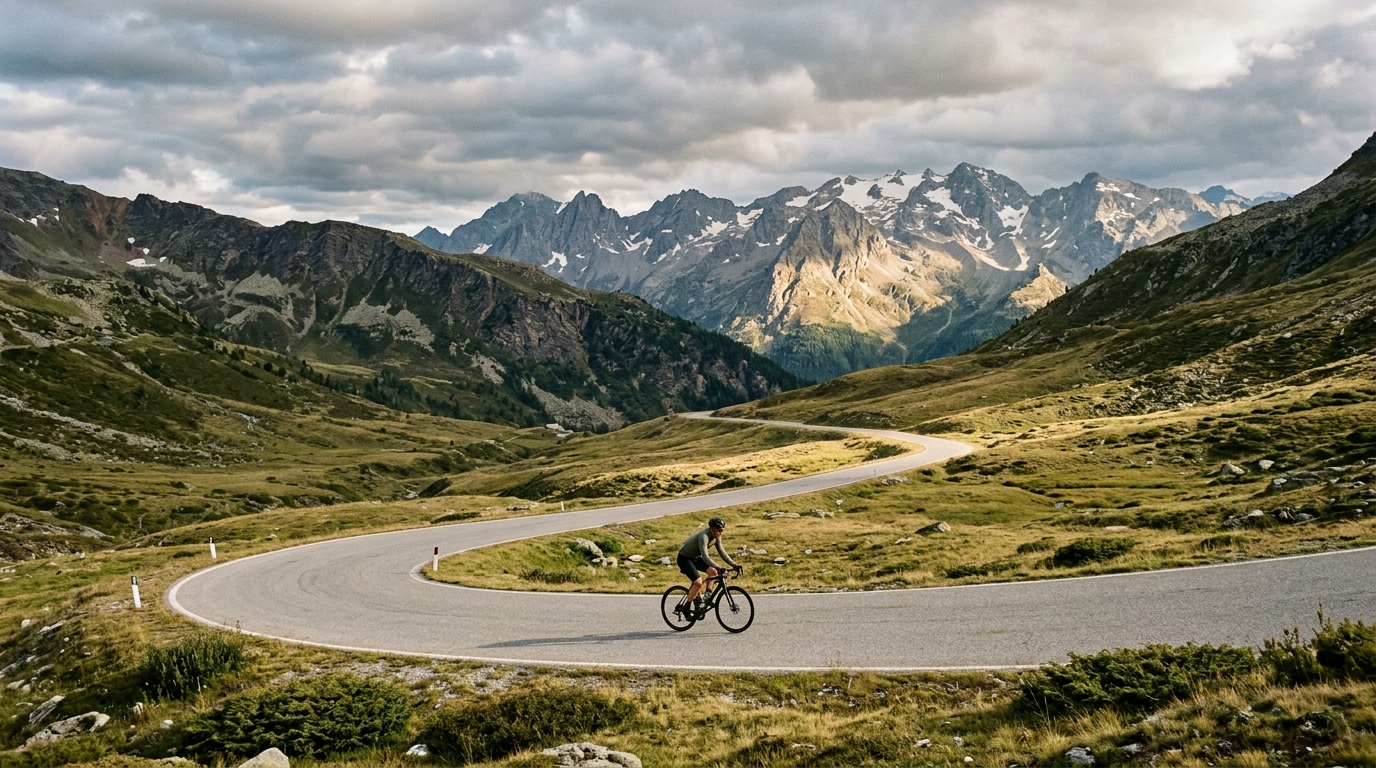
Tonale Pass
A practical pacing and gearing guide to Tonale Pass, a long Category 1 Italian climb where the distance matters more than the average gradient.
- Length
- 31.8km
- Avg
- 3.9%
- Max
- 10.2%
- Summit
- 1,871m
- Ascent
- 1,220m
The climb
Gradient profile
Tonale Pass cycling climb profile
Tonale Pass is a Category 1 climb in Italy that asks for patience more than aggression. On paper, 31.8 km at an average gradient of 3.87% can look manageable, but that headline number is exactly where riders can misread it. The difficulty is not a wall of sustained steepness. It is the accumulation of elevation gain over a long duration, with enough sharper gradient changes to punish poor pacing.
The climb starts at 638 m and rises to 1,871 m, for a net elevation gain of 1,233 m. That tells the real story: this is a long aerobic effort where the cost builds gradually. The average gradient keeps the climb from feeling consistently severe, but the maximum gradient of 10.18% means there are ramps steep enough to force a gear change, disrupt rhythm, and push riders above threshold if they arrive already overextended.
How the gradient rides
From bottom to summit, the key feature is contrast between the moderate average and the double-digit maximum. Without a steep average, the climb should not be treated like a short punchy ascent where repeated surges are sustainable. Instead, it rewards a controlled tempo that leaves margin for the steeper sections.
A rider who focuses only on the 3.87% average may be tempted to ride too close to threshold early, especially if speed feels high on the gentler gradients. The problem is that a 31.8 km climb gives small pacing errors a long runway. Once the road pitches toward its steeper ramps, those early efforts become expensive. The correct read is that Tonale Pass is a long climb with intermittent bite, not an easy climb with one or two hard moments.
Pacing strategy
Ride the lower portion as if the climb will get harder, even if the gradient initially feels forgiving. Keep the effort below your sustainable climbing ceiling and use cadence, breathing, and power discipline to avoid drifting upward. If you know your /glossary/ftp, this is a climb where staying honest matters more than chasing every rider who accelerates on a shallow section.
Practical pacing notes:
- Start conservatively and let the climb come to you.
- Avoid big surges on the gentler gradients, because the maximum gradient is steep enough to demand real reserves.
- Use the moderate sections to settle back into rhythm rather than to make up time aggressively.
- If riding by power, cap the steeper ramps rather than trying to hold a constant speed.
Gearing notes
Because the average gradient is modest but the maximum reaches 10.18%, gearing should cover both steady seated climbing and short steeper efforts. A setup that feels fine on the average grade may become inefficient if it leaves you grinding when the road pitches up.
Choose a low gear that lets you keep cadence under control on the steepest ramps without spiking torque. That matters because the climb is long enough that repeated low-cadence efforts can load the legs well before the summit. Tonale Pass is best ridden with gears that allow restraint, not just survival.
Bottom line
Tonale Pass is not defined by a brutal average gradient. It is defined by duration, elevation gain, and the tactical discipline required to handle sharper ramps inside a long Category 1 ascent. The fastest ride is likely the one that feels slightly too controlled early, then still has usable power when the climb starts asking harder questions.