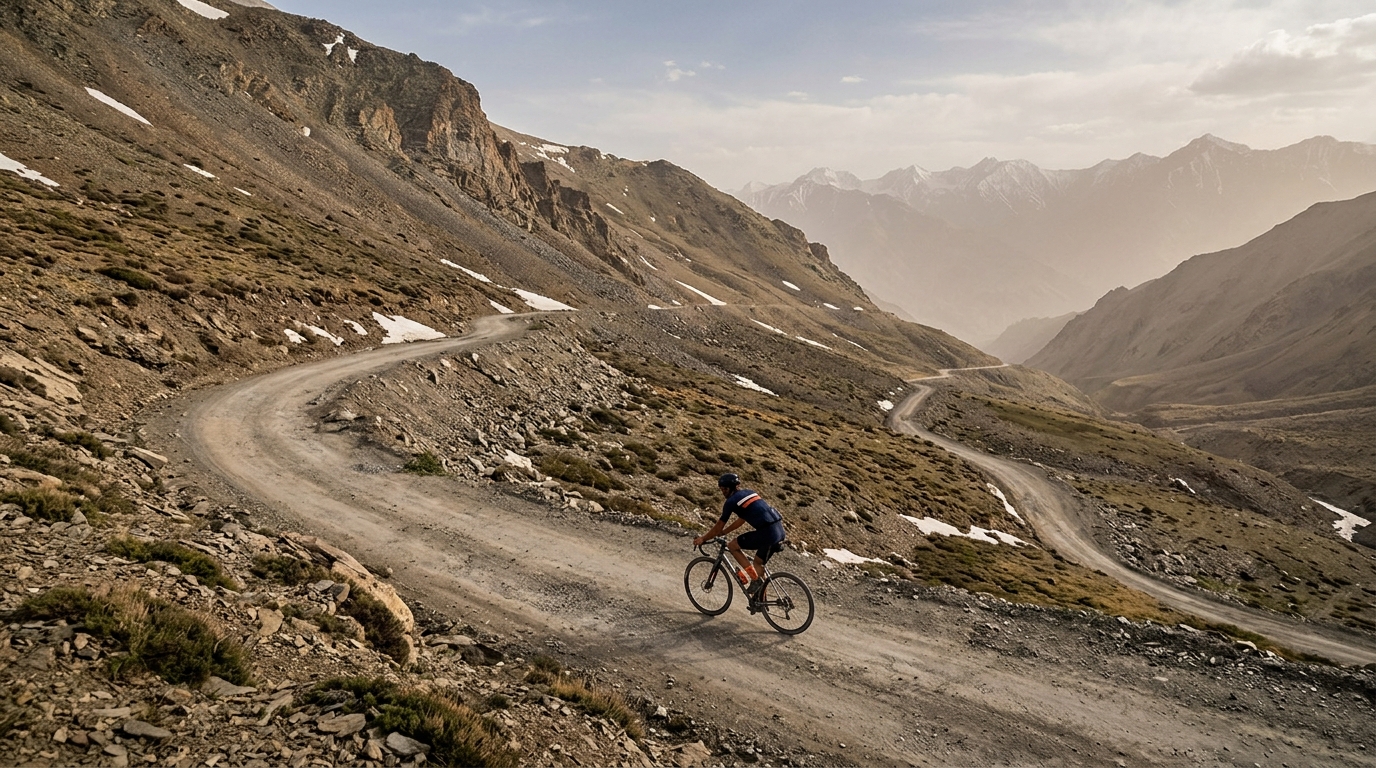
Shingo La Pass
Shingo La Pass is a 20.2 km category 1 climb in India, rising from 3,884 m to 5,043 m at an average gradient of 5.75%.
- Length
- 20.2km
- Avg
- 5.8%
- Max
- 11.0%
- Summit
- 5,043m
- Ascent
- 1,145m
The climb
Gradient profile
Shingo La Pass cycling climb profile
Shingo La Pass is a long, high, category 1 climb in India: 20.2 km from bottom to summit, starting at 3,884 m and topping out at 5,043 m. The headline number is the 5.75% average gradient, but the more useful pacing clue is the spread between that average and the 11.02% maximum. This is not a climb to treat as a steady tempo ramp from the first metre. It is long enough, and starts high enough, that small overextensions early can become expensive before the summit.
The route gains 1,159 m net from start to finish, with the context listing 1,145 m of total ascent. Either way, the practical reading is simple: nearly all of the ride is upward, and the climb asks for sustained aerobic control rather than short-climb aggression.
How the gradient rides
A 5.75% average over 20.2 km points to a climb that should feel broadly rideable on paper, but the 11.02% maximum changes the execution. The danger is not the average gradient itself. The danger is pacing the average and then being forced into the red when the road kicks into its steepest pitches.
The best way to ride Shingo La Pass is to assume the climb will not pay you back quickly after a hard acceleration. At this elevation band, repeated surges tend to have a bigger cost because recovery is slower. Even if the gradient relaxes after a steeper section, the climb is still long enough that lactate and breathing debt can carry forward into the next ramp.
That makes the middle of the climb the decisive zone. On a 20.2 km ascent, it is easy to start with controlled enthusiasm, then slowly drift above sustainable output because the gradient feels manageable. By the time the steeper sections arrive, that drift has already narrowed your margin.
Pacing and gearing notes
Ride the lower slopes as if the steepest gradient is still ahead, because the max gradient of 11.02% demands a reserve. For most riders, that means sitting below /glossary/ftp early rather than trying to lock onto a best-case power target from the start.
A sensible pacing structure:
- First phase: keep the effort deliberately capped, even if the 5.75% average feels comfortable.
- Middle phase: settle into a rhythm and avoid responding to every small change in pitch.
- Final phase: only start using threshold-level efforts once the remaining distance is psychologically manageable.
Gearing should be chosen for the maximum gradient, not the average. A setup that feels fine at 5.75% may become a grind when the road reaches its steepest point. Prioritise a low enough gear to keep cadence under control on the 11.02% sections, especially given the summit elevation of 5,043 m.
The key mistake on Shingo La Pass is riding it like a moderate climb because of the average gradient. The better read is that it is a long aerobic climb with enough steepness to punish poor gear choice and enough altitude to punish impatience.