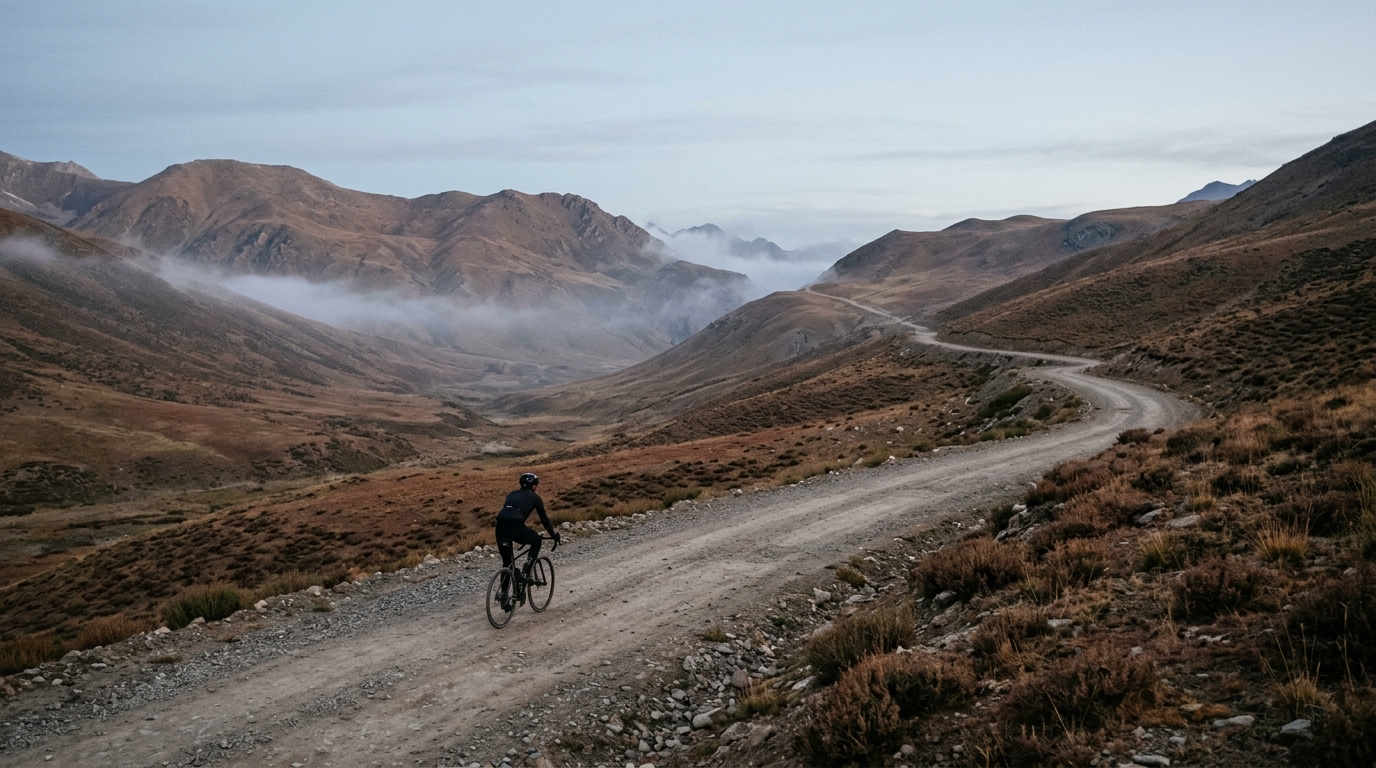
Shandur Pass
A practical profile of the Shandur Pass cycling climb, with pacing, gearing, and gradient notes for its 13 km rise to 3,711 m.
- Length
- 13km
- Avg
- 6.6%
- Max
- 14.9%
- Summit
- 3,711m
- Ascent
- 855m
The climb
Gradient profile
Shandur Pass cycling climb profile
Shandur Pass is a category 1 climb in PK, and the headline numbers explain why it needs to be ridden with discipline rather than aggression. The climb runs for 13 km, gains 861 m from start to summit, and averages 6.61%. That is not a wall, but it is long enough and high enough that poor pacing early will be expensive before the top.
The start elevation is already 2,850 m, with the summit at 3,711 m. That changes the feel of the climb. A 6.61% average at lower elevation can be managed with a strong tempo rhythm, but here the same gradient is likely to feel less forgiving because the effort sits on top of a high-altitude baseline. The practical takeaway is simple: ride by sustainable output, not by how the gradient looks on paper.
How the gradient unfolds
The available profile data points to a direct, sustained climb rather than a rolling ascent. Over 13 km, the road gains almost all of its elevation continuously, so there is limited opportunity to reset the legs. The average gradient of 6.61% suggests long sections that reward rhythm, seated climbing, and controlled breathing.
The catch is the maximum gradient of 14.91%. Even without knowing exactly where that ramp appears, it matters tactically. A climb with this average and that maximum is not just a steady diesel effort. It has at least one section steep enough to force a gear change, disrupt cadence, and spike power if approached carelessly.
That combination makes Shandur Pass a climb where the average can understate the cost. The main body of the ascent invites tempo riding, but the steepest pitches demand a reserve. Riders who sit just under /glossary/ftp on the steadier ground will have room to absorb the harder ramps. Riders who treat the opening kilometres like a short climb risk turning the upper half into survival.
Pacing and gearing notes
Start conservatively. The climb is long enough that the first goal is to establish a repeatable cadence and breathing pattern, not to force speed. If using power, anchor the effort below threshold until the steepest sections are clearly behind you. If riding by feel, the right intensity is hard but controlled, with no need to stand unless the gradient forces it.
Gearing should be chosen for the 14.91% maximum gradient, not the 6.61% average. An easy climbing gear gives two advantages here: it keeps cadence from collapsing on the steepest ramps, and it reduces the temptation to punch above sustainable power. That matters more on a high summit climb, where every unnecessary surge carries a larger cost.
The best approach is to ride Shandur Pass as a long aerobic climb with short anaerobic interruptions. Protect momentum on the steady sections, stay seated where possible, and leave enough in reserve for the steepest grades before the summit at 3,711 m.