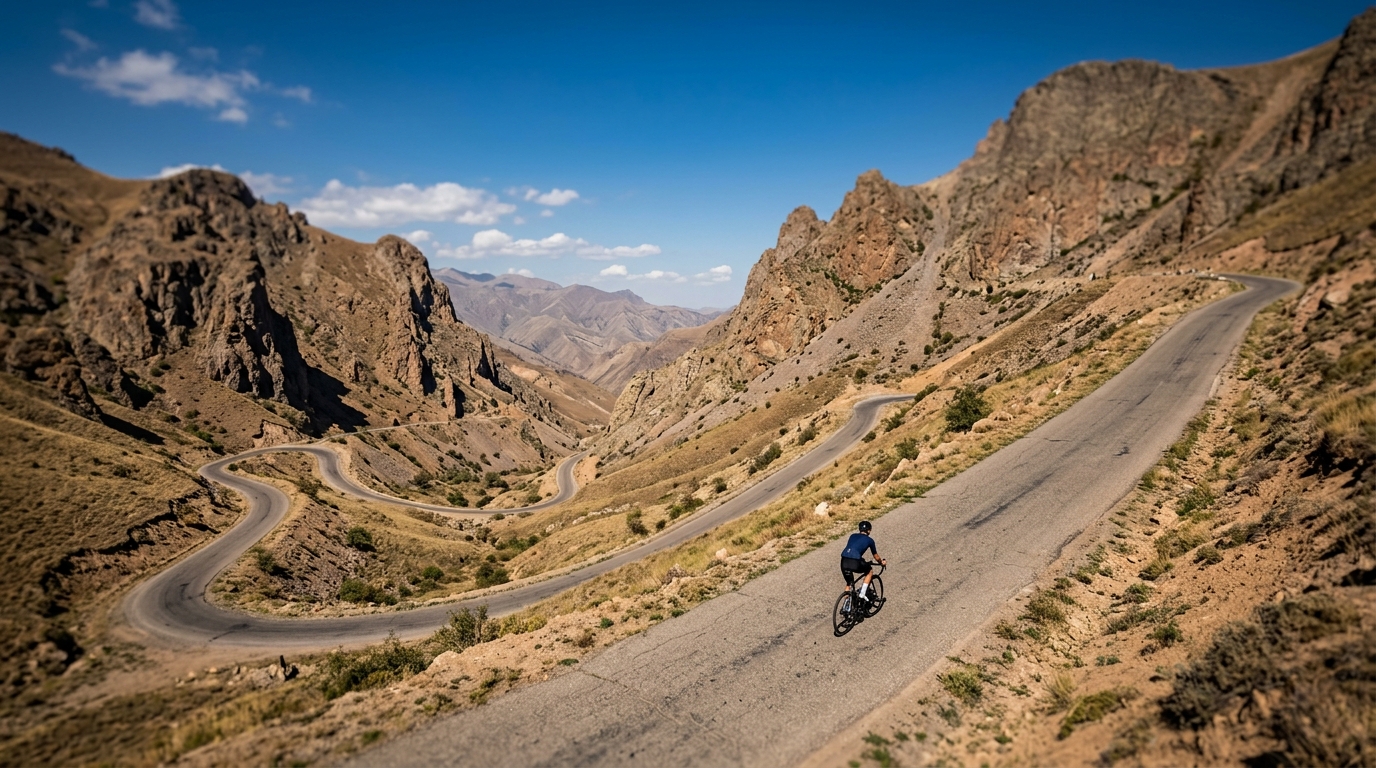
Selim mountain pass
A steep HC climb in Armenia: 10.5 km at 9.94%, with a 16.85% maximum gradient and more than 1,000 m of net elevation gain.
- Length
- 10.5km
- Avg
- 9.9%
- Max
- 16.9%
- Summit
- 2,576m
- Ascent
- 1,010m
The climb
Gradient profile
Selim mountain pass cycling climb profile
Selim mountain pass is a simple climb to understand and a hard one to ride well. The numbers do not leave much room for recovery: 10.5 km at an average gradient of 9.94%, rising from 1537 m to 2576 m, with 1039 m of net elevation gain. That puts it firmly in HC territory, and the key tactical point is that this is not a climb where the average gradient feels manageable once the road starts biting.
An average just under 10% over this distance means the baseline effort is already expensive. The maximum gradient of 16.85% matters because it tells you the climb is not merely steady and hard. There are ramps sharp enough to force a change in torque, cadence, and position. If you pace Selim mountain pass as if the gradient will sit neatly at the average, the steeper sections will make you pay twice: first with an anaerobic spike, then with the loss of rhythm that follows.
How the gradient shapes the ride
The climb gains almost all of its height directly, with the start at 1537 m and the summit at 2576 m. Practically, that means the road is doing real vertical work for the full 10.5 km. There is no reason to expect meaningful free speed or long settling sections from the profile data alone.
The right mental model is a sustained threshold climb with repeated pressure from steeper pitches. The 9.94% average sets the floor. The 16.85% maximum sets the risk. Those two figures together are what make the climb hard: the average keeps you loaded, while the steepest ramps limit your ability to recover if you have already overreached.
Pacing and gearing notes
Start below the effort you think you can hold. On a climb this steep, early enthusiasm is costly because speed is low and every surge tends to come from muscular force rather than momentum. A controlled first section gives you options later; an overpaced start leaves you grinding before the hardest gradients arrive.
Gearing should be chosen for the steepest parts, not the average. The 16.85% maximum gradient is the number that should drive setup. If your lowest gear only feels comfortable on a steady 9.94%, it is not low enough for the full climb. The goal is to keep enough cadence range to stay seated through the hard ramps and avoid turning every steep pitch into a strength effort.
Use power, if available, as a governor rather than a target to chase. On gradients near this average, perceived effort can lag behind the real cost until the legs suddenly stop responding. Riders using /glossary/ftp should treat the climb as a long controlled effort with strict caps on surges. The decisive move is not attacking Selim early. It is arriving near the summit with enough control left to keep pressure on when the road is still steep.