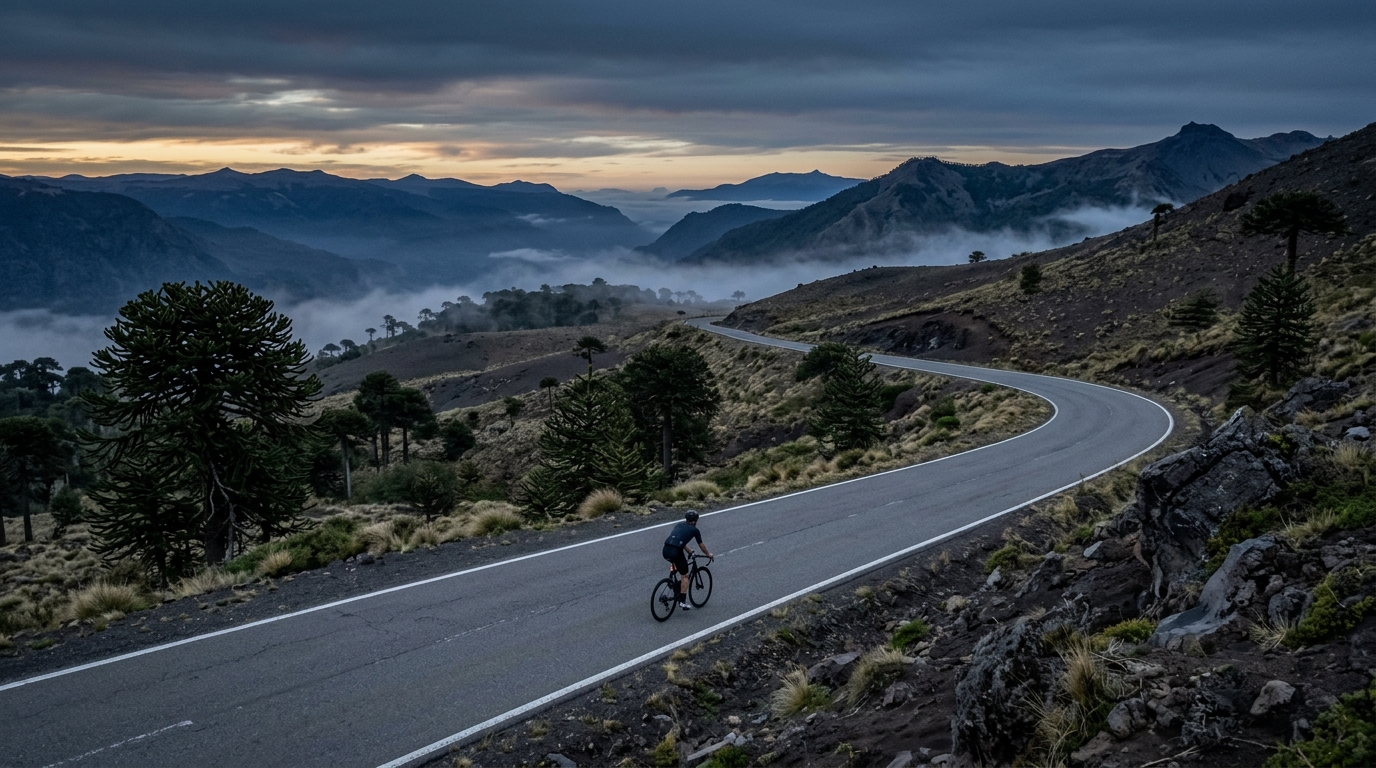
Pino Hachado Pass
A steady Category 2 climb in Chile: 17.8 km at 4.5%, with enough length and 7.8% ramps to reward disciplined pacing.
- Length
- 17.8km
- Avg
- 4.5%
- Max
- 7.8%
- Summit
- 1,879m
- Ascent
- 785m
The climb
Gradient profile
Pino Hachado Pass cycling climb profile
Pino Hachado Pass is a Category 2 climb in Chile that asks for restraint more than aggression. On paper, the defining feature is not brutality, but duration: 17.8 km at an average gradient of 4.5%, rising from 1078 m to 1879 m for a listed net elevation gain of 801 m.
That combination makes it a climb where the early effort matters. A 4.5% average can feel manageable at the bottom, especially if the road is rolling along below the maximum gradient, but nearly 18 km gives small mistakes time to compound. Ride it too close to threshold from the start and the upper half becomes less about climbing well and more about limiting the damage.
How the gradient rides
The available profile data points to a climb that is generally moderate rather than sharply irregular. The maximum gradient is 7.8%, which means the steepest sections are meaningful, but not the kind of ramps that should force a complete change of strategy for a prepared rider.
The important tactical read is the gap between the 4.5% average and the 7.8% maximum. This is not a climb defined by sustained double-digit gradients. Instead, it is likely to reward a smooth aerobic rhythm, with short periods where the gradient tightens enough to test whether you have overcommitted earlier.
Because the climb gains height steadily from 1078 m to 1879 m, pacing should be built around the full ascent rather than any single steep section. The road may not look threatening at 4.5%, but a Category 2 label over 17.8 km usually means the cost is cumulative.
Pacing and gearing notes
Treat the first part as controlled climbing, not as a place to prove freshness. For riders using power, start below your sustainable climbing ceiling and let the effort settle before pressing toward /glossary/ftp. If riding by feel, the correct early sensation is productive but slightly held back.
The 7.8% maximum gradient is the gearing clue. You do not need a bailout setup aimed at extreme walls, but you do need an easy enough climbing gear to stay seated and composed when the road pitches above the average. If your gearing only feels comfortable on 4% to 5% gradients, the steeper ramps will force spikes that are expensive over 17.8 km.
A strong ride on Pino Hachado Pass is likely to look controlled rather than dramatic: steady pressure through the middle, no big surges on the ramps, and enough reserve to keep the final kilometres from turning into a fade. The climb is manageable, but only if you respect its length.