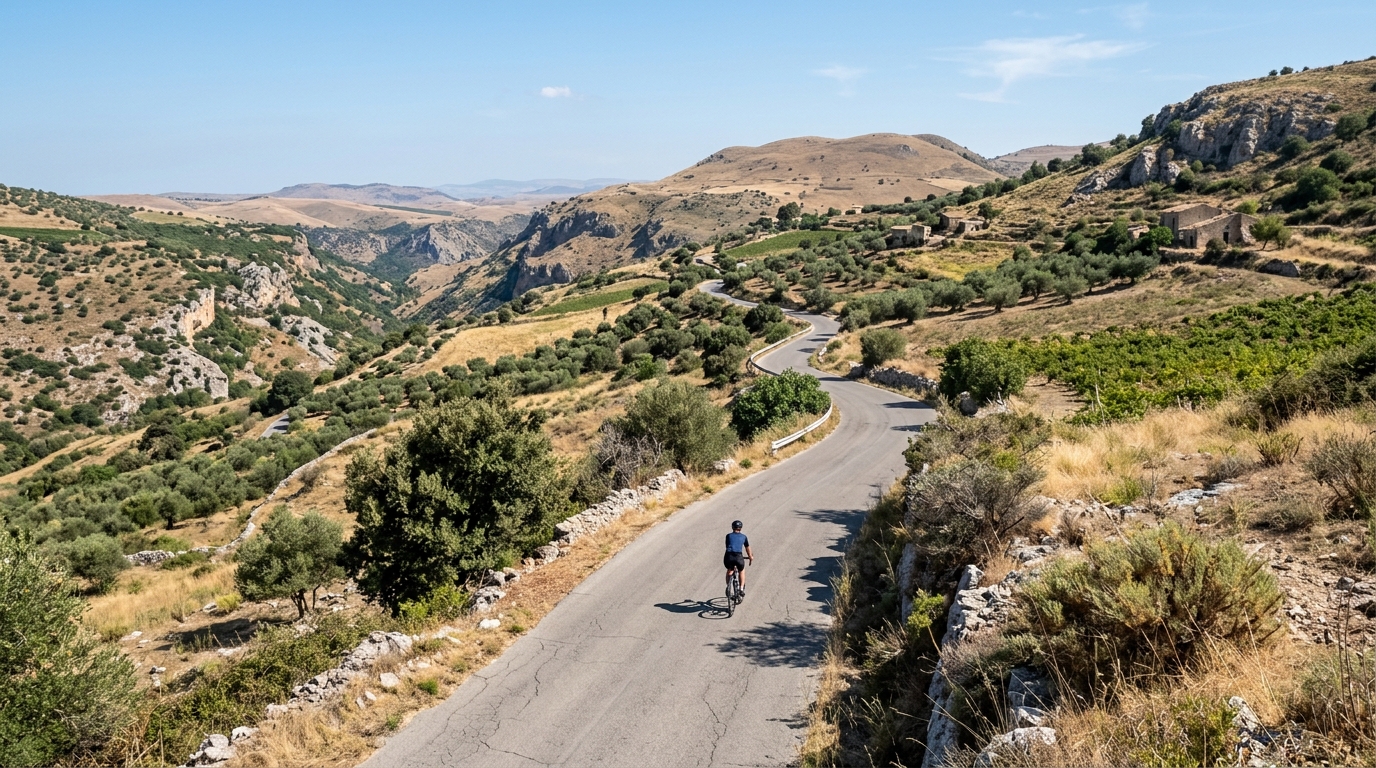
Passo di Mirabella-Pianopantano
A practical pacing guide to the Passo di Mirabella-Pianopantano cycling climb, a 7.1 km category 3 ascent in Italy.
- Length
- 7.1km
- Avg
- 3.8%
- Max
- 7.1%
- Summit
- 449m
- Ascent
- 240m
The climb
Gradient profile
Passo di Mirabella-Pianopantano climb profile
The Passo di Mirabella-Pianopantano cycling climb is a category 3 ascent in Italy that is more about controlled pressure than survival climbing. On paper, it runs for 7.1 km, starts at 183 m, tops out at 449 m, and gains 266 m net elevation. The average gradient is 3.76%, with a maximum gradient of 7.06%.
That combination tells you a lot about how it should ride. The average is modest, but the maximum gradient is nearly double the mean, so this is unlikely to feel like one perfectly even tempo ramp from bottom to summit. The key point is that the steepest sections are not extreme enough to force a full reset in strategy, but they are steep enough to punish riders who treat the lower slope like free speed.
How the gradient shapes the effort
At 7.1 km, this climb is long enough to require pacing discipline, but not so long that it becomes a pure threshold-management problem. The 3.76% average means a strong rider can carry speed, stay seated for much of the ascent, and keep momentum through the gentler ground. The danger is psychological: shallow gradients invite overgearing and small surges, especially if the road feels fast early on.
The 7.06% maximum matters because it is where sloppy pacing shows up. If you arrive at the steeper pitch already riding above sustainable power, the climb can quickly turn from smooth tempo into repeated accelerations and recoveries. That is inefficient on a climb with this profile. The better approach is to keep the effort capped early, let the speed vary with the gradient, and avoid chasing every change in pace.
Pacing and gearing notes
Ride the lower part as a controlled aerobic build rather than an attack point. If using power, settle below or around your sustainable climbing effort and only let it rise briefly on the steeper ramps. Riders pacing by feel should aim for firm pressure on the pedals while still holding enough reserve to respond when the road touches its maximum gradient.
Gearing should favor cadence over torque. The average gradient does not demand ultra-low climbing gears for most riders, but having an easier option available is still useful when the slope reaches 7.06%. Grinding a big gear on a climb this moderate usually costs more than it gives back, because the time gained on shallow sections can disappear quickly once cadence drops on the steeper pitch.
For training, this is a good climb for steady tempo work, controlled /glossary/ftp efforts, or repeatable pacing practice. The fastest ride will usually come from making the climb feel almost too restrained at the bottom, then using the final section to spend what is left rather than repairing earlier mistakes.