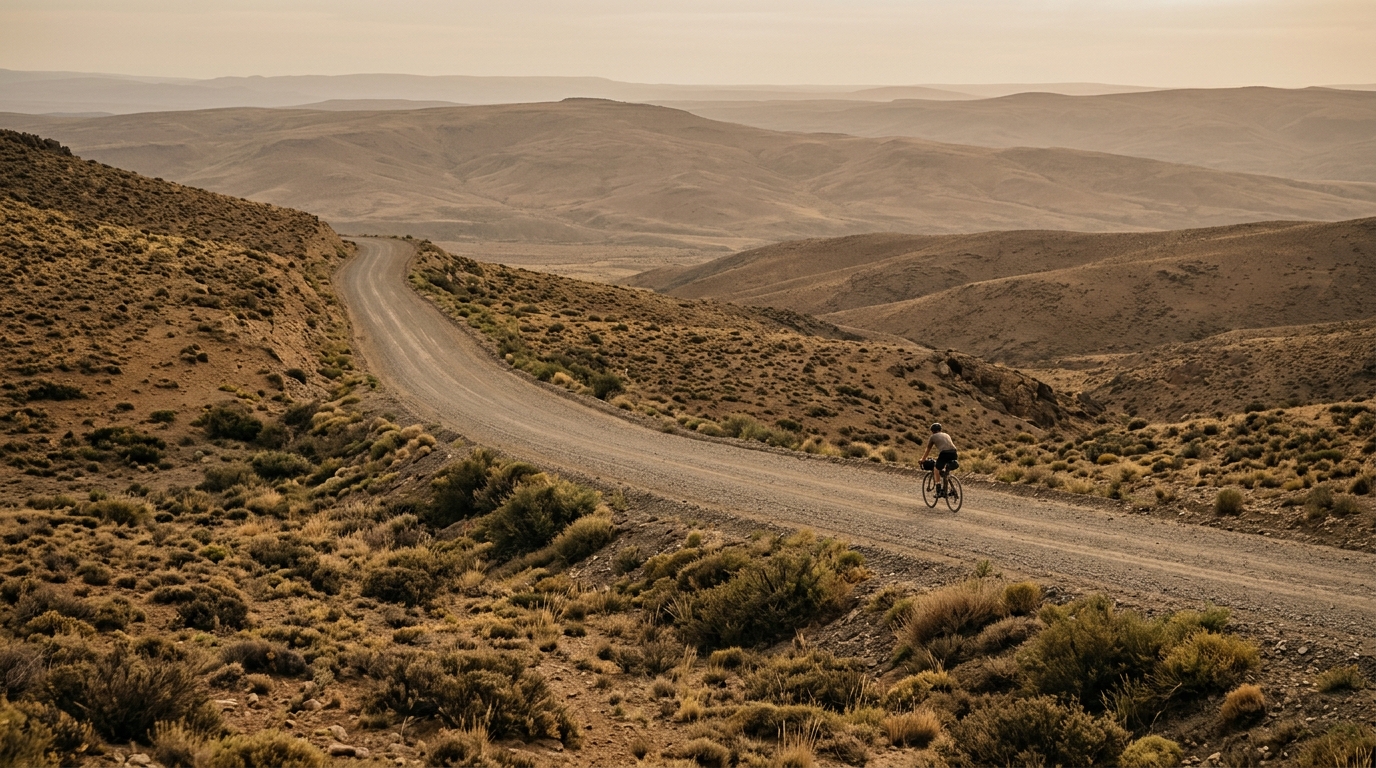
Paso de Indios
A short, steady category 4 climb in AR where the average and maximum gradients sit close together, making pacing discipline more important than survival gearing.
- Length
- 1.8km
- Avg
- 4.4%
- Max
- 4.7%
- Summit
- 399m
- Ascent
- 62m
The climb
Gradient profile
Paso de Indios cycling climb profile
Paso de Indios is a short category 4 climb in AR, measuring 1.8 km at an average gradient of 4.39%. It starts at 318 m and tops out at 399 m, with 81 m of net elevation gain listed in the supplied profile.
The defining feature is not steepness. It is control. With a maximum gradient of 4.71%, the climb appears to stay close to its average rather than swinging between easy recovery sections and sharp ramps. That makes Paso de Indios less of a torque test and more of a pacing test, because the road gives few obvious cues to back off or reset.
How the gradient unfolds
From bottom to summit, the profile should feel steady and shallow by climbing standards. The average gradient of 4.39% tells you this is climbable at a seated rhythm for most riders, while the maximum gradient of 4.71% suggests there is no decisive wall hidden near the top.
That matters tactically. On a climb this short, the biggest mistake is treating the opening slope as free speed. Because the gradient does not appear to change much, an early over-acceleration can quietly push you above sustainable effort before you have enough road left to recover. The climb will likely reward riders who settle immediately into pressure, keep cadence stable, and build through the final portion rather than surge from the base.
Pacing and gearing notes
For a rider using power, Paso de Indios is the type of climb where effort should sit around a controlled hard tempo to threshold feel, depending on the goal. If it is part of a longer ride, keep it below the point where breathing becomes ragged. If it is an effort, the steady gradient makes it a good place to practice smooth power delivery against gravity without the disruption of steep ramps. For more on anchoring that effort, see /glossary/ftp.
Gearing should be straightforward. Since the maximum gradient is only 4.71%, most riders will not need a bailout gear unless they are carrying fatigue, riding into wind, or deliberately keeping cadence high. The better choice is the gear that lets you stay seated and avoid grinding. If cadence starts falling early, shift before the legs load up rather than waiting for the climb to force the issue.
The practical read is simple: Paso de Indios is short, steady, and easy to underestimate. It will not usually be decided by who can handle a steep pitch, but by who resists starting too hard and keeps the same clean rhythm all the way to the summit.