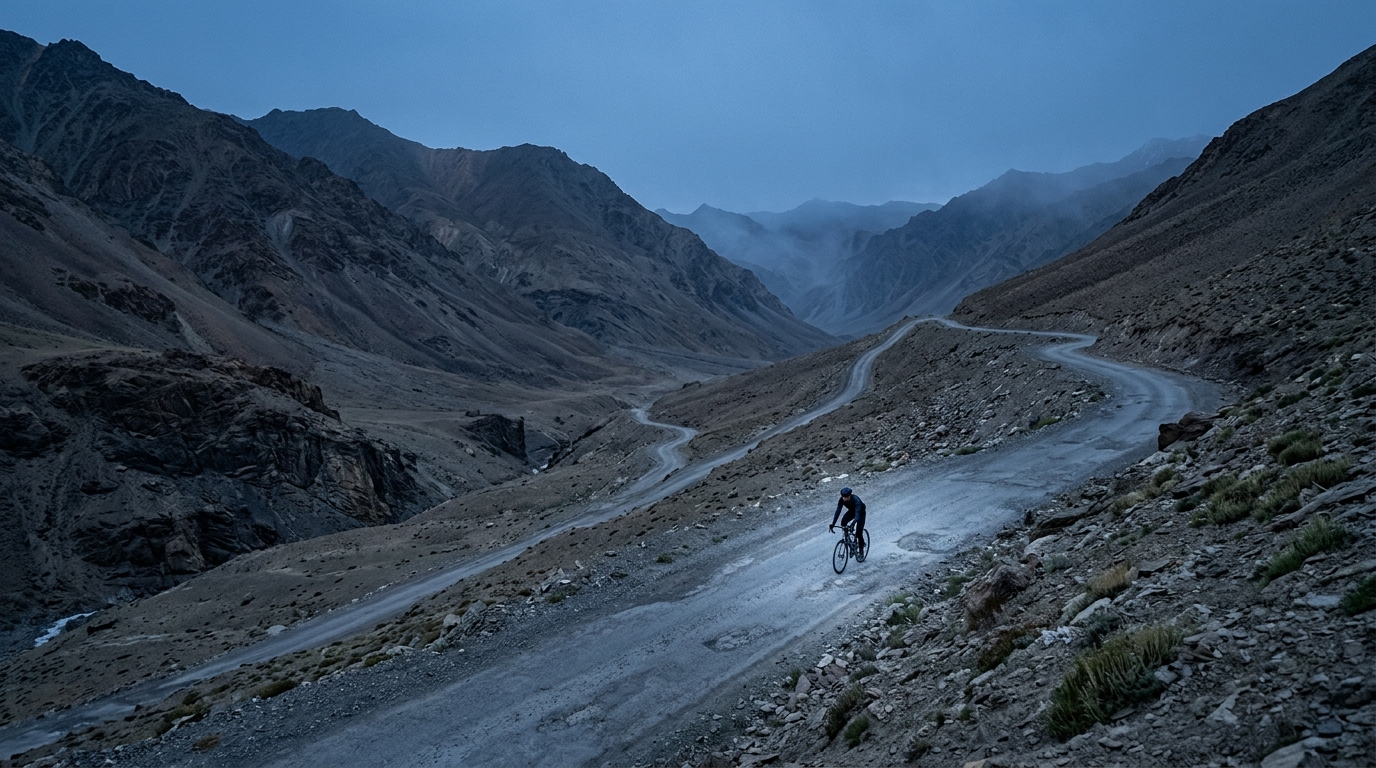
Karakoram Pass
A short, high-altitude category 3 climb: 2.8 km at 6.19%, starting at 5053 m and topping out at 5226 m.
- Length
- 2.8km
- Avg
- 6.2%
- Max
- 7.2%
- Summit
- 5,226m
- Ascent
- 152m
The climb
Gradient profile
Karakoram Pass cycling climb profile
The Karakoram Pass cycling climb is not defined by length. At 2.8 km, it is short enough to look manageable on paper, and its 6.19% average gradient sits in controlled climbing territory rather than survival terrain. The real context is where the effort starts and finishes: from 5053 m to 5226 m, with 173 m of net elevation gain.
That changes the way the climb rides. A grade that would normally invite a firm tempo can feel much more expensive when the body is already dealing with the demands of elevation. The mistake here is treating the profile like a standard category 3 punch. The numbers suggest a climb that rewards restraint more than aggression.
How the gradient unfolds
The available profile points to a steady ascent rather than a climb with violent changes in pitch. The maximum gradient is 7.21%, only a little above the 6.19% average, so the defining feature is not a single decisive ramp. It is the accumulation of a moderate gradient in a very high setting.
From the lower slopes at 5053 m, the road effectively asks for a sustained seated effort. Because the climb gains its elevation over just 2.8 km, there is not much room to recover if the opening pace is too ambitious. The top section should not require a dramatically different tactical approach based on the listed maximum gradient, but fatigue can make the final metres feel sharper than the profile implies.
One data note matters: the climb is listed with 173 m of net elevation gain and 152 m of total ascent. For pacing, the useful takeaway is not the exact vertical accounting, but the shape implied by the gradient figures: compact, uphill, and relatively consistent.
Pacing and gearing notes
Ride this as a controlled threshold-adjacent climb, not as a short maximal effort. If using power, anchor the opening minutes below the number you would normally choose for a 2.8 km climb, then reassess once breathing stabilises. A simple reference point is /glossary/ftp, but perceived exertion matters more than usual here because altitude can distort what familiar power feels like.
Gearing should prioritise cadence control. The 7.21% maximum gradient does not demand extreme bailout gearing by itself, but the elevation makes low-cadence grinding costly. A setup that lets you stay seated and smooth across a 6% to 7% grade is the practical choice.
The best ride here is boring in the first half and deliberate in the second. Keep the effort capped early, avoid chasing speed on the average gradient, and use the final stretch only once the summit at 5226 m is genuinely within reach.