Climb library · Japan
Cycling climbs in Japan
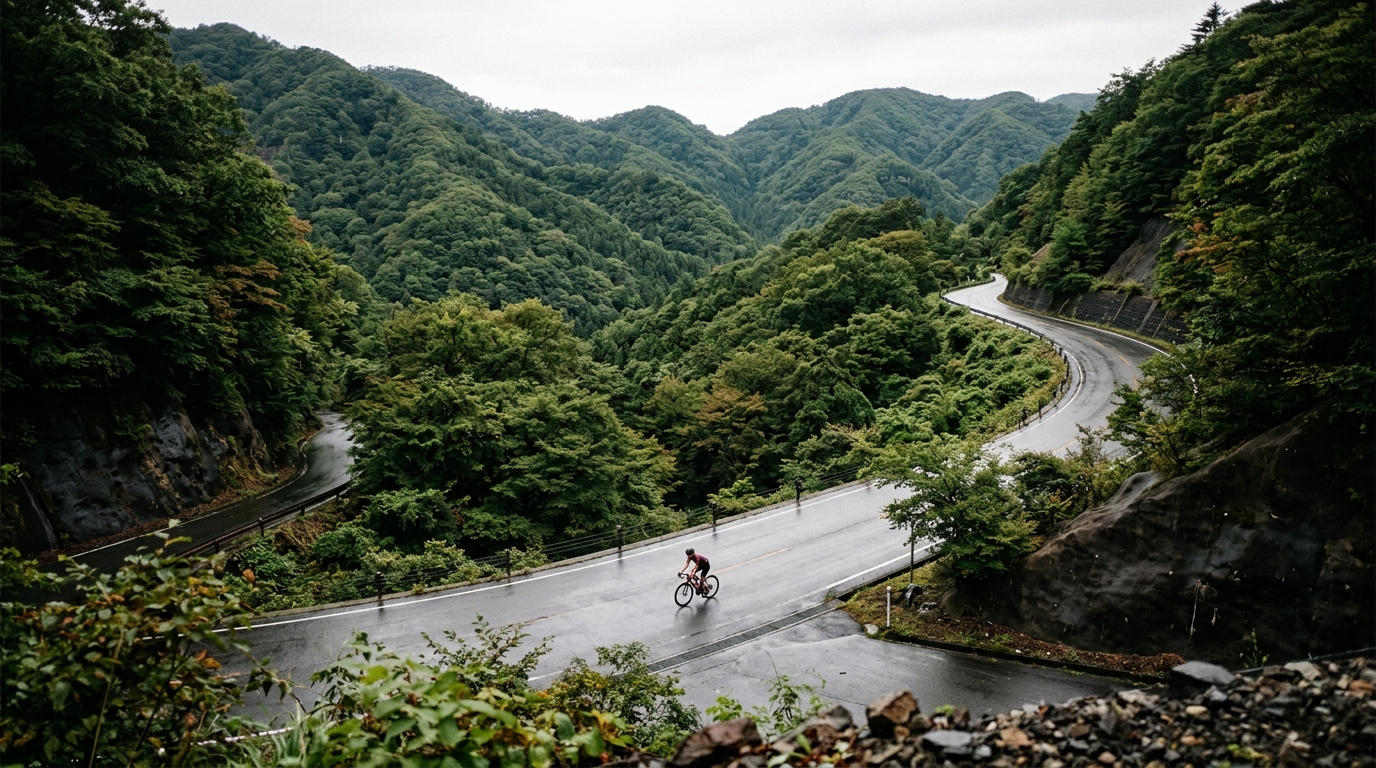
Japan rewards the patient climber with 102 catalogued ascents that thread through steep, forested mountains and rise into thin, quiet air. Of these, 11 carry the hors catégorie rating, the most demanding tier a cyclist can face, and the highest summit tops out at a lung-testing 2358 m. Gradients here are rarely gentle for long, and the reward for grinding upward is a landscape that shifts from dense woodland to open ridgeline as the road tilts toward the sky.
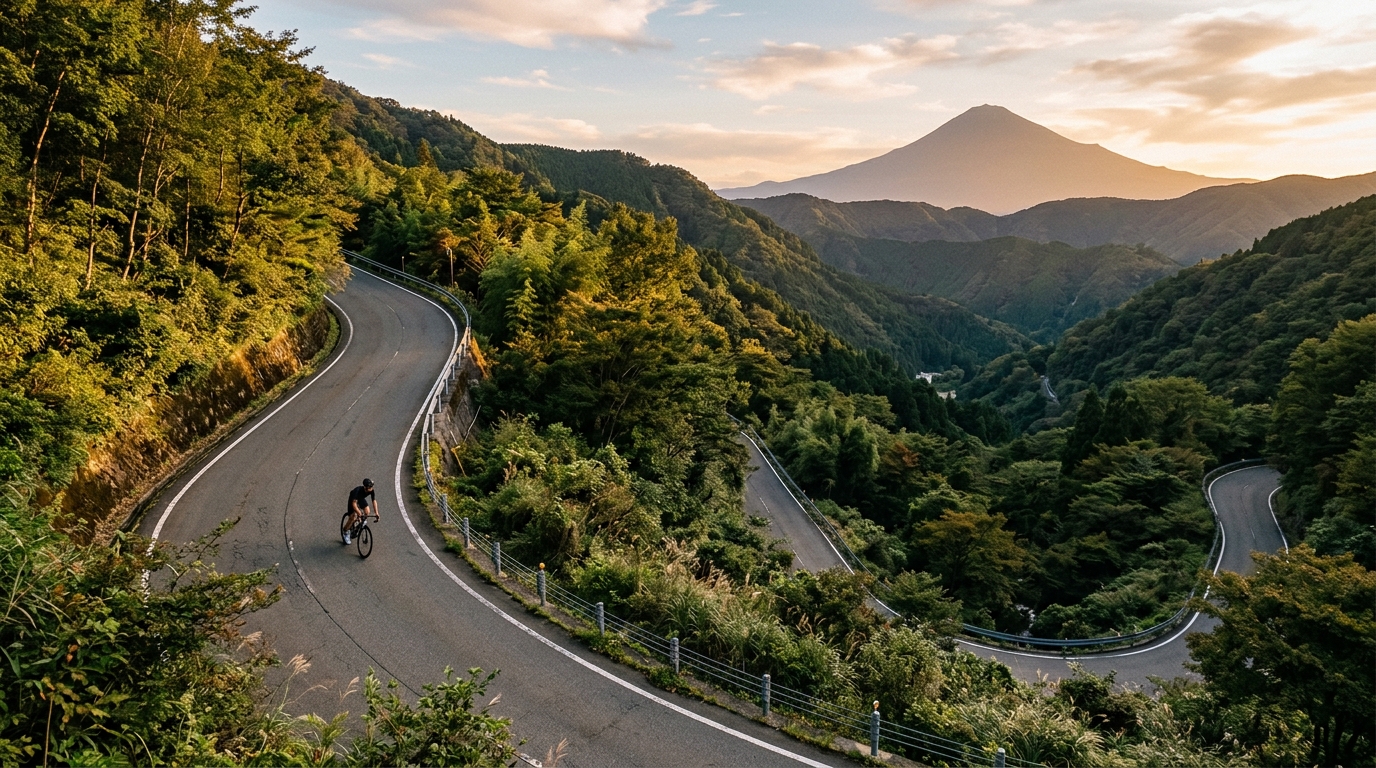
The marquee names read like a rite of passage. Shibu-tōge stands among the country's most feared paved climbs, while Ōdarumi Pass, Mugikusa Pass, Konsei Pass, and Yanagisawa Pass each carve their own relentless line toward the heights. Together they make Japan a destination for riders chasing altitude, punishing gradients, and the deep satisfaction that only a hard-won summit can deliver.
Signature climbs of Japan
All climbs in Japan
130 climbs
 Puerto de MisakiCat 4JP · 1.4 km · 7.9% · 46 m85pts
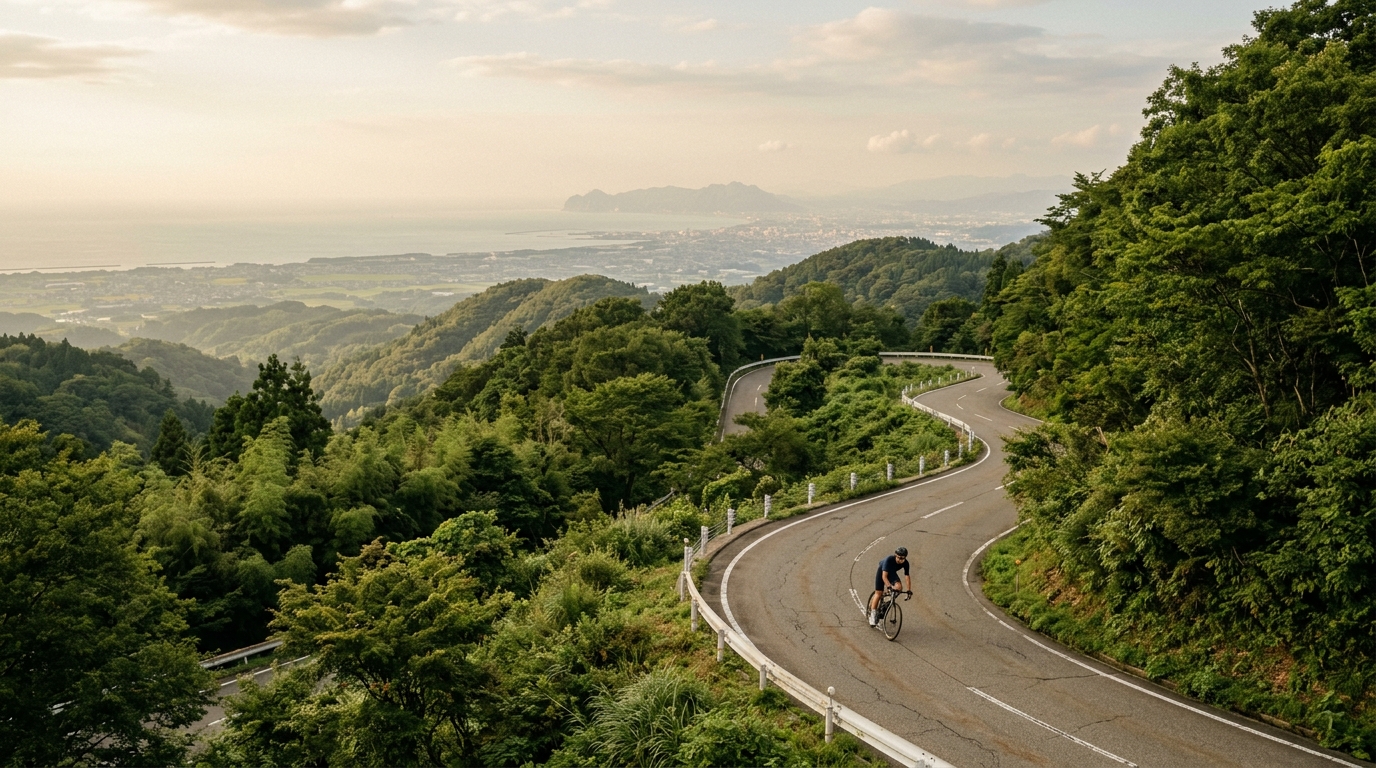 Kurikara PassCat 4JP · 8.3 km · 3.1% · 413 m78pts
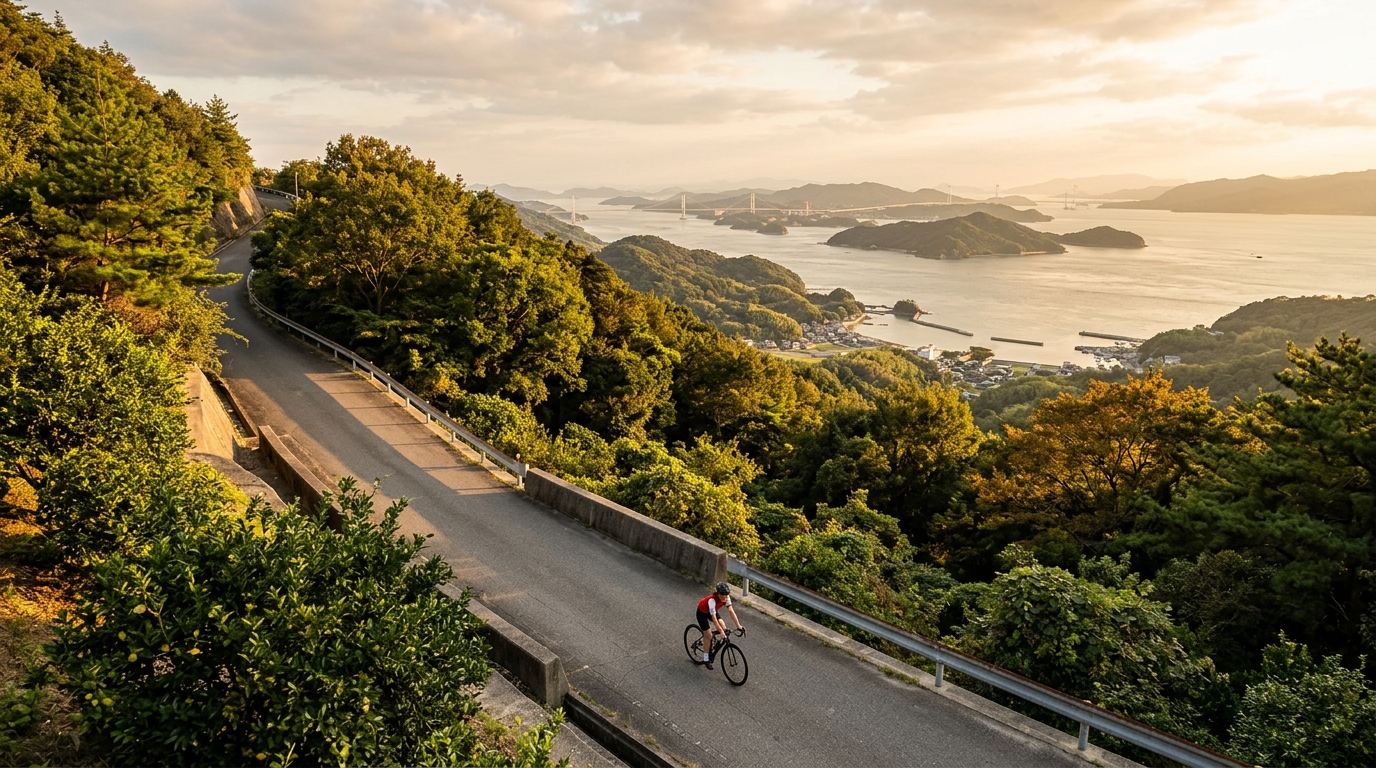 Puerto de ImabariCat 4JP · 1.0 km · 7.5%58pts
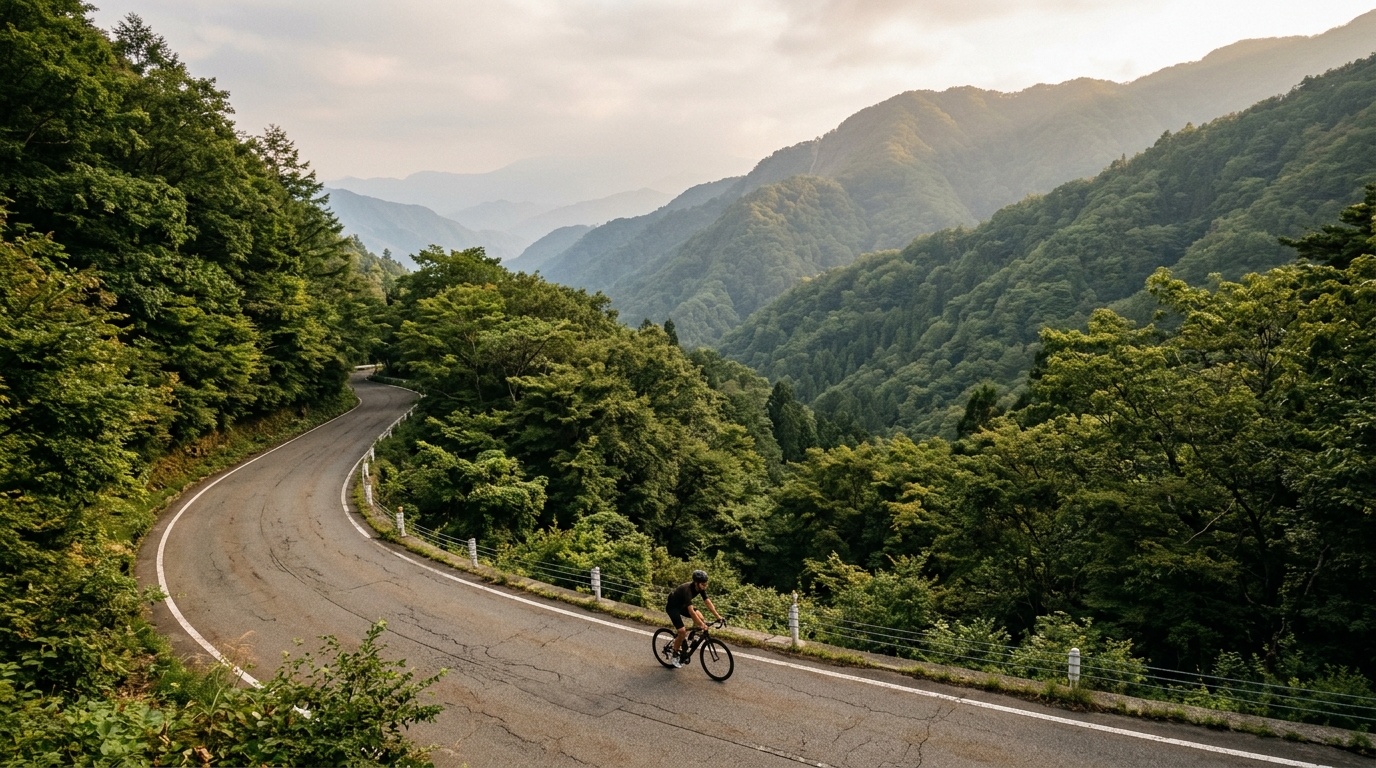 Tsuru PassCat 3JP · 9.7 km · 4.2% · 976 m171pts
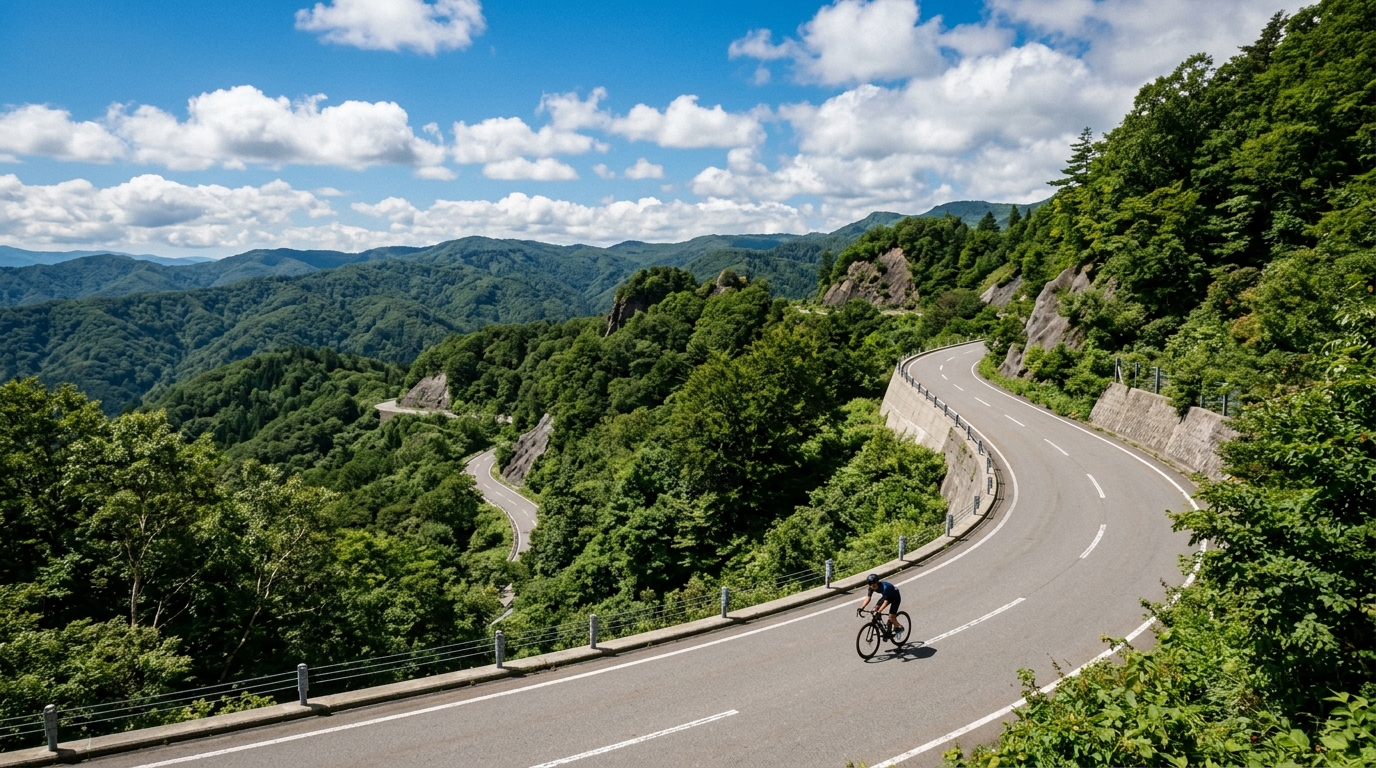 Nakayama PassCat 3JP · 8.7 km · 4.3% · 473 m160pts
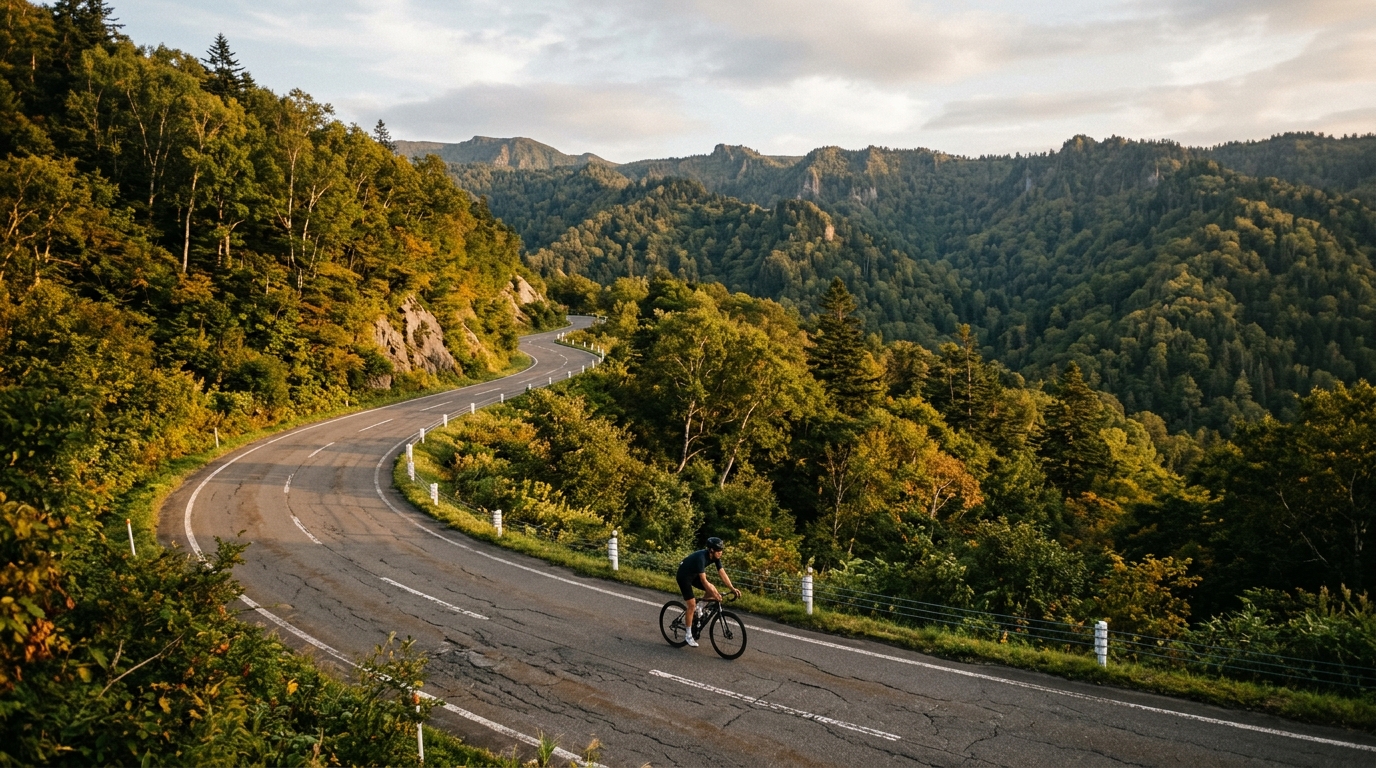 Sekihoku PassCat 3JP · 11.1 km · 3.7% · 716 m149pts
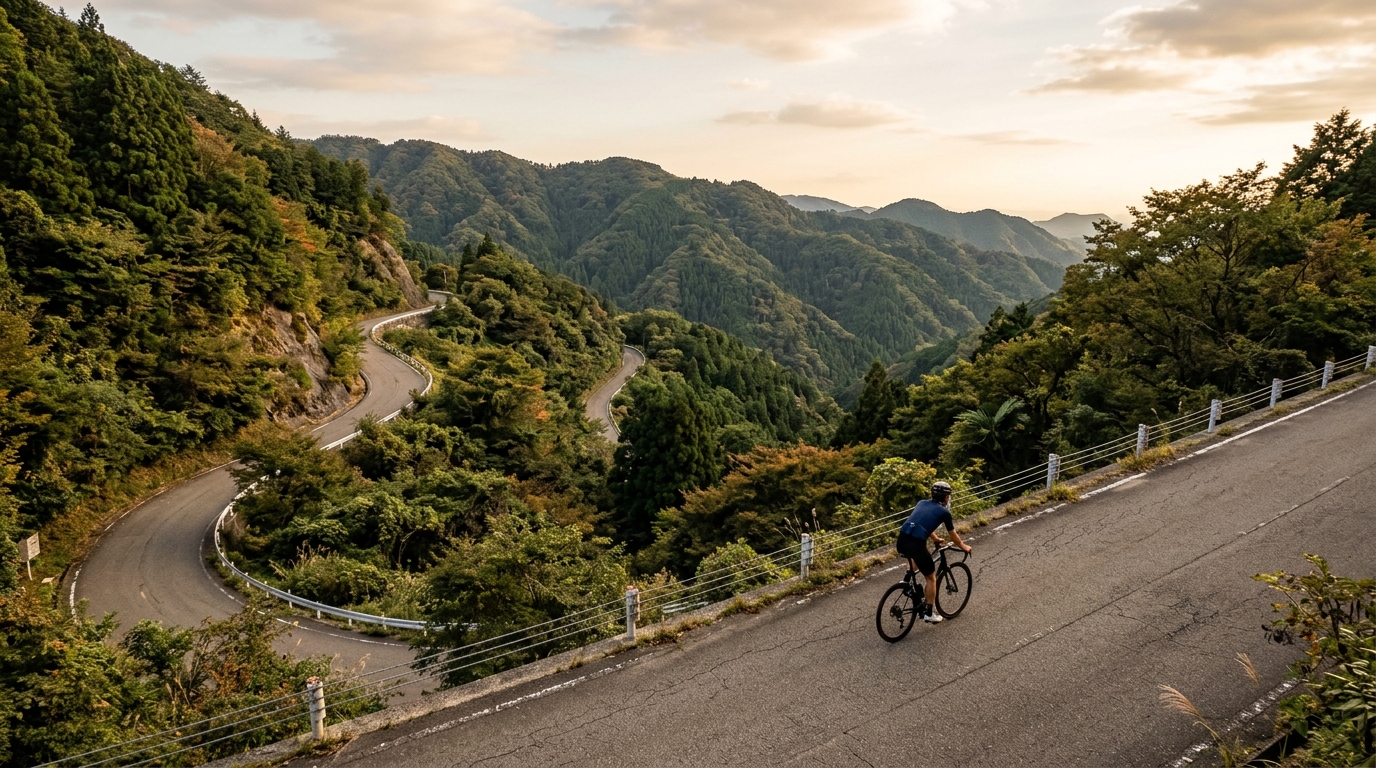 Suzuka PassCat 3JP · 6.4 km · 4.8% · 398 m147pts
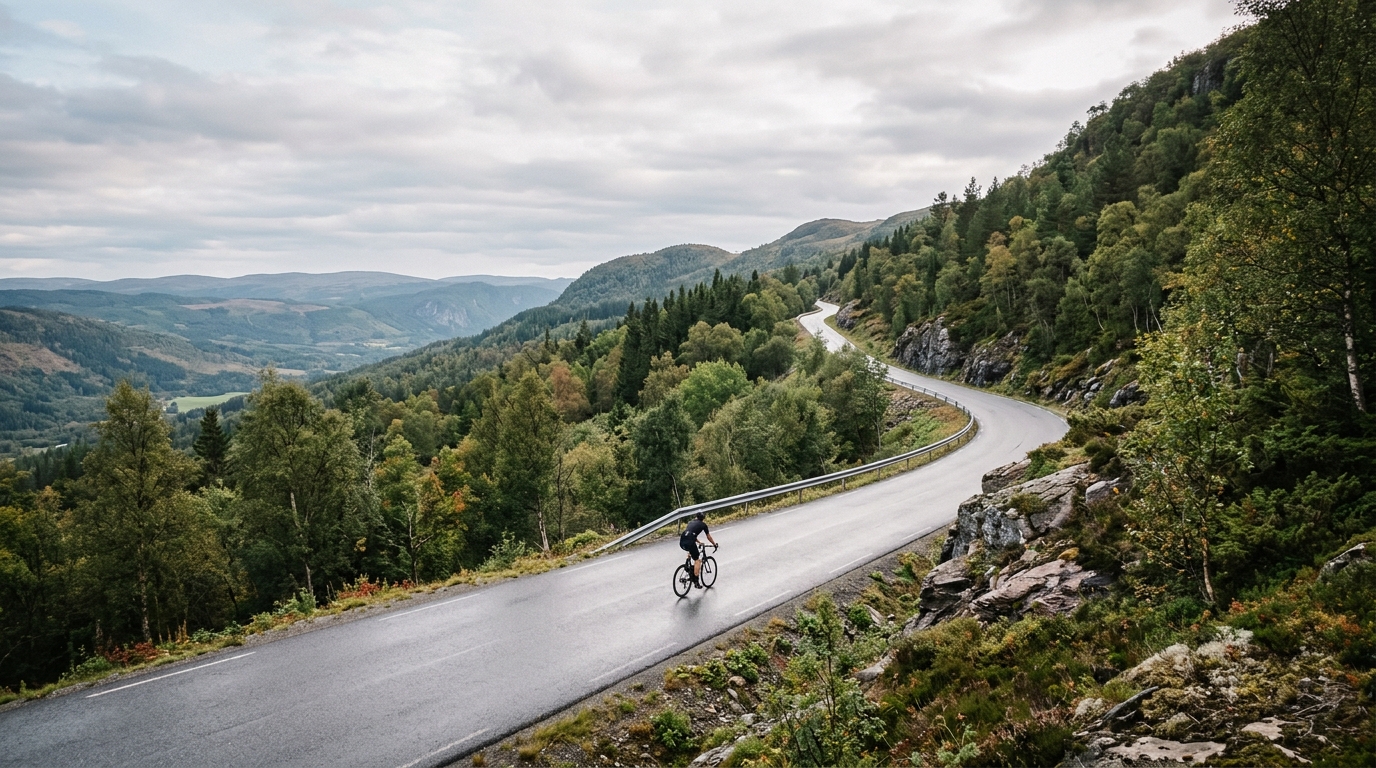 Shiojiri PassCat 3JP · 7.2 km · 4.5% · 387 m144pts
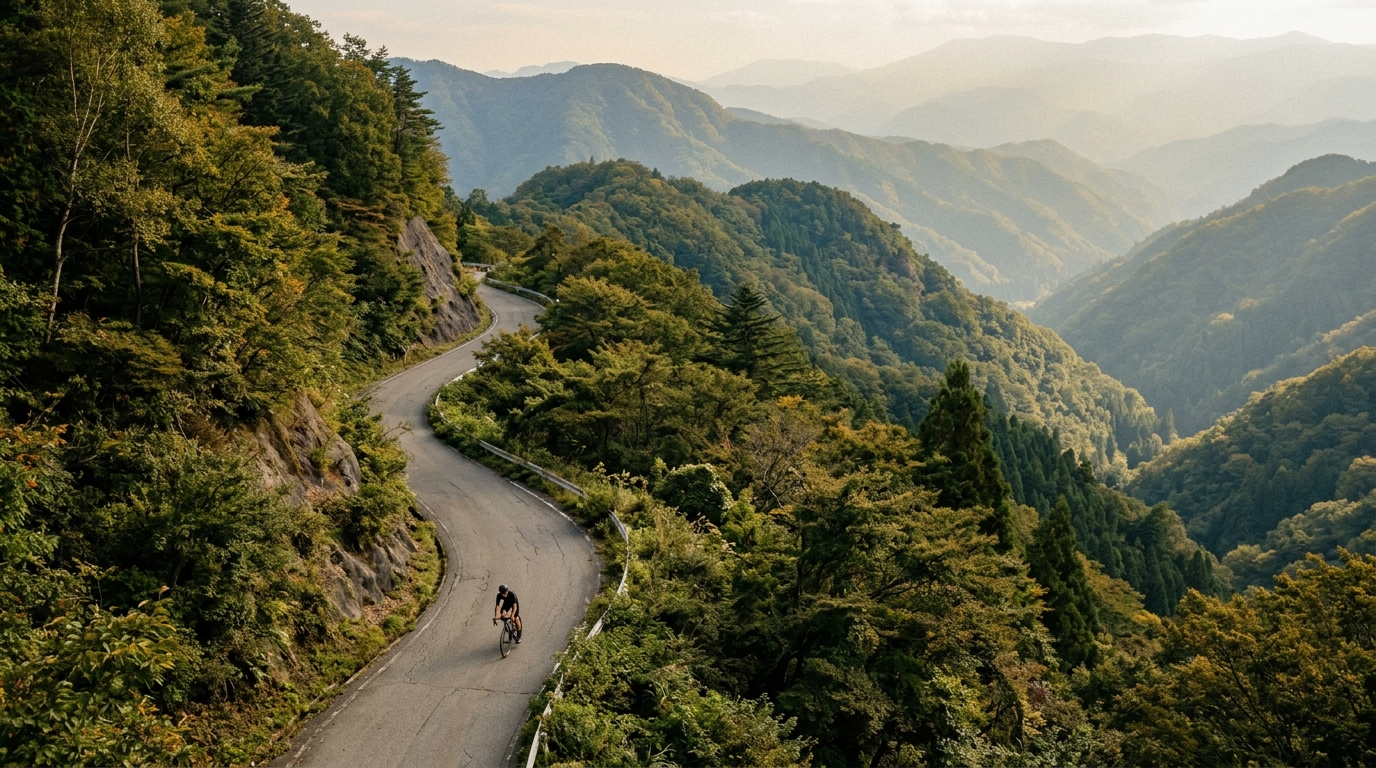 Iriyama PassCat 3JP · 11.4 km · 4.1% · 765 m189pts
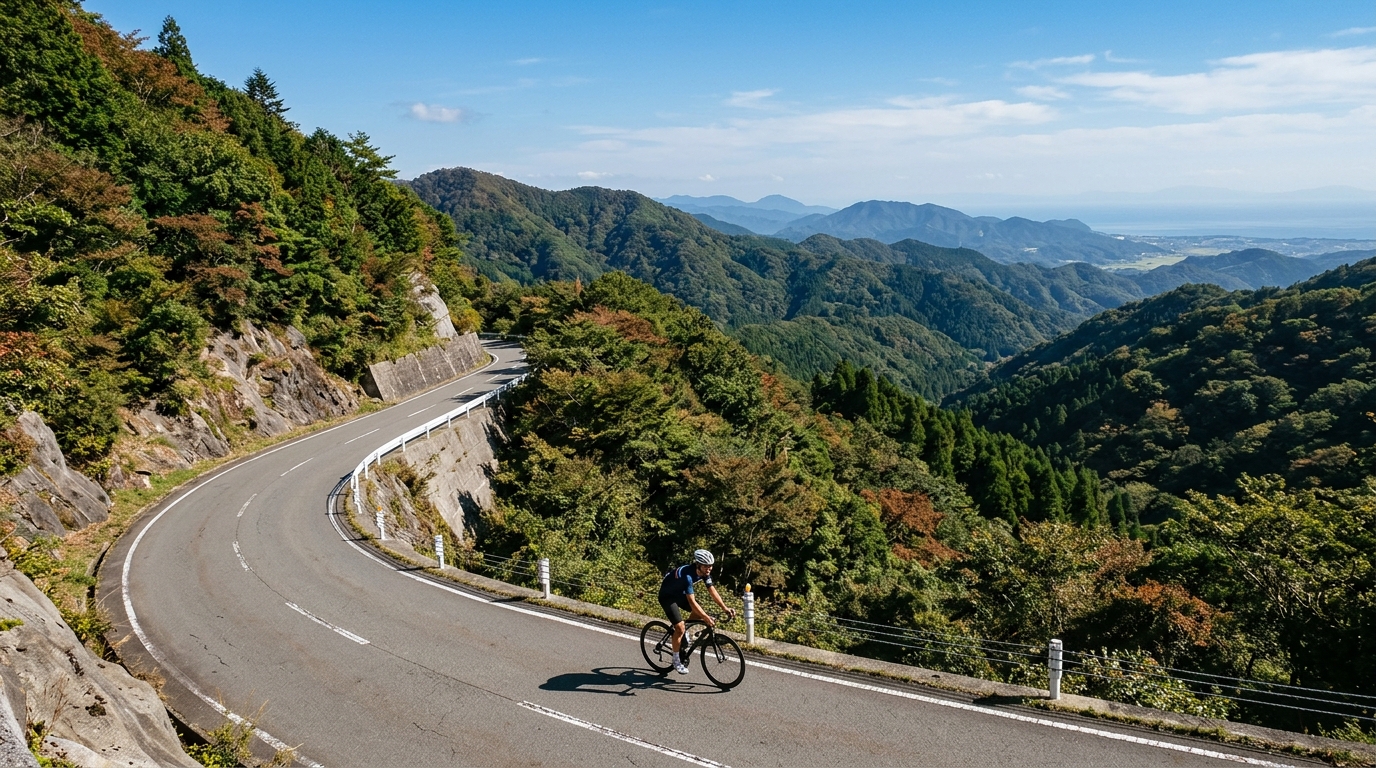 Shiisaka PassCat 3JP · 9.7 km · 4.3% · 770 m183pts
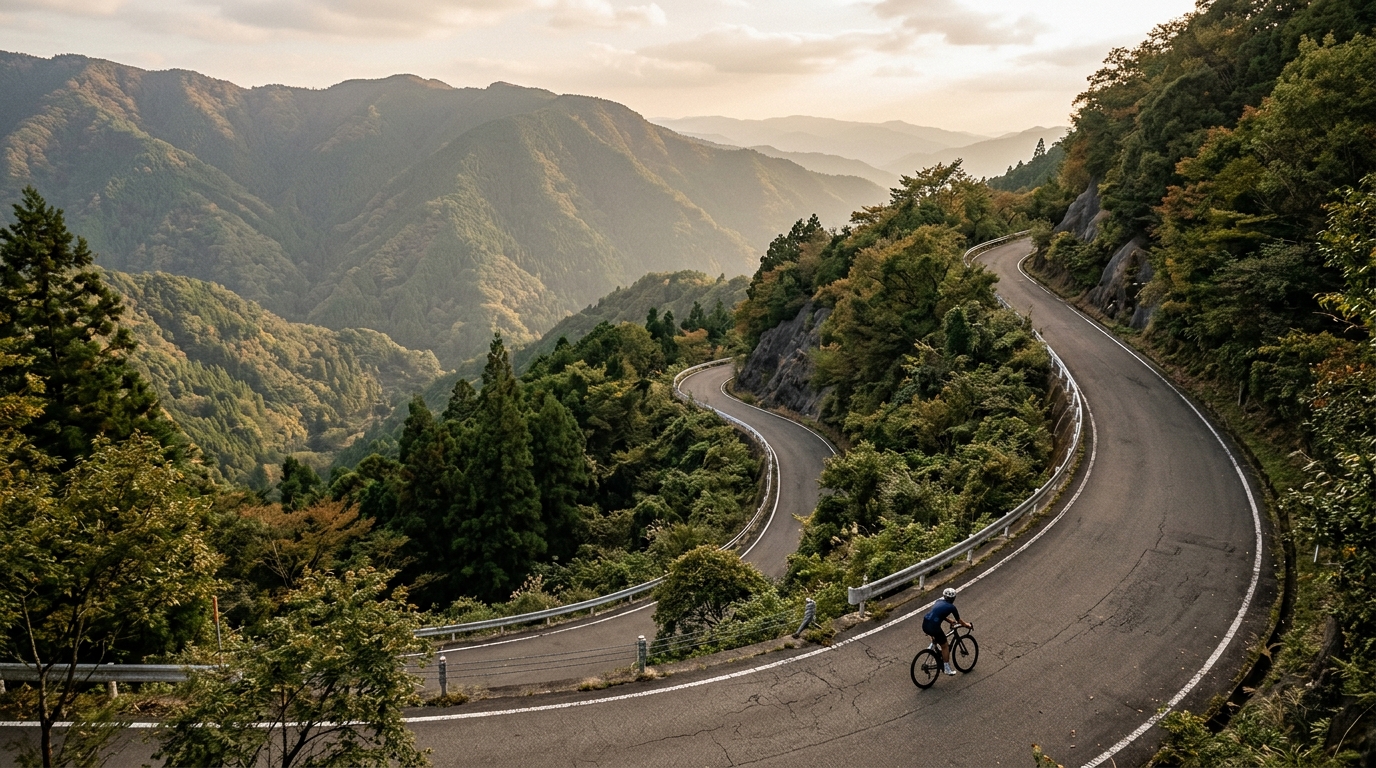 Tatsumaru PassCat 3JP · 11.2 km · 4.0% · 803 m182pts
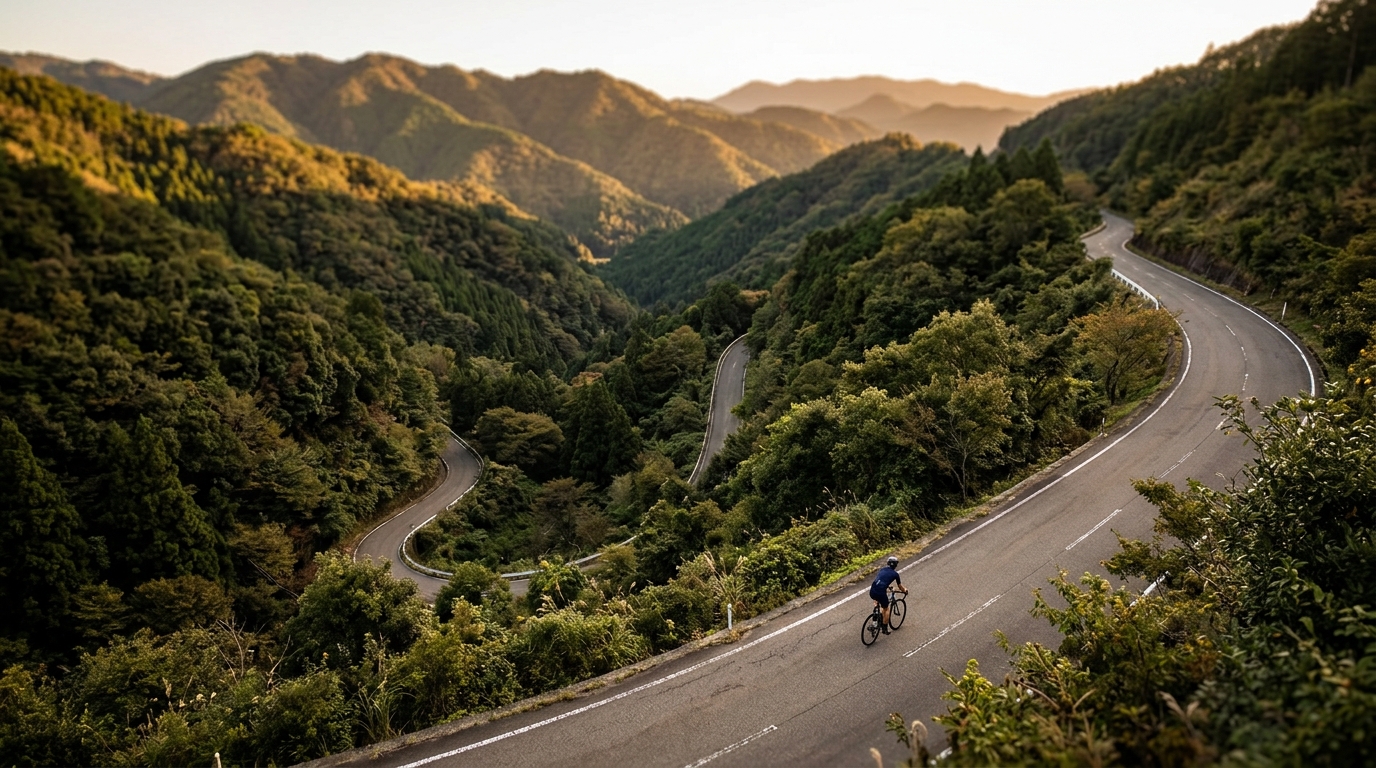 ImogatougeCat 3JP · 8.8 km · 4.5% · 547 m179pts
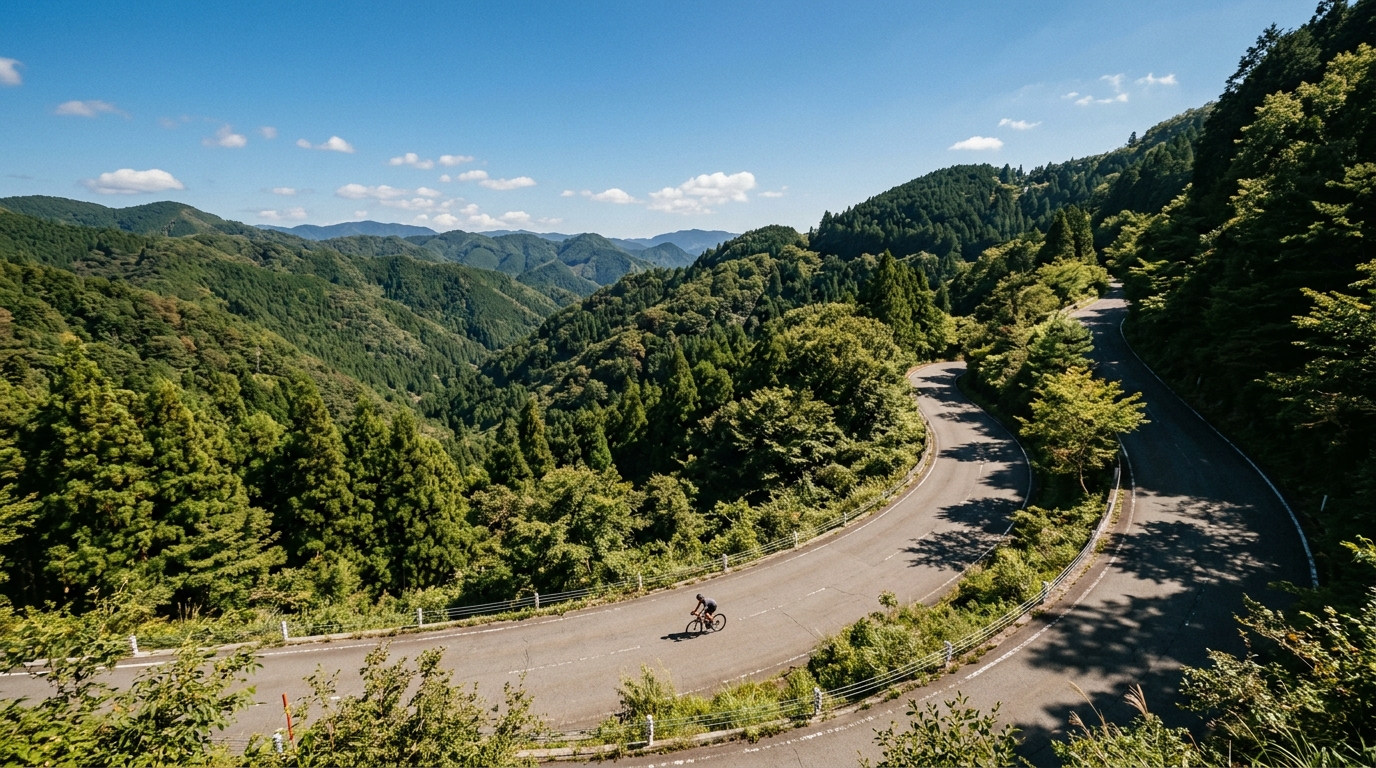 Kasagi PassCat 3JP · 8.2 km · 4.6% · 621 m177pts
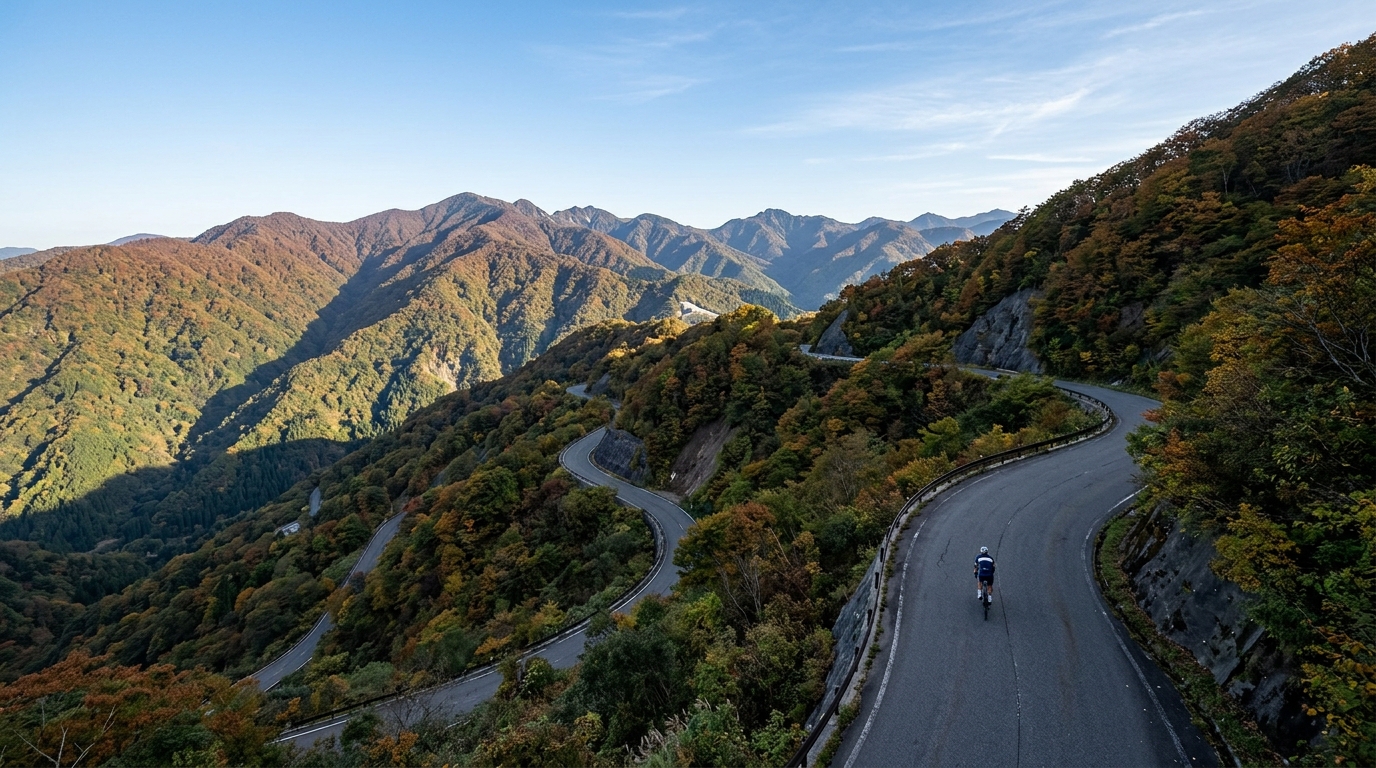 RokujurigoeCat 3JP · 8.1 km · 4.7% · 826 m176pts
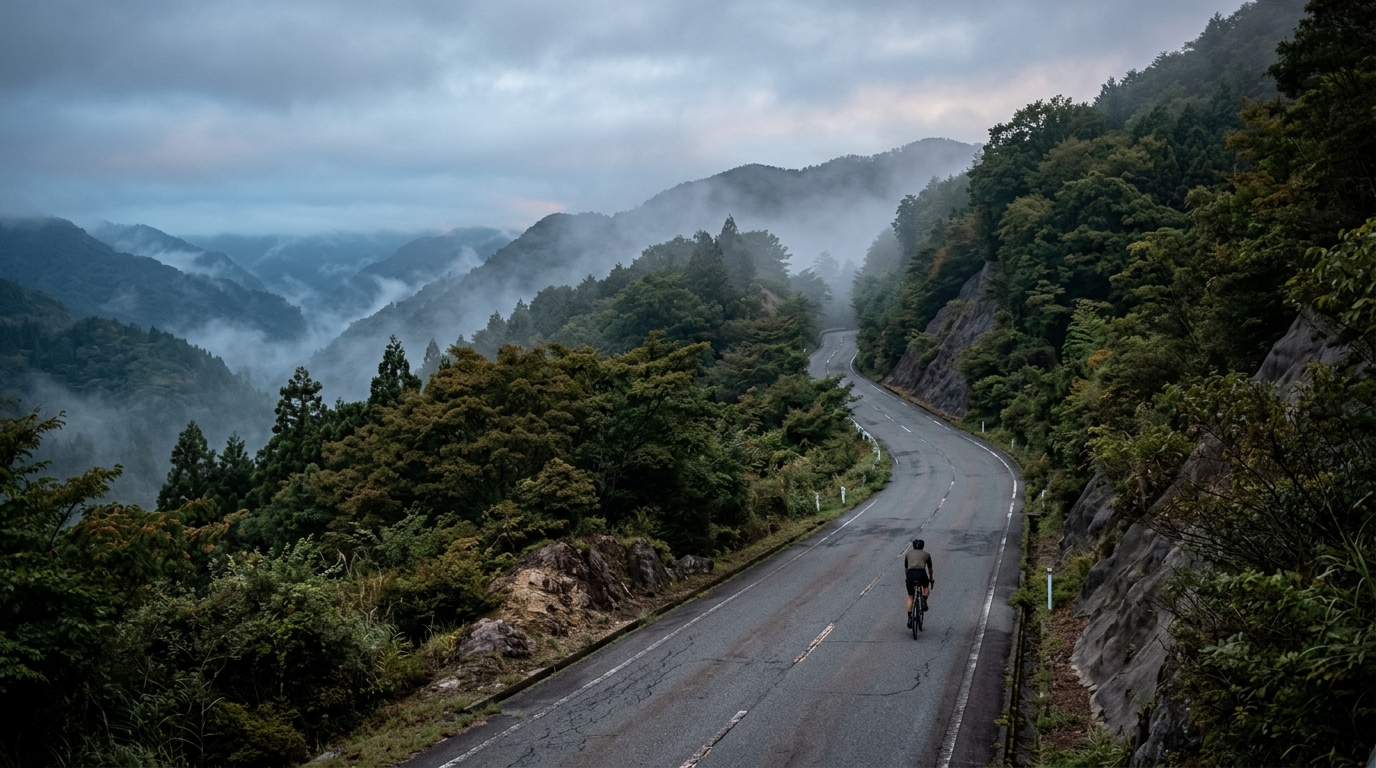 Tentsuji PassCat 3JP · 8.8 km · 4.5% · 815 m174pts
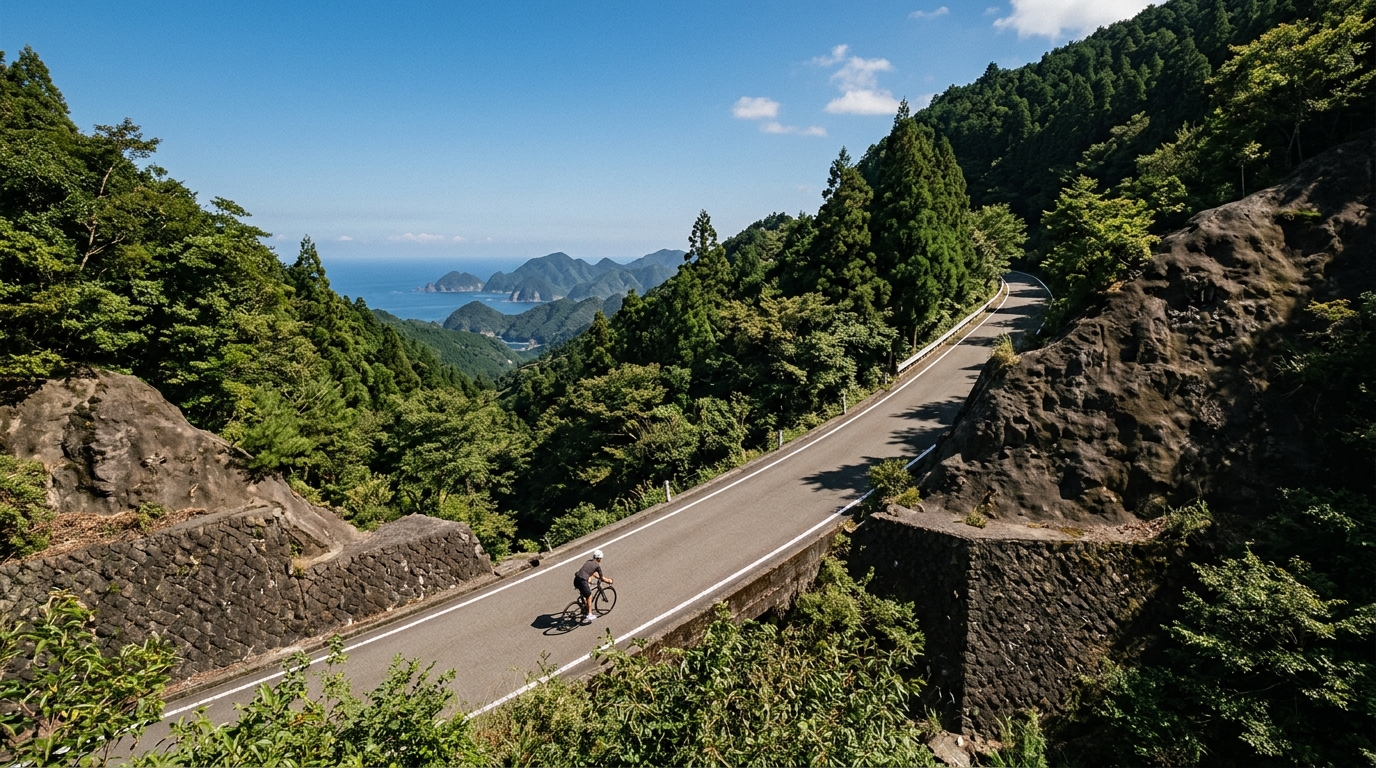 Magose PassCat 3JP · 5.5 km · 5.6% · 404 m169pts
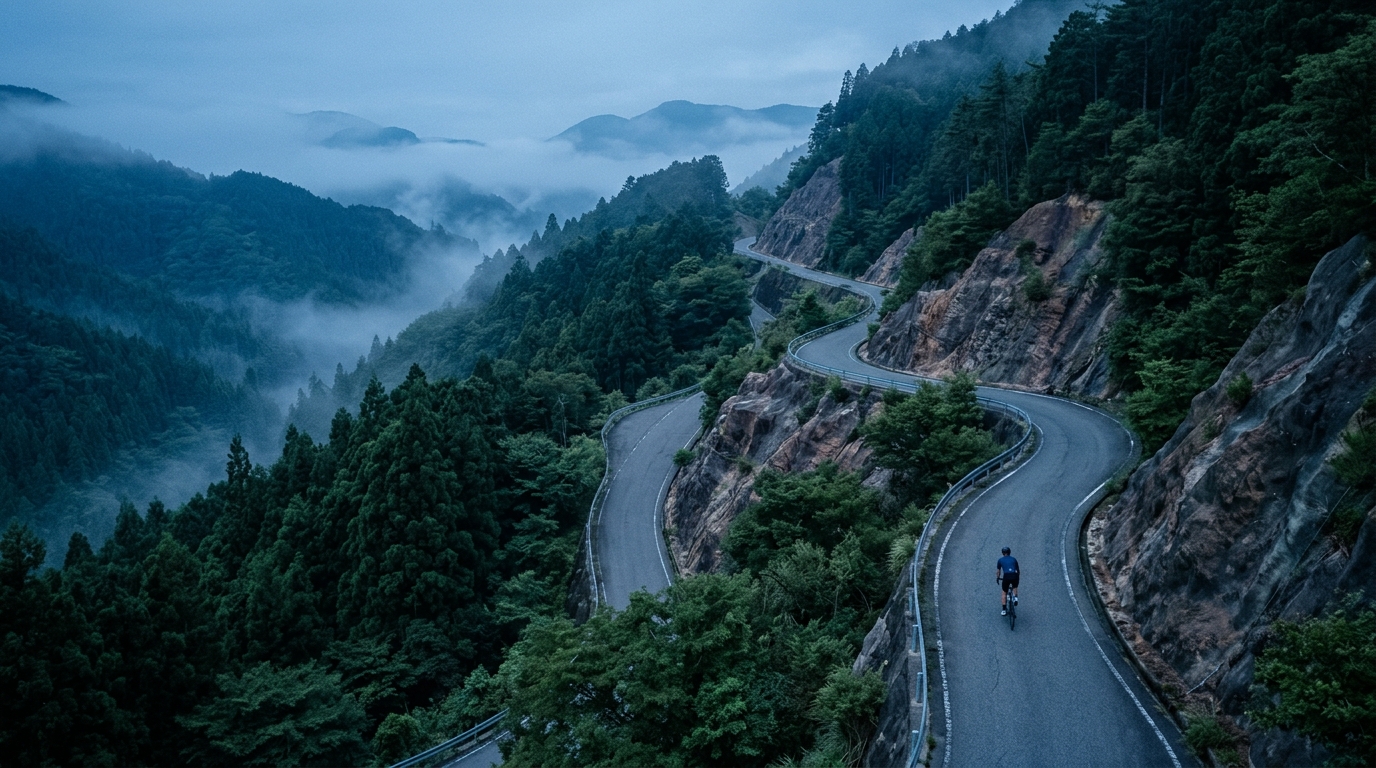 Kissaka PassCat 3JP · 3.2 km · 7.2% · 196 m169pts
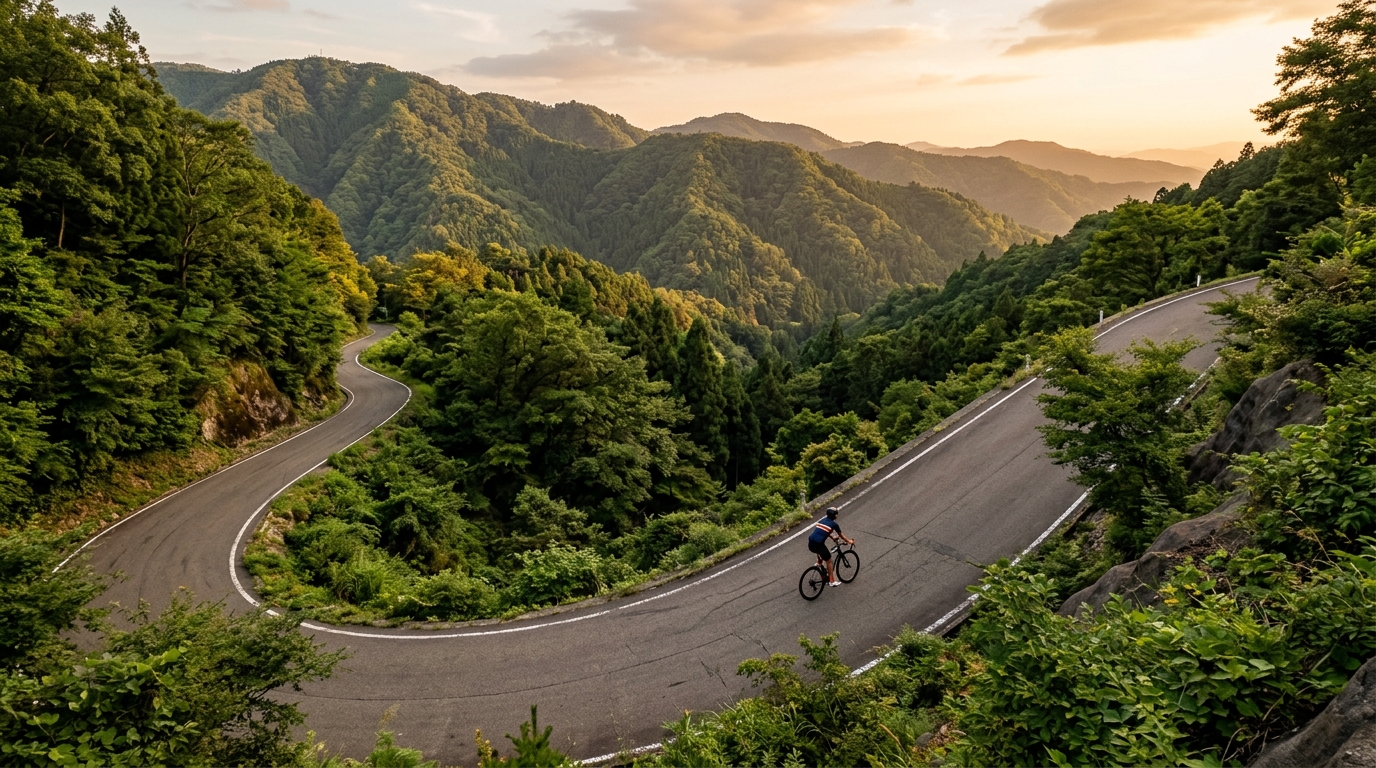 Mizukoshi PassCat 3JP · 12.4 km · 3.5% · 729 m155pts
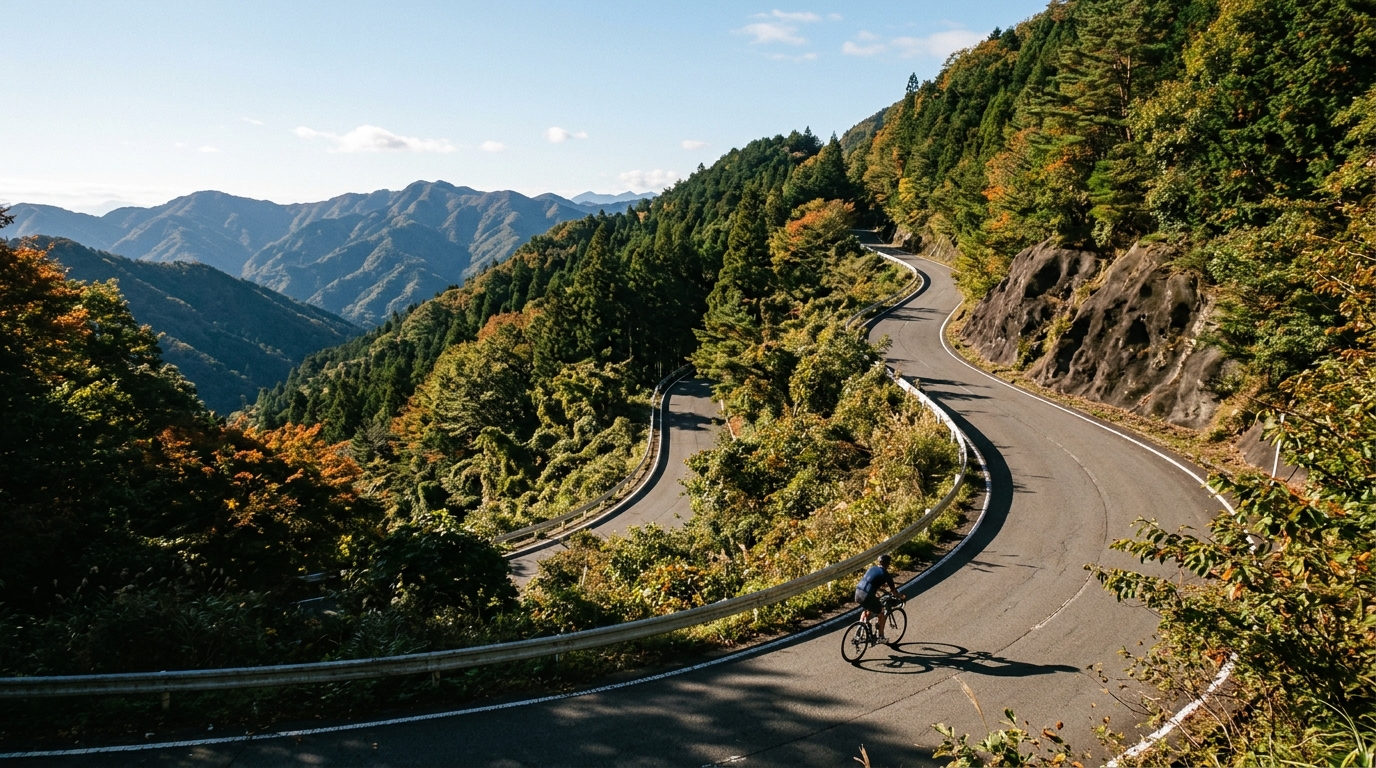 Shomaru PassCat 3JP · 11.2 km · 3.7% · 700 m155pts
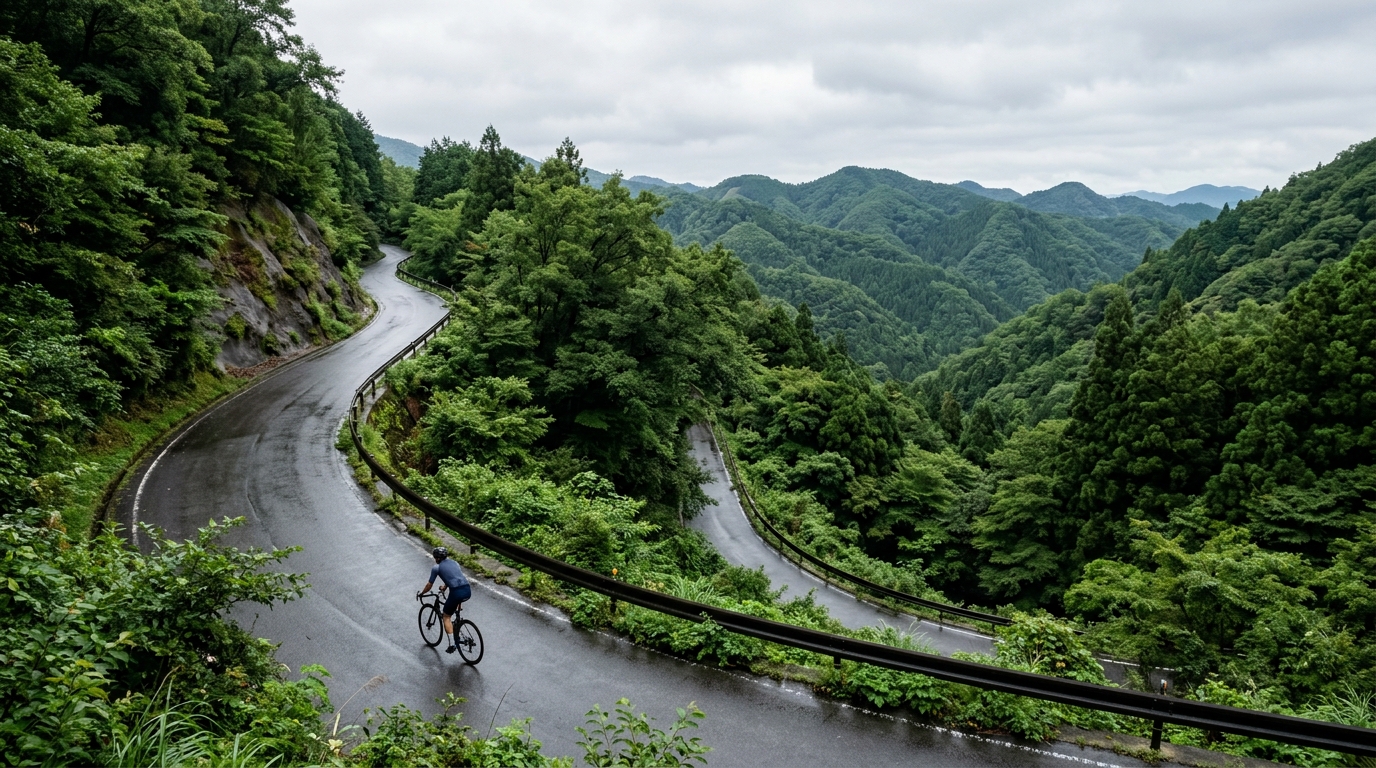 Itaya PassCat 3JP · 7.0 km · 4.6% · 501 m150pts
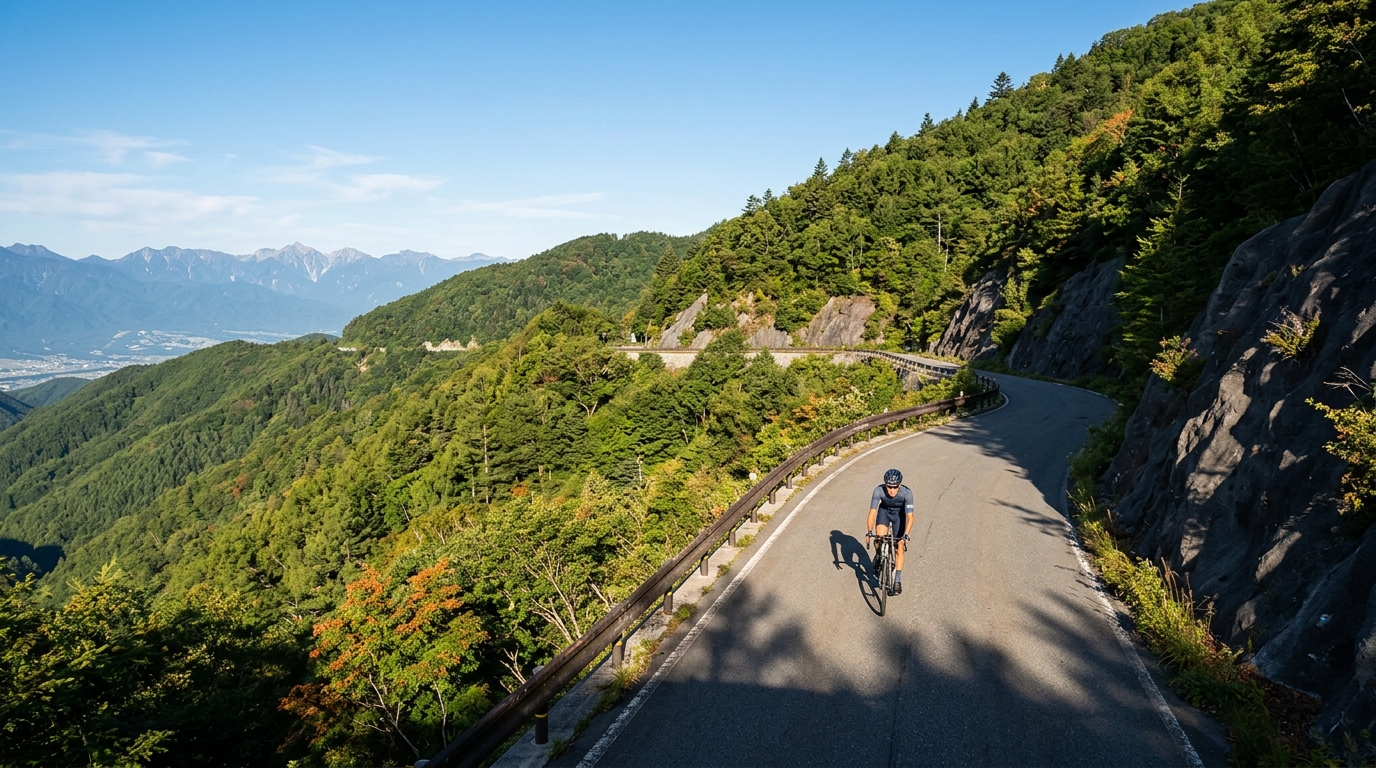 Shijumagari PassCat 3JP · 10.1 km · 3.6% · 843 m134pts
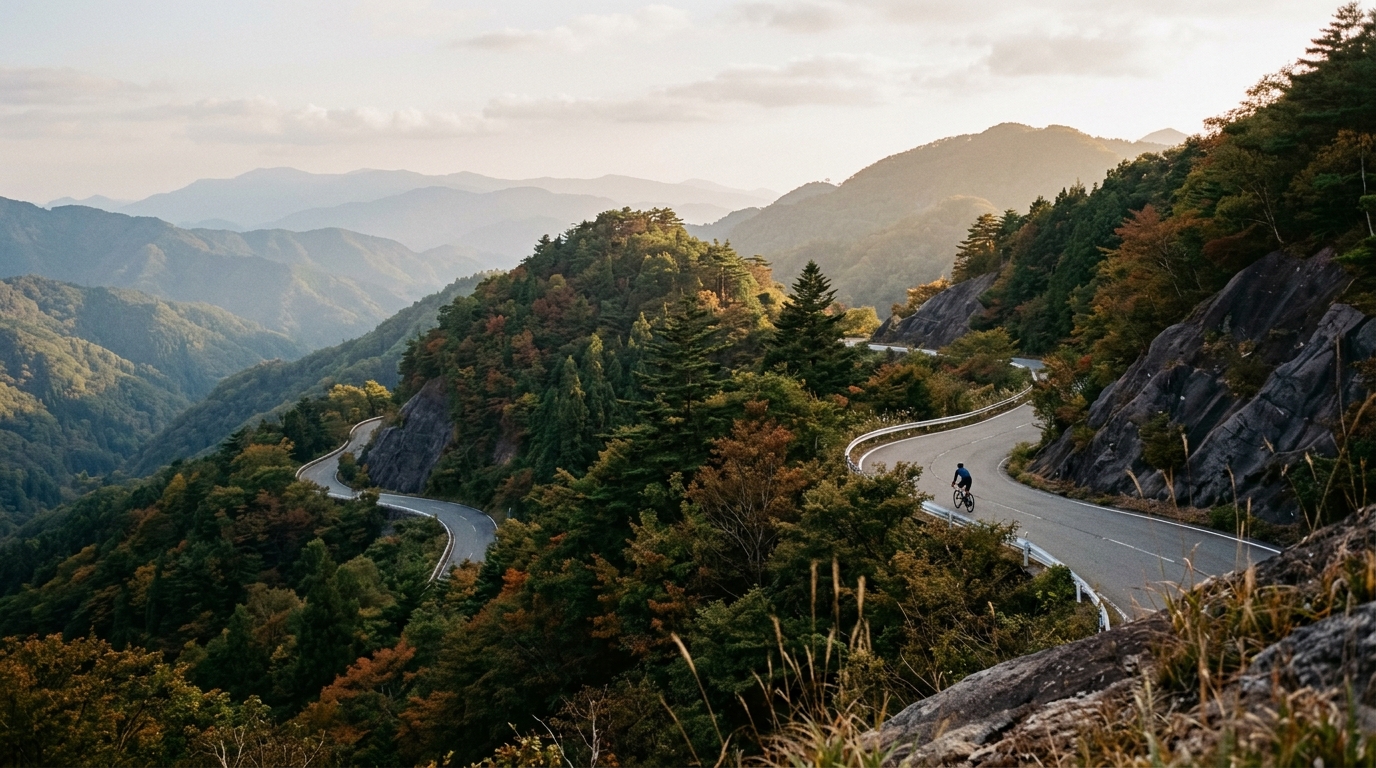 TochūgoeCat 3JP · 7.2 km · 4.3% · 414 m133pts
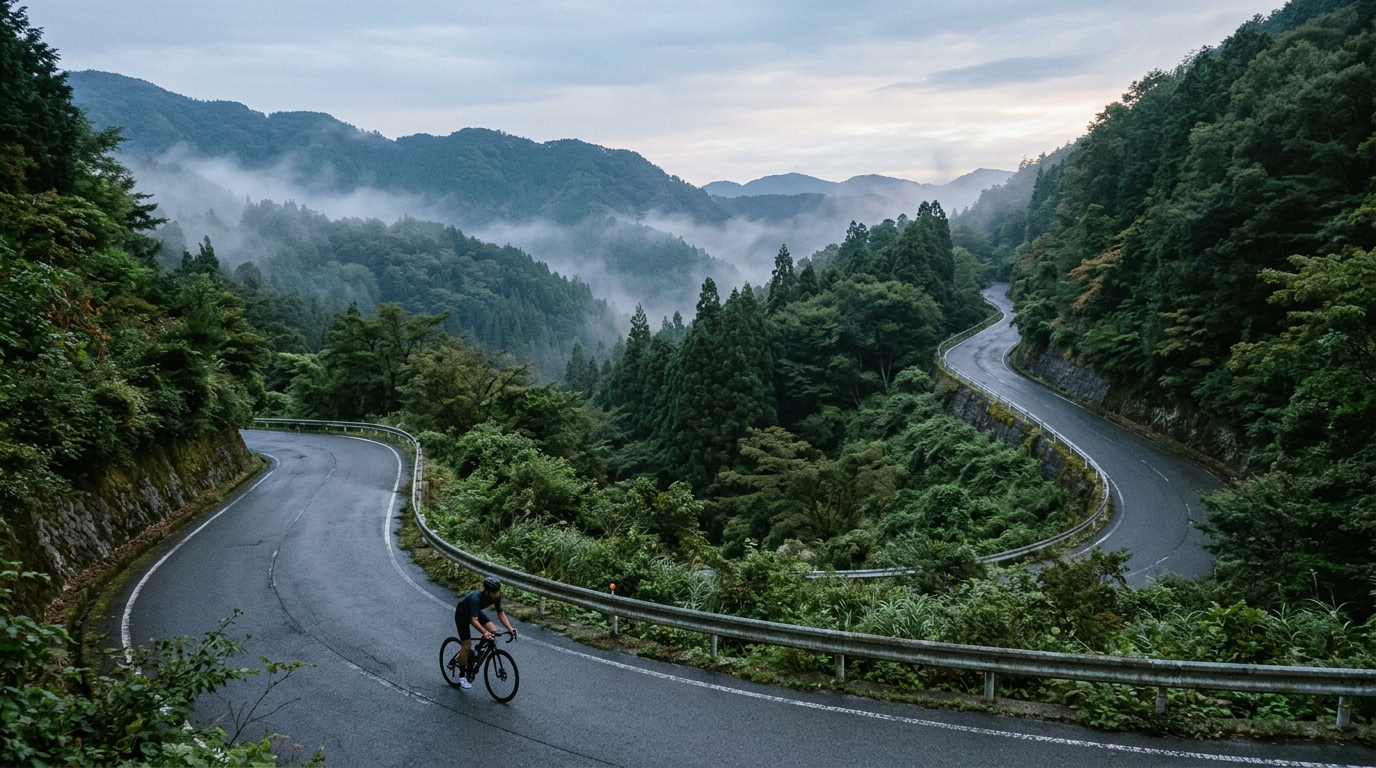 Akana PassCat 3JP · 6.9 km · 4.3% · 415 m128pts
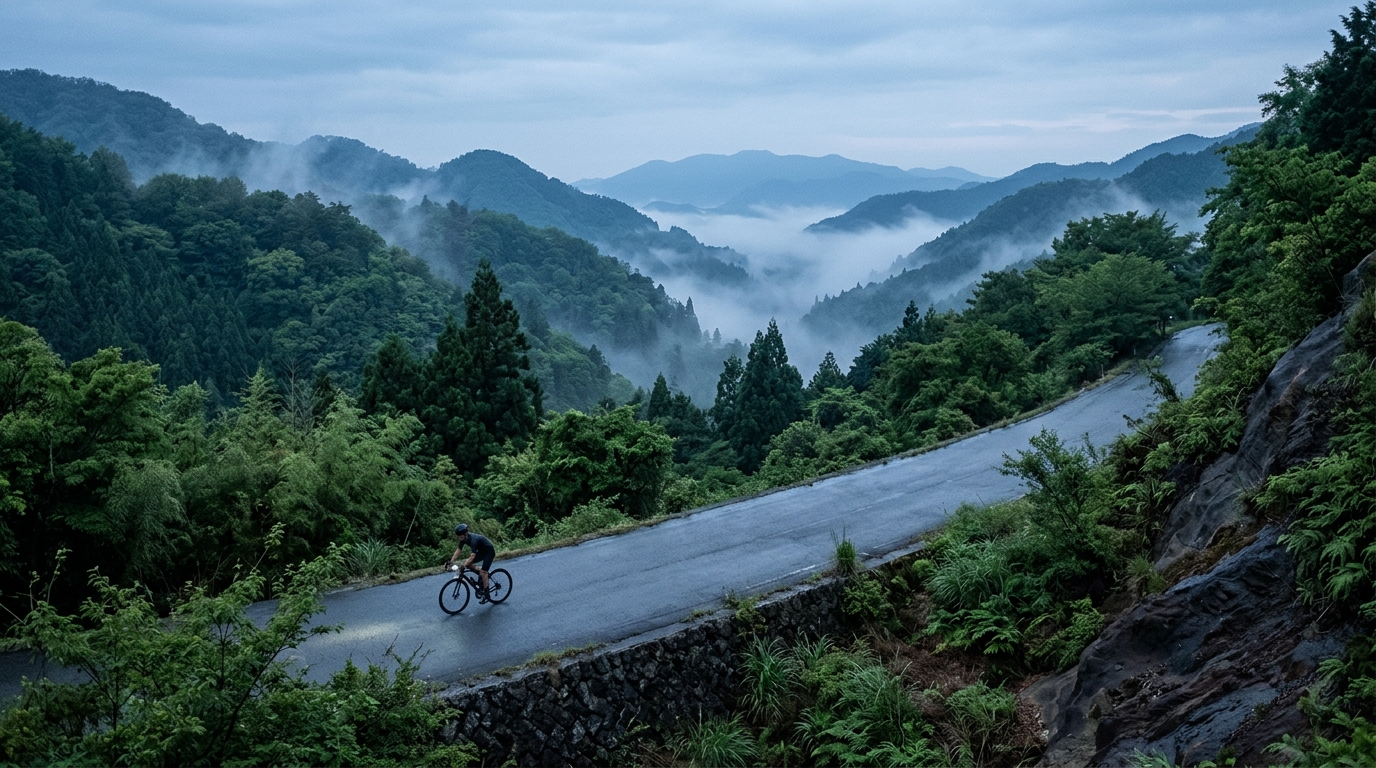 Sasao PassCat 3JP · 7.6 km · 4.0% · 265 m121pts
The complete guide to climbing in Japan
The Riding
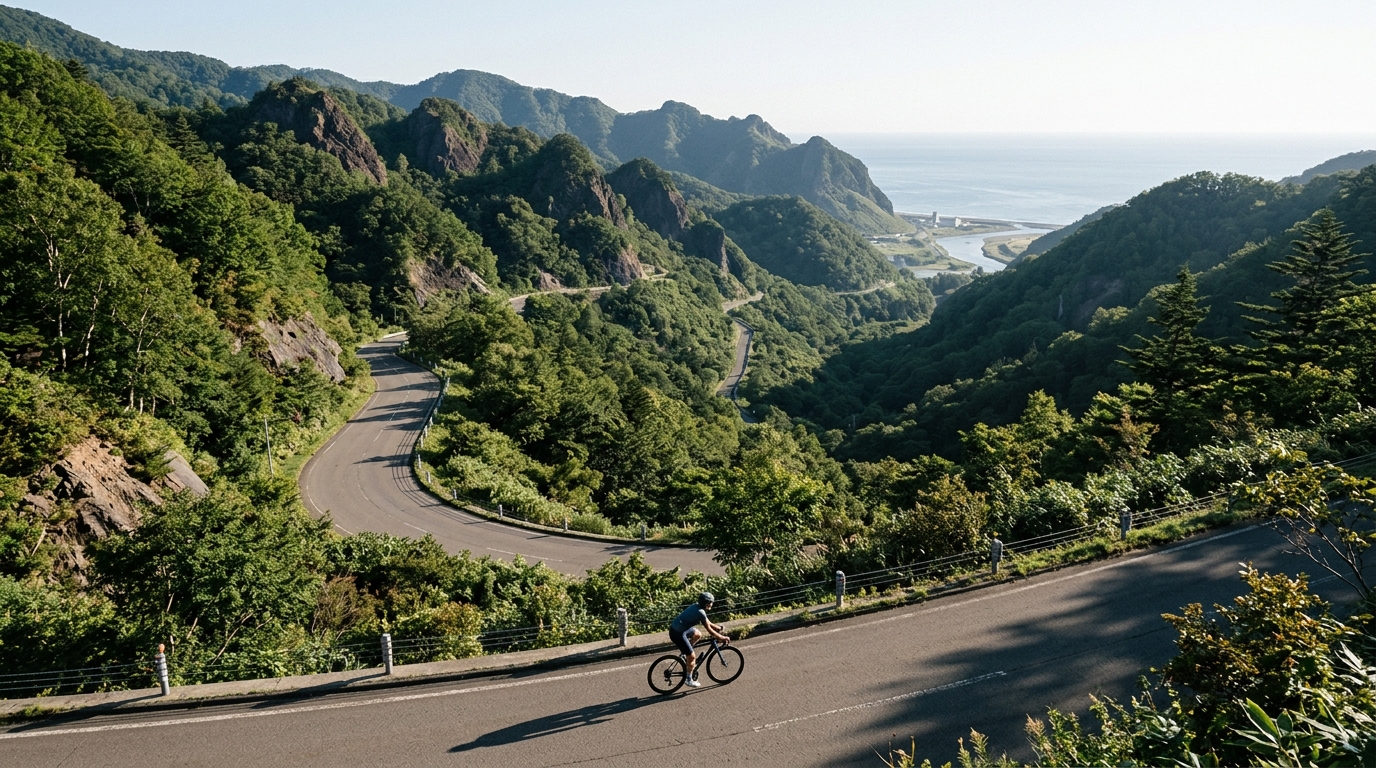
Japan is a country of mountains, and its cycling climbs reflect that vertical geography with unusual honesty. Across the catalogue there are 102 documented ascents, and they share a character that rewards patience over raw power. Rather than short, savage ramps, the defining climbs of Japan tend to be long, sustained efforts that wind steadily upward through forested slopes before breaking out onto exposed high ground near the tree line.
Altitude is a real factor here in a way it is not everywhere. With the highest summit in the catalogue sitting at 2358 m, the upper reaches of these roads carry thinner air, cooler temperatures, and weather that can turn quickly. The gradients are generally manageable but relentless: you settle into a rhythm and hold it for the better part of an hour or more. It is climbing that measures endurance and judgment as much as legs, and the payoff is the quiet, alpine feeling of gaining serious height under your own power.
Of the 102 climbs on record, 11 carry the hors catégorie rating, the toughest classification a climb can hold. These are the ascents that combine length and elevation into something genuinely demanding, and they form the backbone of any serious rider's ambitions in Japan.
Standout Climbs
A handful of passes stand out as the ones riders return for. Shibu-tōge is among the most storied of Japan's high roads, a long haul into genuine altitude that captures everything the country's climbing is about: sustained effort, big elevation, and a summit that feels earned. Ōdarumi Pass reaches toward the upper end of the catalogue's height range, a demanding ascent that pushes riders well above the everyday.
Mugikusa Pass offers another long climb through forested terrain into high country, the kind of steady grind that rewards a measured pace. Konsei Pass is a classic mountain crossing, linking valleys over a high saddle with the gradual, grinding gradients typical of the region. And Yanagisawa Pass rounds out the list of names worth planning a trip around, a substantial ascent that fits squarely into Japan's tradition of long, honest climbing. Together these five give a representative taste of what the wider catalogue holds.
When to Ride
Timing matters enormously when your best climbs top out above 2000 m. The high passes are seasonal by nature: their upper sections sit at altitudes where snow lingers, so the riding window is concentrated in the warmer months when the roads are clear and open. Late spring through early autumn is the reliable stretch for tackling the bigger ascents, with the shoulder seasons offering cooler air and thinner crowds at the cost of less certain weather.
Because the summit of the highest climb reaches 2358 m, conditions at the top can differ sharply from the valley floor where you start. Even on a warm day lower down, the exposed upper slopes can be markedly colder and windier. Plan around clear-weather windows, and treat the high hors catégorie efforts as fair-weather objectives rather than something to force.
Practical Notes
Prepare for range. On a single long climb you may leave a warm valley and finish near the tree line in noticeably cooler air, so pack layers even when the forecast at the base looks mild. A windproof layer for the descent is worth its weight, since coming down from height means a long stretch of cooling wind after a hard effort.
Gearing deserves thought too. The signature climbs here are less about steep pitches and more about duration, so choose ratios that let you spin comfortably for sustained periods rather than muscling a bigger gear. Carry enough food and water for efforts that can stretch well past the hour, and respect the altitude on the highest ascents by pacing conservatively early. With 102 climbs catalogued, there is plenty to build a trip around at every level, from approachable warm-ups to the full 11 hors catégorie challenges.
Summary
Japan offers a deep and coherent catalogue of climbing: 102 documented ascents defined by length, steady gradients, and real altitude, crowned by a 2358 m high point and 11 hors catégorie efforts. Names like Shibu-tōge, Ōdarumi Pass, Mugikusa Pass, Konsei Pass, and Yanagisawa Pass anchor the experience. Ride them in the warmer months, pack for the range in temperature that altitude brings, and gear for endurance. It is climbing that rewards the patient rider with some of the most memorable high-mountain riding anywhere.
Looking for full rides in Japan?
Routes in Japan