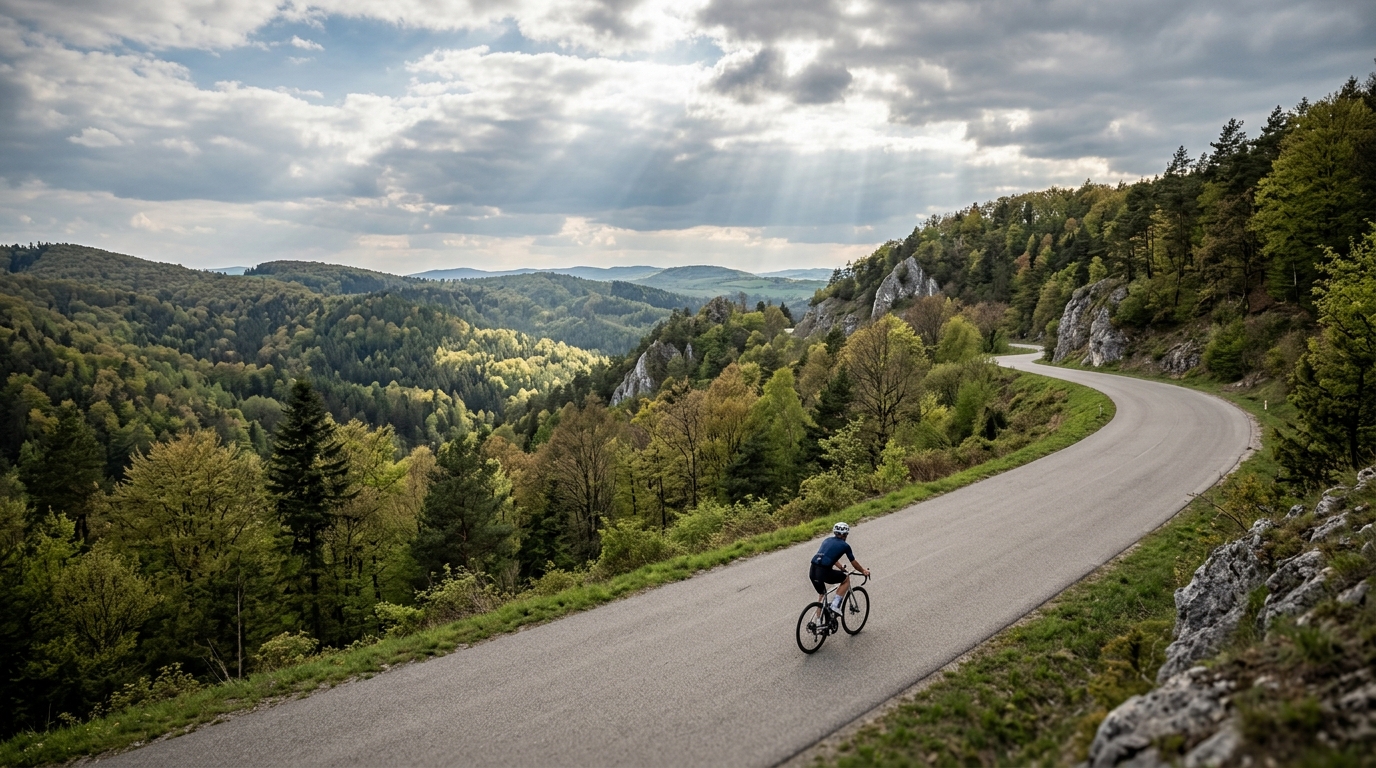
Branisko
A short Category 4 climb in SK: 2.8 km at 3.8%, with a shallow maximum gradient that rewards steady pacing over force.
- Length
- 2.8km
- Avg
- 3.8%
- Max
- 5.1%
- Summit
- 519m
- Ascent
- 92m
The climb
Gradient profile
Branisko cycling climb profile
Branisko is a short, controlled climbing effort rather than a climb that forces a major change in race or ride rhythm. The headline numbers are modest: 2.8 km in length, an average gradient of 3.8%, and a maximum gradient of 5.06%. That combination matters because it tells you the climb is unlikely to be defined by violent ramps. The challenge is not survival. It is keeping the pressure on without drifting into an effort that is too hard for the return.
The climb starts at 412 m and tops out at 519 m, with 107 m of net elevation gain. Listed as a Category 4 climb, Branisko sits in the zone where pacing mistakes are easy to make because the road feels manageable from the bottom. A rider can push a gear that feels fine for the first minutes, only to realise near the top that the gradient has been quietly taxing the legs.
How the gradient unfolds
With an average of 3.8% and a maximum of 5.06%, Branisko should ride as a steady false-flat-to-light-climb effort. The gap between the average and maximum gradient is small, which suggests the road does not need repeated surges to clear sharp walls. Instead, the profile points toward a climb where momentum matters.
From bottom to summit, the best mental model is a gradual rise that asks for consistent torque and aerobic control. Because the steepest listed gradient is only just above 5%, the climb is unlikely to demand out-of-the-saddle grinding unless you choose too heavy a gear. The real risk is riding it like a flat road and letting speed dictate effort, rather than using power, breathing, or perceived exertion to cap the intensity.
Pacing and gearing notes
For most riders, Branisko is best ridden just below the point where breathing becomes ragged. If using power, anchor the effort around a sustainable climbing intensity relative to /glossary/ftp rather than chasing speed. On a climb this shallow, wind, road surface, and momentum can make pace feel deceptive.
Gearing should stay efficient. There is no statistical signal here for a need to prepare for steep gradients, but a lighter gear still helps protect cadence when the road nudges toward its 5.06% maximum. Avoid muscling a big gear from the base. The climb is short enough that overgearing can feel productive, but that usually turns a manageable aerobic rise into unnecessary muscular fatigue.
A practical approach:
- Start seated and smooth, not sprinting into the lower slopes.
- Let cadence settle before increasing pressure.
- Use the shallow gradient to carry momentum, but do not let speed pull you above target effort.
- Shift early if the road approaches the maximum gradient, rather than waiting until cadence stalls.
- Save any acceleration for the final part of the 2.8 km, when the cost of going over threshold is easier to contain.
Bottom line
Branisko is a climb for disciplined riding. Its 2.8 km length and 3.8% average gradient make it accessible, but that is exactly why it rewards restraint. Ride it smoothly, keep the gear light enough to maintain rhythm, and treat the summit as the end of a controlled aerobic effort rather than the top of a steep mountain test.